
IBM
IBM · AI / ML · Filed Jan 6, 2025 · USPTO published Jul 9, 2026 · Jul 9 release
IBM Patents a System That Finds the Exact Paragraph You're Looking For Inside Any File
Instead of returning an entire document when you search for something, IBM's new patent describes a system that pinpoints the specific section of a file that actually answers your question. Think of it as keyword search, but for meaning.
- Publication number
- US 2026/0195310 A1(US20260195310A1)
- Applicant
- INTERNATIONAL BUSINESS MACHINES CORPORATION
- Filed · Published
- Jan 6, 2025 · Jul 9, 2026
- Inventors
- Sasikanth Eda, Khanh Vi Ngo, Yadavendra Yadav, Yu-Cheng Hsu, Sandeep Ramesh Patil
- Status when we published
- Rejected again; the company can still amend or appeal
- Document
- 20 claims
- US classification
- 707/745
- Examiner
- PENG, HUAWEN A (Art Unit 2169)
How IBM's file-chunk search actually works
Imagine you ask a question and your computer searches through thousands of documents to find the answer. Most search tools either return the whole document or match on exact words. That means you get a 200-page PDF when you just needed the one paragraph on page 47.
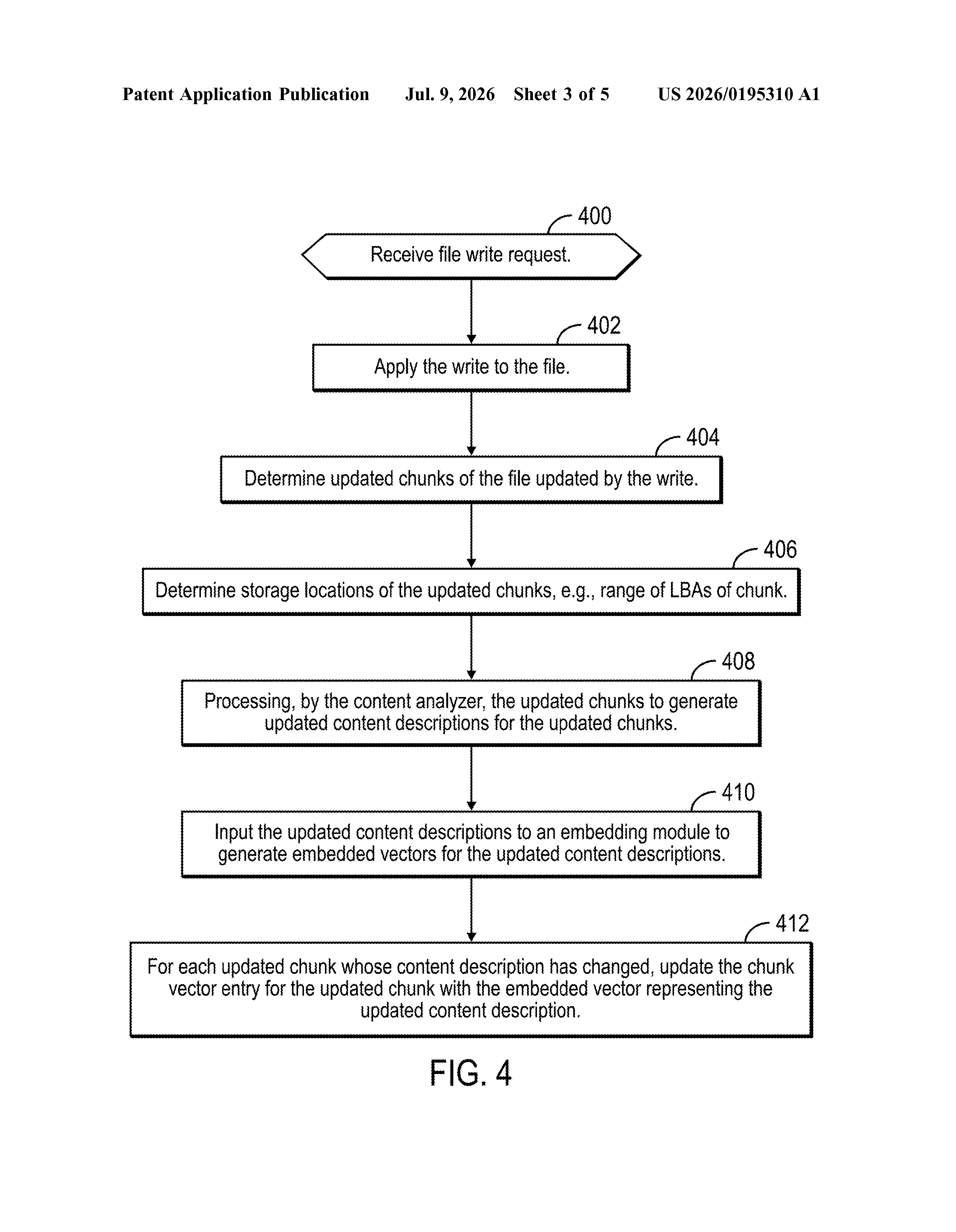
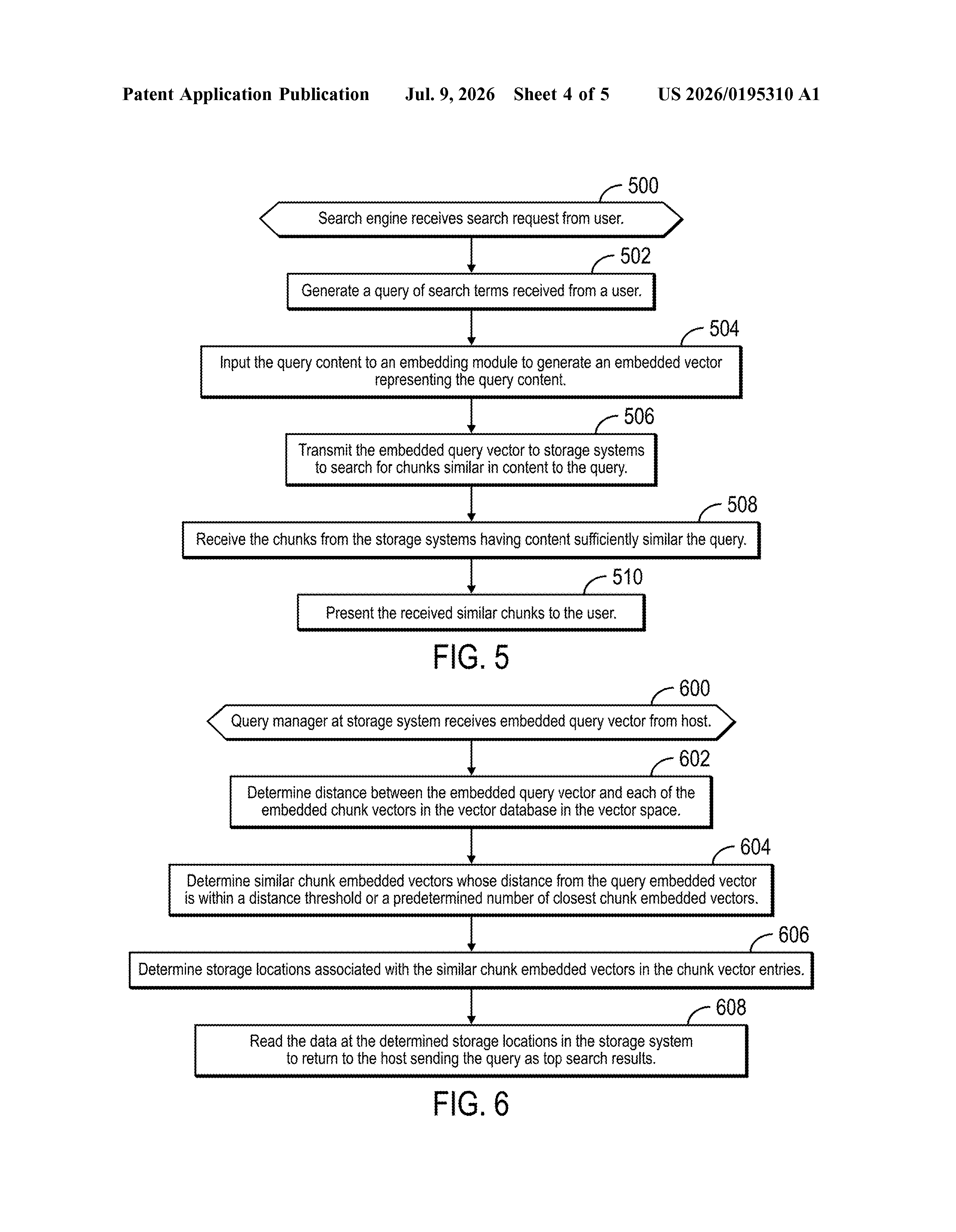
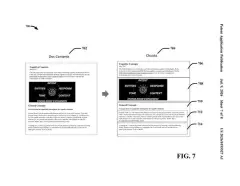
IBM's patent describes a system that reads every file in advance, breaks it into smaller pieces (called chunks), and captures what each piece means, not just what words it contains. Those meanings get converted into numbers and stored in a special database. When you ask a question later, the system converts your question into numbers too and finds the chunks whose numbers are closest.
The result: instead of a list of documents, you get back the specific sections of files that actually answer what you asked. This is the core mechanic behind most modern AI question-answering tools, and IBM is staking out a specific approach to how the chunks are stored and retrieved.
How the vector database maps content to storage locations
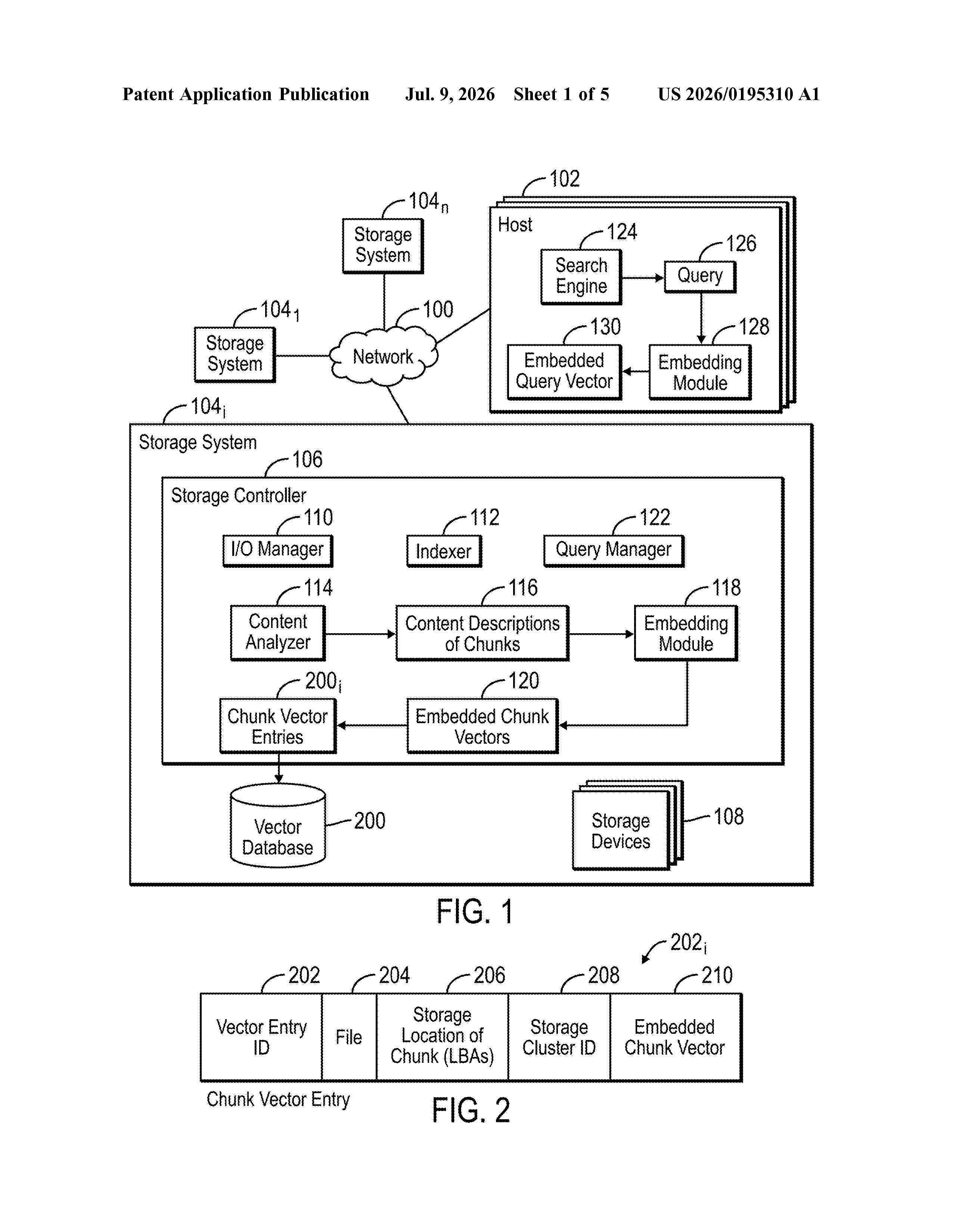
The patent describes an end-to-end pipeline for building and querying a vector database (a database that stores meaning as numbers rather than text).
Here's the core flow:
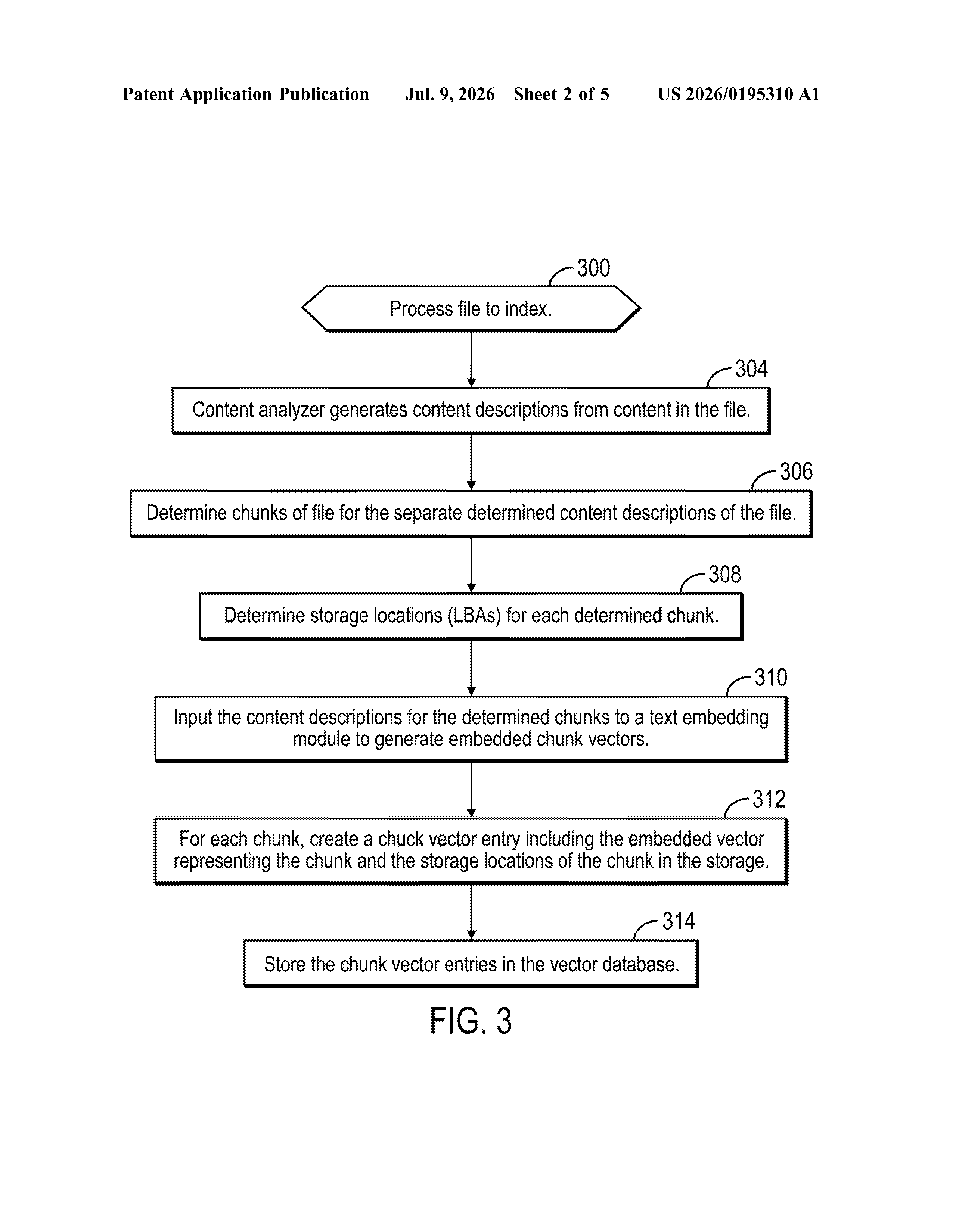
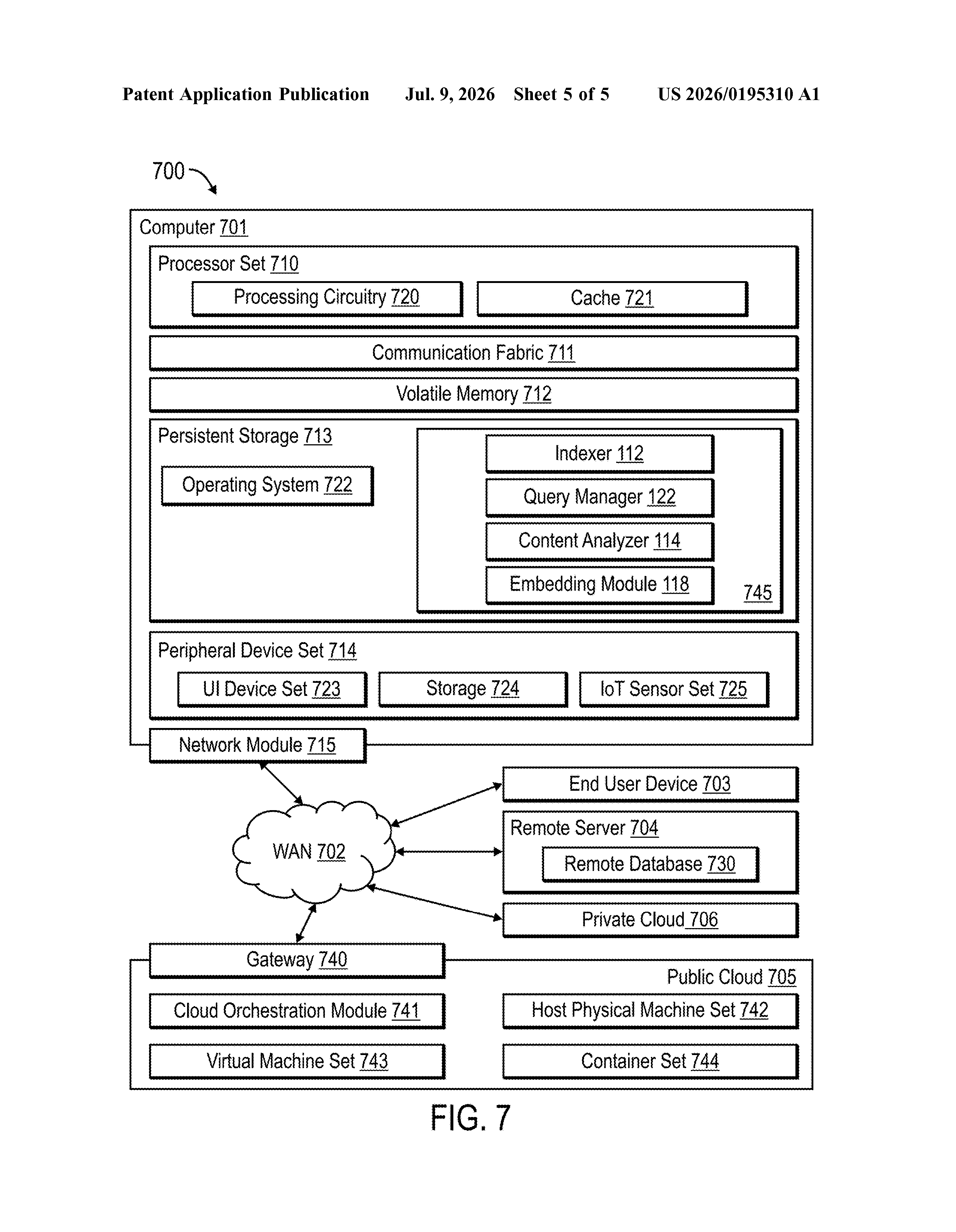
- A content analyzer reads a file and produces "content descriptions" for each meaningful section. These descriptions capture the context and meaning of what's in that section, not just a copy of the words.
- The system identifies chunks, specific segments of the file at particular storage locations, that correspond to each description.
- Each description is converted into an embedded vector (a list of numbers that represents meaning in a mathematical space) using a process called embedding. Similar meanings produce numbers that are numerically close to each other.
- Those vectors, along with pointers back to exactly where in the original file each chunk lives, are stored in the vector database across many files.
When a query arrives, it's converted into its own embedded vector. The system scans the database for stored vectors that are mathematically close to the query vector (meaning they're about the same topic), then returns the original file chunks at those storage locations. The key detail IBM emphasizes is preserving the precise storage location of each chunk, so retrieval goes directly back to the source material.
What this means for enterprise AI search tools
This is foundational infrastructure for retrieval-augmented generation (RAG), the technique where an AI assistant looks up real documents before answering a question rather than just guessing from memory. Getting this layer right determines whether the AI gives you the right answer or a plausible-sounding wrong one.
For enterprises using IBM's storage and AI platforms, a patent like this signals that IBM wants to own the pipeline from raw files to AI-ready search. If you work somewhere that stores contracts, manuals, or research reports on IBM infrastructure, this is the kind of technology that could eventually let you ask a plain-English question and get back the exact clause or finding you need.
Source: US 2026/0195310 A1 at the USPTO (PDF). Full patent text and figures are in the official publication.
Get our take in your Top Stories
Liked this breakdown? Add Patentlyze as a preferred source on Google, and our plain-English take shows up more often in your Top Stories the next time IBM patent news breaks.
Add Patentlyze on Google
One click.
There are more where this came from
We read the new patents from Big Tech, carmakers and more and send you the ones worth knowing. Plain English, free, every week.
The drawings · 5 sheets
5 drawing sheets from US 2026/0195310 A1 · click any drawing to enlarge
More from IBM
All 481 IBM patents →
More in AI / ML
All 2,745 AI / ML patents →
Google
A New Patent Rewrites Your Search Query Before Looking Anything Up
Microsoft
Microsoft Patent Automates the Generation of Synthetic AI Coding Training Data
Google
Google Patents an AI That Pulls a Single Sound Out of a Recording Using Plain-Text Descriptions
Google