
Samsung Patents a Wearable That Hands Off Tasks to Nearby Devices Automatically
Imagine your smartwatch notices you've sat down at your desk and automatically tells your PC to pick up where your phone left off. That's the core idea behind Samsung's latest wearable patent.
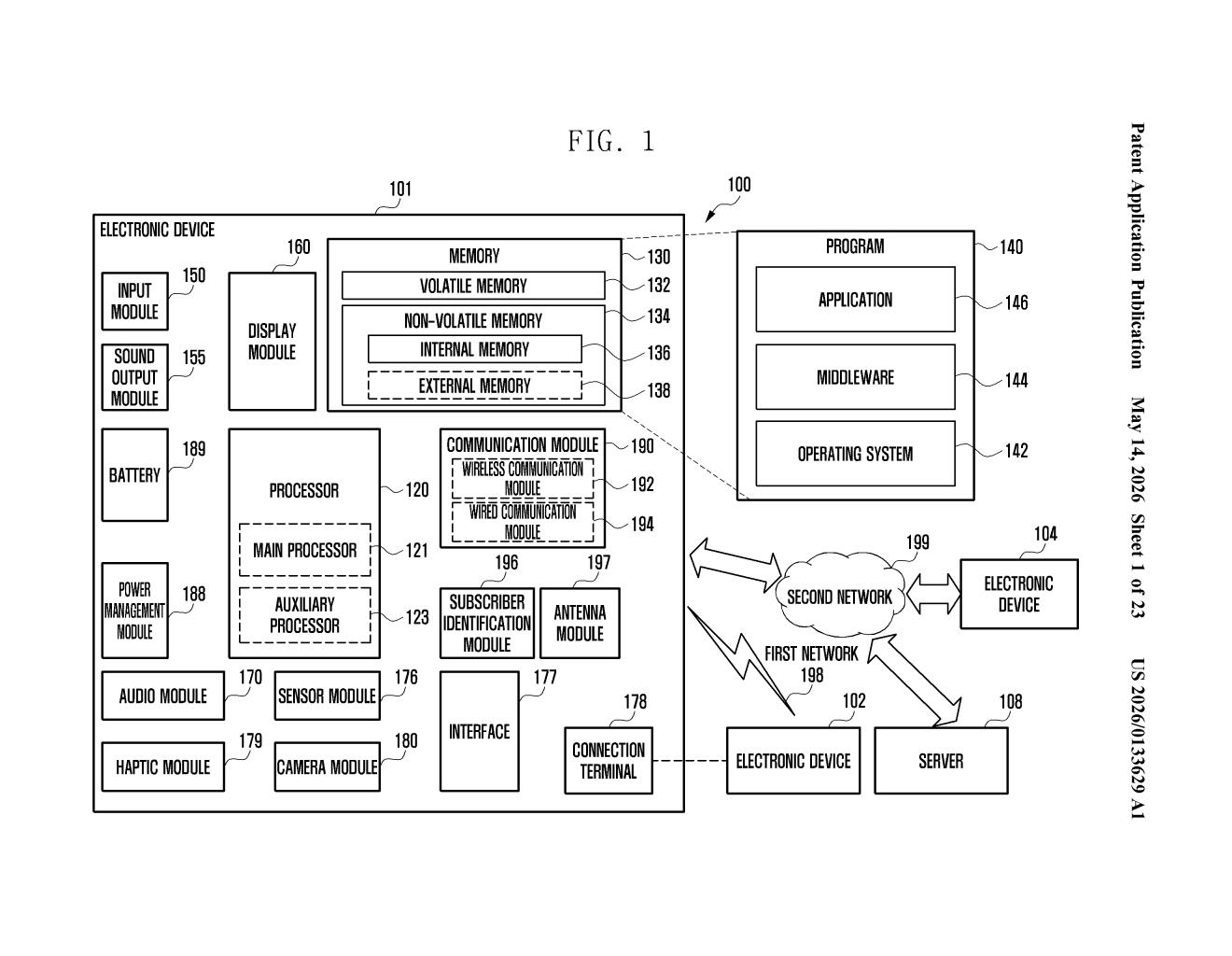
How Samsung's wearable-to-device task handoff works
Picture this: you're watching a video on your phone, then you take off your Galaxy Watch and set it on your desk. Right now, nothing happens — those are two separate devices doing their own thing. Samsung's new patent imagines a smarter version of that moment.
The wearable — a watch, ring, or similar device — uses its built-in sensors to notice that something has changed about its own state. Maybe you removed it, maybe you set it down, maybe you started walking. Based on that change, the device figures out what task should happen next and sends instructions to a nearby phone, PC, or TV to keep that task going.
Think of it like a relay race baton pass, but for your digital workflow. The wearable is the coordinator, and it quietly tells the other devices in your life what to do next — without you having to lift a finger.
How the wearable detects state changes and delegates tasks
The patent describes a wearable device — presumably something like a smartwatch or smart ring — that continuously monitors its own state changes using onboard sensors. A "state change" could mean the device was removed from the body, placed on a surface, detected a shift in orientation, or registered a change in user activity.
When a state change is detected, the wearable's processor runs logic to determine which tasks should be executed on one or more external electronic devices (phones, tablets, PCs, smart TVs, etc.). It then transmits both the task information and a command to those external devices, instructing them to continuously execute at least part of that task.
The patent references a layered software architecture including a Perception Service Layer and a Plugin Layer — essentially a modular system where different sensors or detection methods can plug in to feed state information upward, and different task handlers can respond. This kind of layered design makes it easier to add new sensor types or new task categories without rebuilding the whole system.
Key components described:
- One or more onboard sensors for detecting state changes
- A processor that maps state changes to tasks
- A communication interface that pushes task commands to external devices
- External devices that receive and execute those tasks seamlessly
What this means for Galaxy Watch and connected device ecosystems
Samsung already has one of the broadest device ecosystems in consumer electronics — Galaxy phones, watches, rings, tablets, PCs, and TVs all live under one roof. A patent like this is clearly aimed at tightening the connective tissue between those devices. If your Galaxy Ring or Galaxy Watch can act as a smart coordinator that knows your context and routes tasks accordingly, the whole ecosystem feels more fluid and less like a collection of separate gadgets.
For you as a user, the pitch is fewer interruptions and less manual switching between devices. The wearable becomes a kind of ambient orchestrator for your digital life. Whether Samsung can execute on this in a way that feels seamless — rather than just technically functional — is the real challenge.
This is a solid, strategically sensible patent from Samsung. It's not technically exotic, but it directly addresses one of the biggest friction points in multi-device ecosystems: the awkward handoff between gadgets. Samsung's unique position — selling watches, rings, phones, PCs, and TVs simultaneously — makes this more actionable for them than for almost any other company filing something similar.
There are more where this came from
We read every patent application Big Tech publishes and send you the ones worth knowing. Plain English, free, every week.
Want this weekly breakdown for a company we don't cover? Patentlyze Pro →