
Samsung Patents a Wearable That Syncs Device Vibrations to an Expanding Visual Ripple
Imagine tapping your smartwatch and feeling a nearby phone buzz at exactly the moment an animated ripple visually 'hits' it on screen. That's the specific experience Samsung is trying to engineer with this patent.
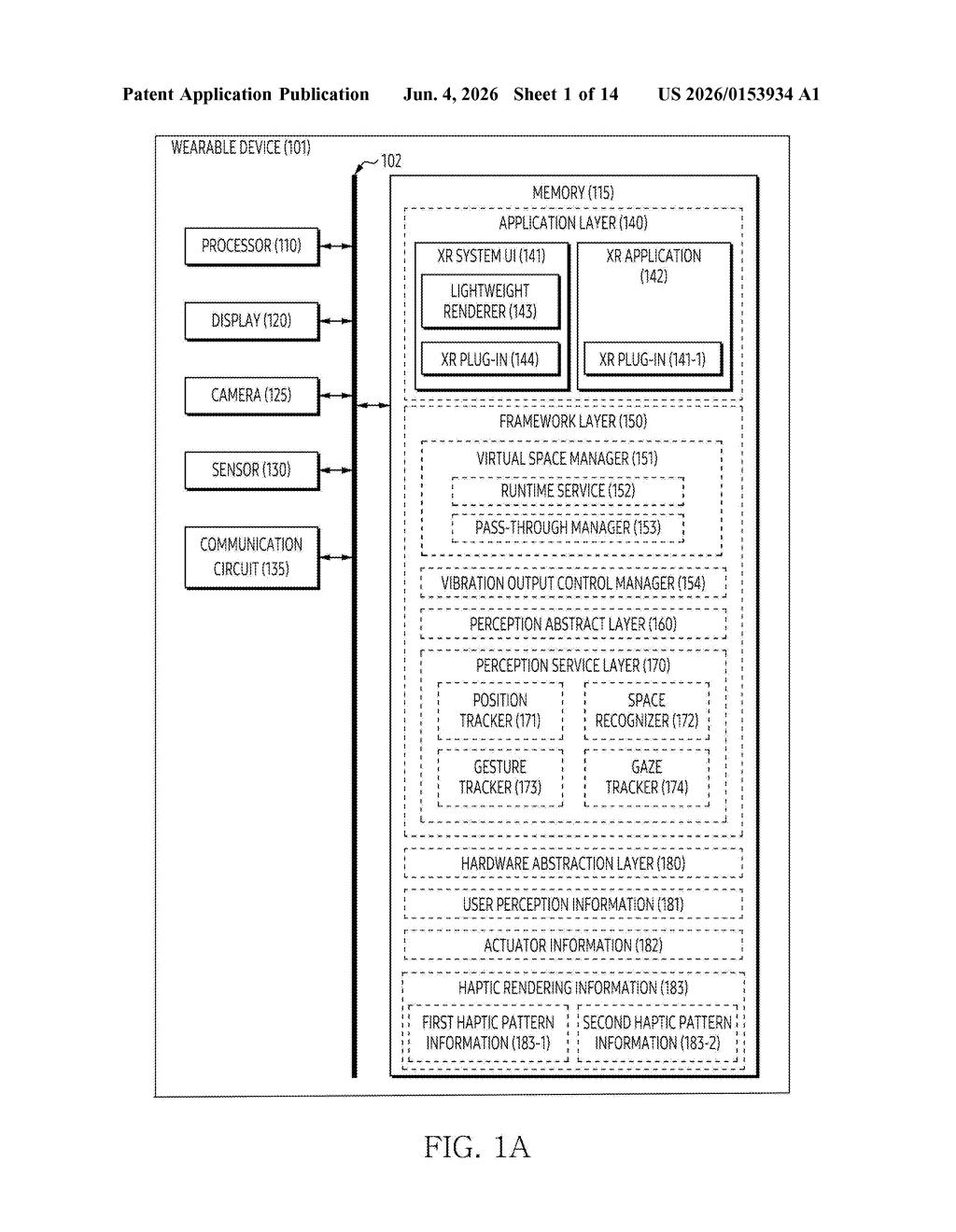
How Samsung's ripple-to-haptics system actually works
Picture dropping a pebble in a pond and watching the ripples spread outward. Now imagine your smartwatch shows that same animation whenever something happens nearby — and your phone, sitting on the desk, actually buzzes at the exact moment the ripple reaches it on the watch display.
That's the core idea here. Samsung's wearable would show a graphic ripple spreading from the spot where an event occurred. The watch calculates how far that spot is from your other connected devices — like a phone or tablet — and uses that distance to figure out when the animated wave would visually arrive at each one. At that precise moment, the device vibrates.
The vibration strength is also scaled by distance: a device that's logically farther from the event source in the visual space gets a softer buzz, mimicking how a real wave loses energy as it travels. The result is a multi-device notification system where what you see and what you feel are synchronized.
How the wearable times and scales each vibration burst
The wearable (a smartwatch is the obvious implementation) does four things in sequence when an event triggers a vibration-worthy notification:
- Displays a spreading graphic effect — a ripple or pulse animation — originating from the event's location on the display.
- Identifies the distance between that origin point and a registered external device (like a phone), treating the display's visual space as a coordinate system where real-world proximity is mapped.
- Calculates the intersection time — the exact moment the expanding graphic wave visually reaches the external device's mapped position.
- Sends a timed haptic command to the external device via wireless communication, instructing its actuator (vibration motor) to fire at that calculated moment, with magnitude scaled inversely to distance.
The key technical claim is the time-point identification: the watch isn't just sending a delayed vibration command, it's deriving the delay mathematically from the distance, so the haptic output stays locked to the visual animation regardless of how devices are spatially arranged. The patent covers the wearable as the controller; external devices are passive actuators that respond to the incoming signal.
What this means for multi-device notification design
Notifications today are either simultaneous across all your devices (annoying) or staggered by simple priority rules (clumsy). Samsung's approach ties the timing and intensity of haptic feedback to a visual metaphor that makes spatial sense — your phone buzzes when the wave reaches it, not just whenever the system decides. That's a more intuitive, less jarring multi-device experience.
For Galaxy ecosystem users — Watch, phone, tablet all paired — this could make coordinated alerts feel designed rather than accidental. It also hints at Samsung thinking about connected devices as a unified sensory environment, not just a list of endpoints to ping.
This is a genuinely clever UX idea hiding inside typically dry patent language. Tying haptic timing to a visual ripple animation is the kind of detail-oriented interaction design that separates a good notification system from a great one — and it's exactly the kind of polished ecosystem trick Samsung needs to differentiate Galaxy from Android competitors.
There are more where this came from
We read every patent application Big Tech publishes and send you the ones worth knowing. Plain English, free, every week.
Want this weekly breakdown for a company we don't cover? Patentlyze Pro →