
X Development Files Patent for an AI That Tells Bioengineers Which Genes to Tweak
X Development, Alphabet's moonshot lab, is patenting an AI system that combines published biology research with a company's private fermentation data to recommend genetic and environmental changes that make microbes produce more of whatever you want them to make.
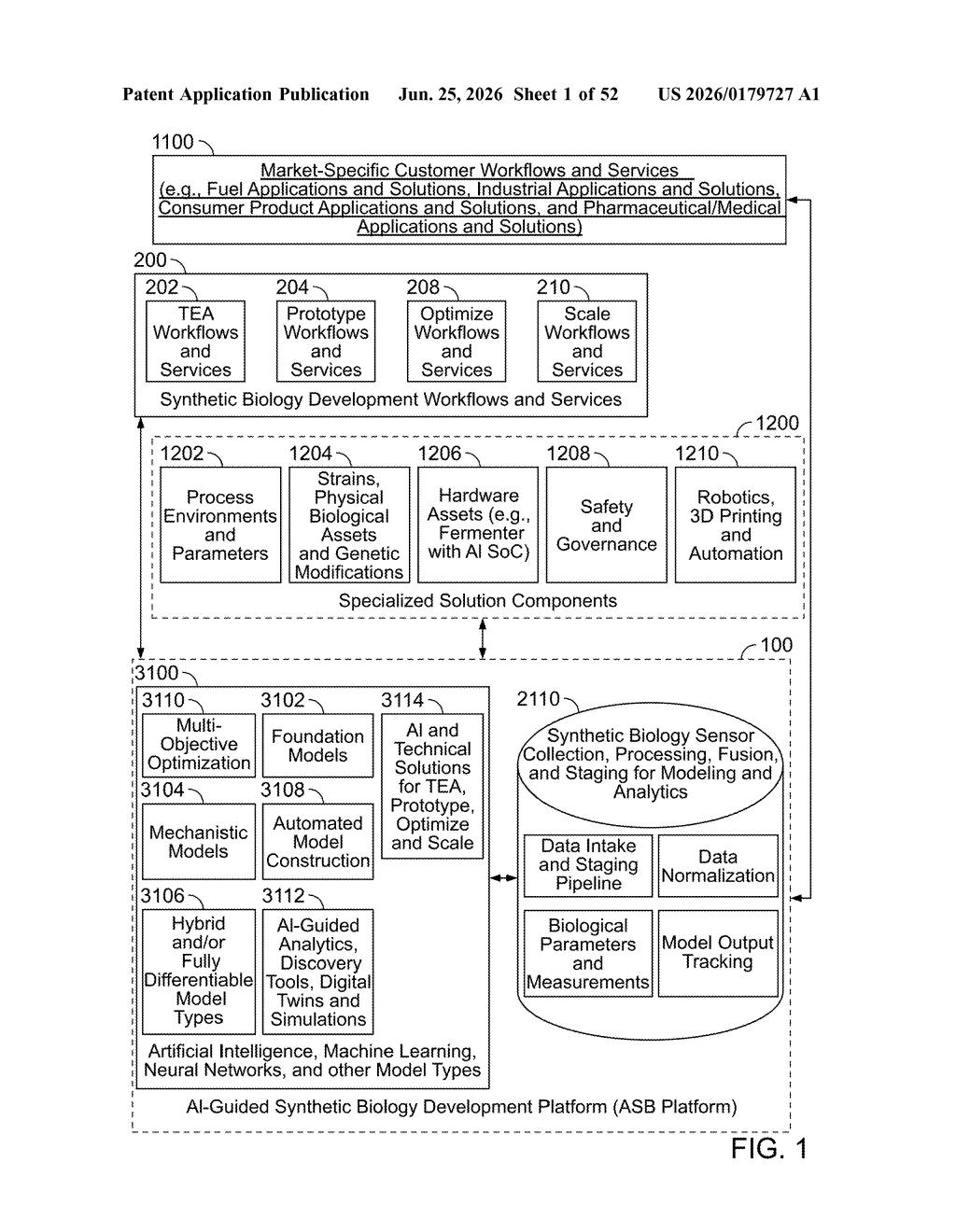
What X Development's AI strain advisor actually does
Imagine you're running a factory where the workers are bacteria or yeast. Your job is to coax them into churning out as much of a target substance as possible, whether that's a protein, a fuel, or a food ingredient. The problem is that figuring out exactly which genetic dials to turn, and which temperature or nutrient conditions to set, requires reading thousands of scientific papers and running hundreds of expensive lab experiments.
X Development's patent describes an AI system that takes both of those sources at once: published scientific literature about a given microbial strain and your own proprietary process data from actual production runs. The system feeds all of that into machine learning models that spit out a ranked list of recommendations.
Those recommendations might tell you to edit a specific gene, adjust a metabolic pathway, swap out an enzyme, or change a temperature setting. The goal is to increase how much of your target product the strain makes, faster and with fewer costly trial-and-error experiments.
How the system merges public research with proprietary lab data
The patent describes a two-part data pipeline feeding into a set of machine learning models.
Data integration layer: The system pulls in two distinct types of information:
- Publication data sets, publicly available scientific literature about the biological strain in question, covering known genetics, metabolic pathways, and enzyme behavior.
- Proprietary data sets, the company's own internal records of process parameters (things like fermentation temperature, nutrient concentrations, timing) and the corresponding production outputs from real runs.
Recommendation engine: Once the integrated data is formatted as model inputs, the machine learning layer generates a set of specific, actionable recommendations. The patent spells out four categories those recommendations can fall into:
- Modifications to genes in the strain.
- Changes to environmental parameters like temperature, pH, or feed rates.
- Adjustments to metabolic pathways (the internal chemical routes a microbe uses to build or break down molecules).
- Changes to specific proteins or enzymes the strain expresses.
The framing is deliberately general. The claim doesn't lock in a specific organism, product, or ML architecture, which means the system is designed as a platform applicable across many different industrial biology contexts.
What this means for AI-driven industrial biology
Industrial biology, the business of engineering microbes to produce chemicals, drugs, fuels, or food ingredients, is already a multi-billion-dollar sector. Its biggest bottleneck is the design-build-test cycle: you hypothesize a change, engineer it into a strain, run a fermentation, and wait days or weeks for results. AI-guided recommendation systems like this one could compress that loop significantly by prioritizing only the changes most likely to work based on all available data.
X Development (formerly Google X) sits inside Alphabet alongside DeepMind, which has already reshaped structural biology with AlphaFold. A patent like this signals that Alphabet is interested in moving further downstream, from predicting protein structures to actively directing how engineered organisms are optimized in production environments. That's a meaningful expansion of scope.
This is a real and interesting patent, not a vague AI placeholder. The explicit combination of public scientific literature with proprietary process data as a unified ML input is a meaningful design choice, one that mirrors what serious biotech AI companies are already building commercially. X Development staking out this territory on the optimization side of synthetic biology is worth watching, even if the claim language is broad enough to cover a lot of ground.
There are more where this came from
We read every patent application Big Tech publishes and send you the ones worth knowing. Plain English, free, every week.
Want this weekly breakdown for a company we don't cover? Patentlyze Pro →