
Zoox Files Patent to Keep Its Robotaxis From All Piling Onto the Same Street
A new Zoox patent application tries to stop a robotaxi fleet from jamming the same curb and the same street after a big event. A central system hands each car slightly different trip details so the cars spread out.
What Zoox's robotaxi traffic-spreading idea does
Every time a concert or ball game lets out, hundreds of people open an app and request a ride within the same few minutes. If every robotaxi in a fleet gets sent to the same curb and down the same street, you end up with a traffic jam made of self-driving cars.
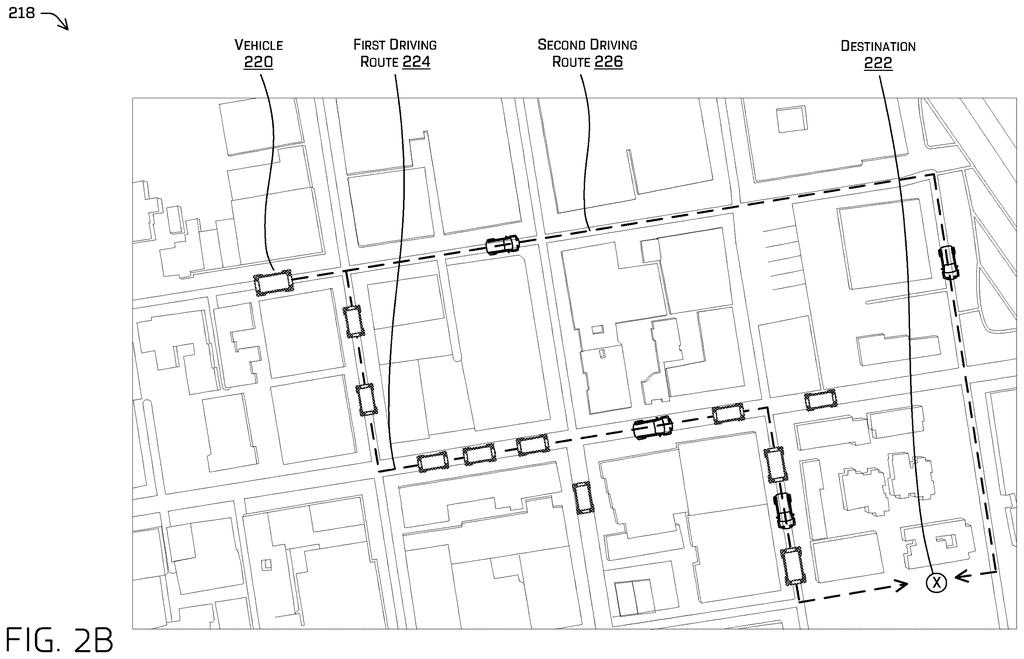
Zoox, the robotaxi company Amazon owns, describes a fix in this patent application. A central system keeps track of where the fleet's cars are already headed and treats crowded spots as costly. When your ride request comes in, it adjusts the trip details before they reach your car: a pickup spot a bit farther away, an extra stop that pulls the car onto a side street, or a zone to avoid.
Your car still plans its own route. It just plans it with the crowd already factored in.
… to influence the vehicles in the fleet to determine driving routes to prevent congestion on roads and at crowded pullover locations, and to improve vehicle safety, efficiency, and traffic distribution.
Translation: The software spreads out the robotaxis to avoid traffic jams and busy pickup zones.
How Zoox's fleet nudges cars onto other streets
The claims describe a central fleet routing system that watches where its cars are going. When one car's route passes through a location, the system gives that spot a cost, a score for how crowded or undesirable it is.
When a new ride is requested, the system rewrites the trip details before they reach the assigned car, attaching the location and its cost. That second car then works out its own route with the cost in mind and drives it. The cost can come from overlapping schedules (two cars due at the same place in the same time window) or from comparing the number of usable lanes at a spot with the number of trips headed there.
The filing lists several ways the trip data can change:
- An extra stop (a waypoint) that pulls a car toward a side street
- A restricted region on the map the car should avoid
- A changed cost on a particular road segment
- A distribution region, a set of near-identical parallel streets the car can pick between
Cars can also report back the route they chose, and the system uses that to update the road's score for future trips. The description gives a simple example: a pullover spot that holds six cars with five already in it, so the sixth car gets sent somewhere else.
What this means for Zoox rides after a big event
If you ride a robotaxi after a game or from an airport, the practical result could be a shorter wait and a pickup point that isn't blocked by the car ahead. The description says riders might be offered a choice: their preferred spot with an estimated delay, or a nearby spot with less delay. It also mentions charging more for a crowded pickup spot and less for an emptier one.
For people living along popular routes, the filing's pitch is that cars rotate across similar parallel streets instead of all taking the same one every trip. It also says varied routes help the fleet collect data on roads it rarely uses. That is useful to a company trying to run many driverless cars in busy cities, and it could apply to a Zoox robotaxi service as it grows.
Amazon's 101st filing in our Amazon coverage since May follows patents like ranking caller topics and a web-browsing voice assistant.
The trade here is control for flexibility. The central system never draws the exact route. It adds a nudge, like an extra stop or a no-go zone, and lets each car work out the rest. That keeps each car adaptable and leaves the planners guessing how the fleet will react, using estimates of how many ordinary cars will also show up at a curb.
The cost lands on two groups. Riders may be offered a pickup spot a few minutes' walk away to save waiting, and the filing even describes charging more for a crowded spot. Neighbors on quiet parallel streets could see a few more robotaxis, since the plan is to share the traffic around.
The trade reads as worth it once a fleet is big enough to clog a venue curb, as long as riders get a clear choice about walking. For a fleet of a few dozen cars, the idea has little to do.
Get our take in your Top Stories
Liked this breakdown? Add Patentlyze as a preferred source on Google, and our plain-English take shows up more often in your Top Stories the next time Amazon patent news breaks.
There are more where this came from
We read every patent application Big Tech publishes and send you the ones worth knowing. Plain English, free, every week.
The drawings
9 drawing sheets from US 2026/0309505 A1 · click any drawing to enlarge


Show the other 1 sheets

Want this weekly breakdown for a company we don't cover? Patentlyze Pro →
Be the first to weigh in