
Nvidia Patents a Way to Stop Rendering Grids From Ruining Realistic Lighting
When a computer renders a realistic 3D scene, it secretly divides space into a grid — and if that grid's edges line up with a wall or floor in the scene, you get subtle but ugly lighting glitches. Nvidia's new patent describes a way to deliberately warp that grid so its edges never align with the surfaces that matter.
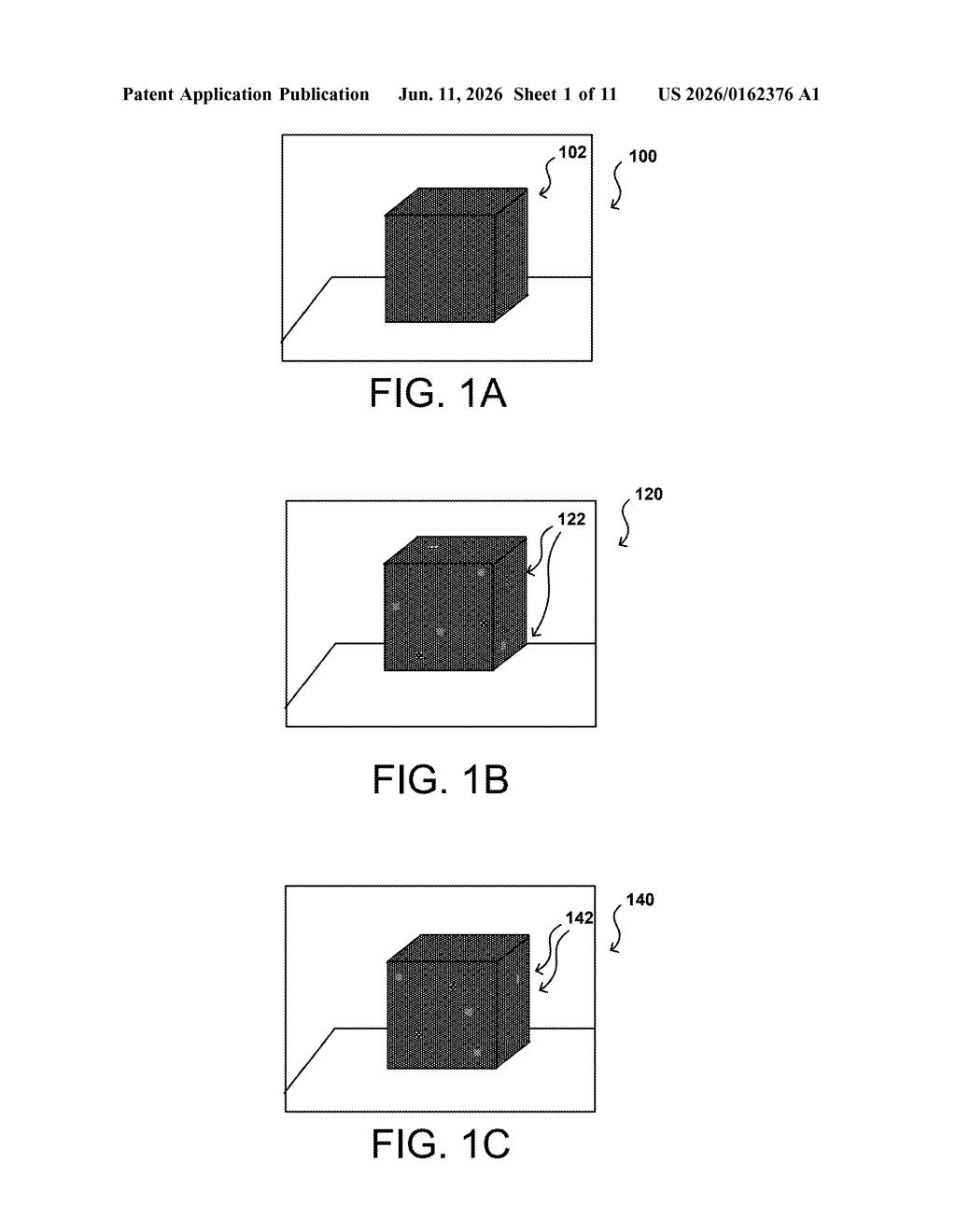
Why Nvidia's lighting grid fix matters for 3D scenes
Imagine a real estate agent dividing a city into delivery zones on a map. If a zone boundary runs exactly down the middle of a building, packages meant for the whole building might get routed to two different warehouses — causing confusion at the seam. Modern 3D graphics engines face the exact same problem when they divide a virtual scene into a grid to calculate how light bounces around.
Nvidia's patent describes a technique for wiggling those grid lines using repeating wave-shaped math functions, so the boundaries between grid cells are deliberately misaligned with walls, floors, and other surfaces in the scene. The wave patterns are chosen carefully so they never accidentally sync back up with the original grid spacing.
The practical result is that light-simulation calculations don't hit awkward seams at the exact spots where they'd be most visible to you. It's a behind-the-scenes fix aimed at making rendered scenes look more consistent and free of subtle artifacts — the kind of thing you'd notice as an odd shadow or a strange lighting patch even if you couldn't explain why.
How periodic functions reshape the hash cell boundaries
The patent tackles a problem in light transport simulation — the process of calculating how light travels, bounces, and fades across surfaces in a 3D environment, used in both real-time games and offline rendering.
To make those calculations tractable, graphics engines divide 3D space into a grid of hash cells (small volumetric buckets that store lighting data). The trouble is that when a cell boundary falls exactly on a scene surface — say, the edge of a wall — the lighting engine must make a discontinuous decision right at that seam, which can produce visible artifacts.
Nvidia's approach applies a set of periodic functions (repeating wave-like math, similar to sine waves) to shift the coordinates of points along each cell boundary. Key details:
- The wavelengths of those functions are intentionally chosen to be non-multiples of the original grid spacing, so the distortion never cycles back into alignment with the base grid.
- Coordinates can be shifted along multiple axes, producing cells with varied, irregular outlines rather than uniform boxes.
- Different cells end up with different shapes, which statistically reduces the chance that any boundary lands on a scene surface.
The system determines the dimensions of neighboring hash cells, defines the shape of their shared boundary using those periodic functions, then modifies the cells accordingly before using them for rendering operations.
What this means for ray tracing and real-time rendering
For real-time ray tracing — the lighting technology Nvidia has pushed hard through its RTX GPU line — subtle grid-alignment artifacts are a known quality floor. A technique that structurally prevents cell boundaries from coinciding with scene geometry could reduce a whole class of visual glitches without requiring artists to manually tune scene layouts around the renderer's grid.
More broadly, this kind of improvement sits inside the rendering pipeline where you as a player or viewer would never see the mechanism — only the cleaner result. If it ships in a future driver or game engine integration, the benefit would be quieter shadows and more consistent indirect lighting, particularly in scenes with lots of flat surfaces like architectural interiors or urban environments.
This is a focused, technically specific patent targeting a real and well-documented pain point in grid-based light transport — it's not hype. The periodic-function approach is clever precisely because it's parameter-free in the sense that artists don't have to do anything differently. Whether it meaningfully outperforms existing hash-grid jitter schemes will be the real test, but the underlying problem is genuine and the approach is concrete.
There are more where this came from
We read every patent application Big Tech publishes and send you the ones worth knowing. Plain English, free, every week.
Want this weekly breakdown for a company we don't cover? Patentlyze Pro →