
Samsung Display Patents a Single Control System for Mixed Factory Robot Fleets
Running a display factory means juggling overhead rail carriers, ground-level robots, and conveyor systems that often can't talk to each other. Samsung Display's new patent describes a single controller that manages all of them at once.
What Samsung's unified factory transport system actually does
Imagine a massive warehouse where some packages are carried by ceiling-mounted rail cars and others are moved by ground robots — but neither system knows what the other is doing. Someone has to manually coordinate handoffs, and when things go wrong, it's hard to tell where a package got stuck.
That's roughly the challenge inside a display-panel factory, where fragile components travel along several different types of automated routes. Samsung Display's patent describes a setup where one unified controller oversees all the different transport machines — regardless of their type — while cameras placed along every route feed it a live picture of what's happening on the floor.
The idea is that when a central system issues a "move this cargo" command, the integrated controller figures out which machines handle which legs of the journey and keeps them in sync. You get one point of coordination instead of several siloed systems trying to talk to each other.
How the integrated controller ties two transport types together
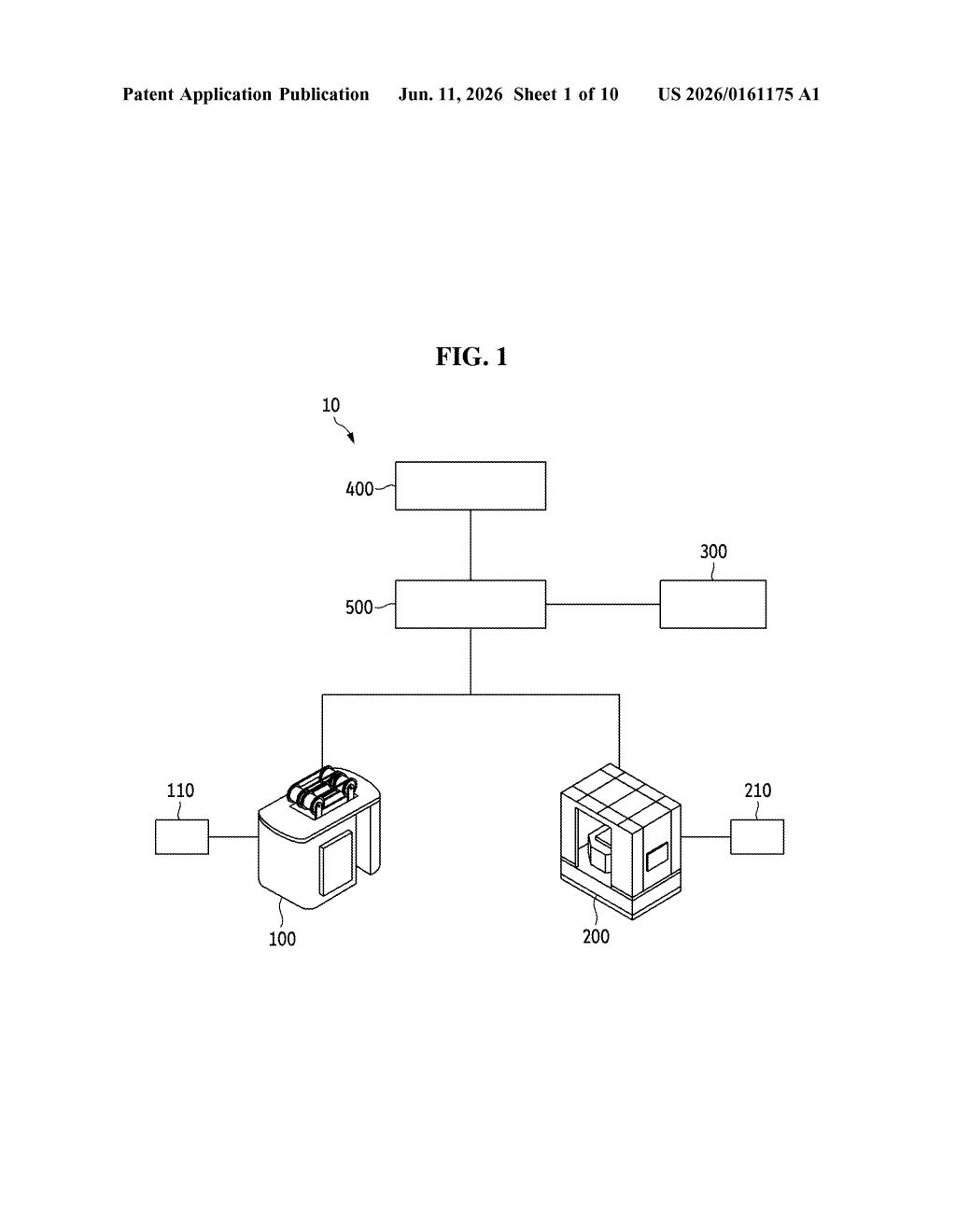
The patent describes an automatic transport system made up of at least two distinct types of transport equipment — each running along its own dedicated path — plus a camera network, a host controller, and an integrated controller.
- First and second transport equipment: Two mechanically different systems (for example, an overhead rail carrier and a ground-level automated vehicle) each responsible for a different segment of the cargo's journey.
- Camera network: One or more cameras placed along both paths to capture real-time images of what's happening on each route — giving the system visibility into the physical state of the factory floor.
- Host controller: The high-level system that issues transport commands (essentially saying "get this item from A to B").
- Integrated controller: The key piece — a single control layer that translates the host's commands into specific instructions for each transport type and keeps both systems coordinated.
The core claim is that one controller can span heterogeneous (meaning different-type) equipment, rather than requiring each machine type to have its own separate management system. The camera feeds presumably help the integrated controller detect blockages, verify handoffs, or confirm cargo position.
What this means for display manufacturing efficiency
Display panel manufacturing — the kind Samsung Display does at enormous scale — depends on moving ultra-thin glass and components through highly precise, multi-stage factory lines. Any coordination gap between transport systems can cause delays, damage, or quality failures that are expensive to fix. A unified control layer reduces the number of system boundaries where things can go wrong.
More broadly, mixed-fleet automation is a real pain point in any large factory. Most industrial facilities have accumulated different generations of transport equipment that weren't designed to work together. A patent like this points toward Samsung Display investing in the software glue that makes heterogeneous fleets behave like a single system — which matters as factories push toward higher automation density.
This is unglamorous factory-floor infrastructure work, and it's pretty clearly aimed at Samsung Display's internal manufacturing operations rather than any consumer product. The patent is narrow and functional — it's not a dramatic technology bet, it's the kind of careful systems engineering that keeps a high-volume display factory running smoothly. Worth noting, but don't expect headlines.
There are more where this came from
We read every patent application Big Tech publishes and send you the ones worth knowing. Plain English, free, every week.
Want this weekly breakdown for a company we don't cover? Patentlyze Pro →