
Intel Patents a 5G Security System That Controls Which Apps Can Access Your Connected Devices
Your smart thermostat, fitness tracker, and security camera all share a personal network — but who decides which apps get to talk to them? Intel's latest patent tackles that exact problem for 5G-connected IoT setups.
What Intel's personal IoT network access control actually does
Imagine your home has a private bubble of connected devices — your smartwatch, door lock, and temperature sensors — all humming along on 5G. Now imagine an app on your phone wants to read data from one of those devices. How does the network know whether to let it in? Right now, that answer is often fuzzy.
Intel's patent describes a structured gatekeeper system for exactly this situation. Each personal IoT network gets a unique ID, and any app that wants access has to prove it's authorized using a standard security token (similar to how you log into a website using "Sign in with Google"). A dedicated network function checks the token, confirms the app's identity, and then asks the IoT network's own manager component for final approval.
The key idea is that trust is tiered — how much access an app gets depends on how much the mobile carrier trusts that app in the first place. It's a layered permission model, not a simple yes-or-no door.
How the PIN ID token system gates app access in 5G
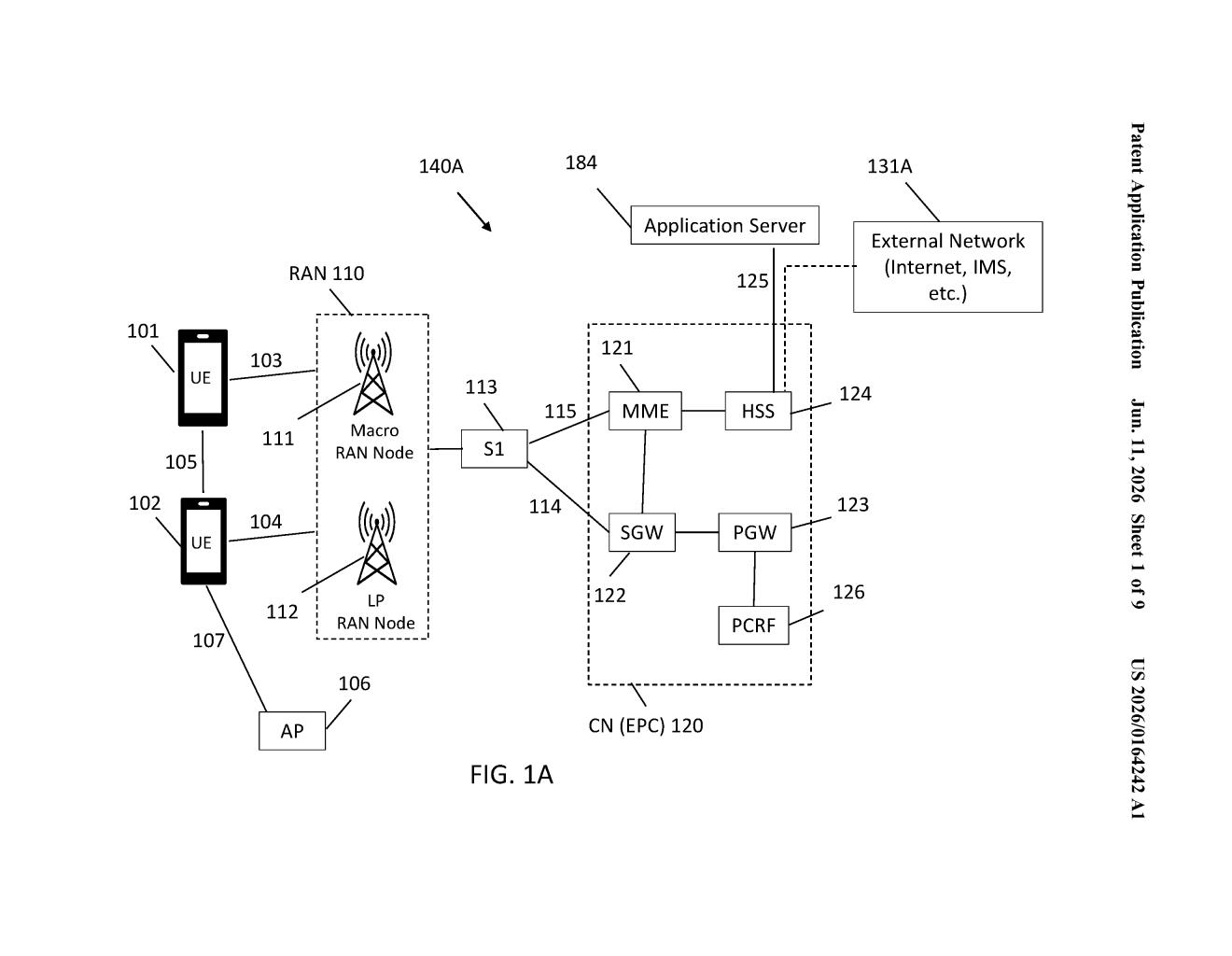
The patent centers on a piece of 5G network infrastructure called the Network Exposure Function (NEF) — essentially the official gateway through which outside apps are allowed to interact with the core mobile network.
When an app (called an Application Function, or AF) wants to reach a device inside someone's Personal IoT Network (PIN), it sends a request to the NEF carrying an OAuth token (a digitally signed credential, similar to the access badges used in corporate IT). The NEF then:
- Verifies the token is valid and hasn't expired
- Checks that the app's ID is on the approved list for this type of resource
- Looks up the unique PIN ID — a network-level identifier for the personal IoT cluster — based on how much the carrier trusts that app
- Forwards a secondary access request to the PIN Element with Management Capability (PEMC), a designated device inside the IoT network that acts as its local manager
The PIN ID itself is created when the network is first set up or when a new device joins, and it's stored in a central User Data Repository (UDR) — the 5G network's authoritative database — so every lookup is consistent and auditable.
What this means for connected-home and wearable security
As 5G becomes the backbone for personal wearable and smart-home device clusters, the question of who controls access becomes genuinely consequential. Today, most consumer IoT security is app-level and inconsistent. A standardized, carrier-enforced permission layer — built into the 5G core itself — would make it much harder for a rogue or compromised app to silently reach your devices.
For you as a user, this kind of architecture could mean your carrier actively enforces which third-party apps can interact with your health sensors or home devices, not just the device manufacturer. That's a meaningful shift in where the security perimeter sits — and it aligns with how enterprise IT security has worked for years, now applied to personal networks.
This is unglamorous but genuinely important infrastructure work. The IoT security problem is real, and applying enterprise-style OAuth and tiered trust to personal 5G device clusters is a sensible architectural answer. Whether this ends up in a 5G standard or stays proprietary to Intel's network silicon roadmap will determine whether it actually changes anything.
There are more where this came from
We read every patent application Big Tech publishes and send you the ones worth knowing. Plain English, free, every week.
Want this weekly breakdown for a company we don't cover? Patentlyze Pro →