
Intel Patents a Chip Memory That Learns From Its Own Prediction Errors
Every modern processor constantly guesses which code path to run next — and when it guesses wrong, it pays a steep penalty. Intel's new patent describes a dedicated cache that remembers those wrong guesses, so recovering from them the second time around costs far less.
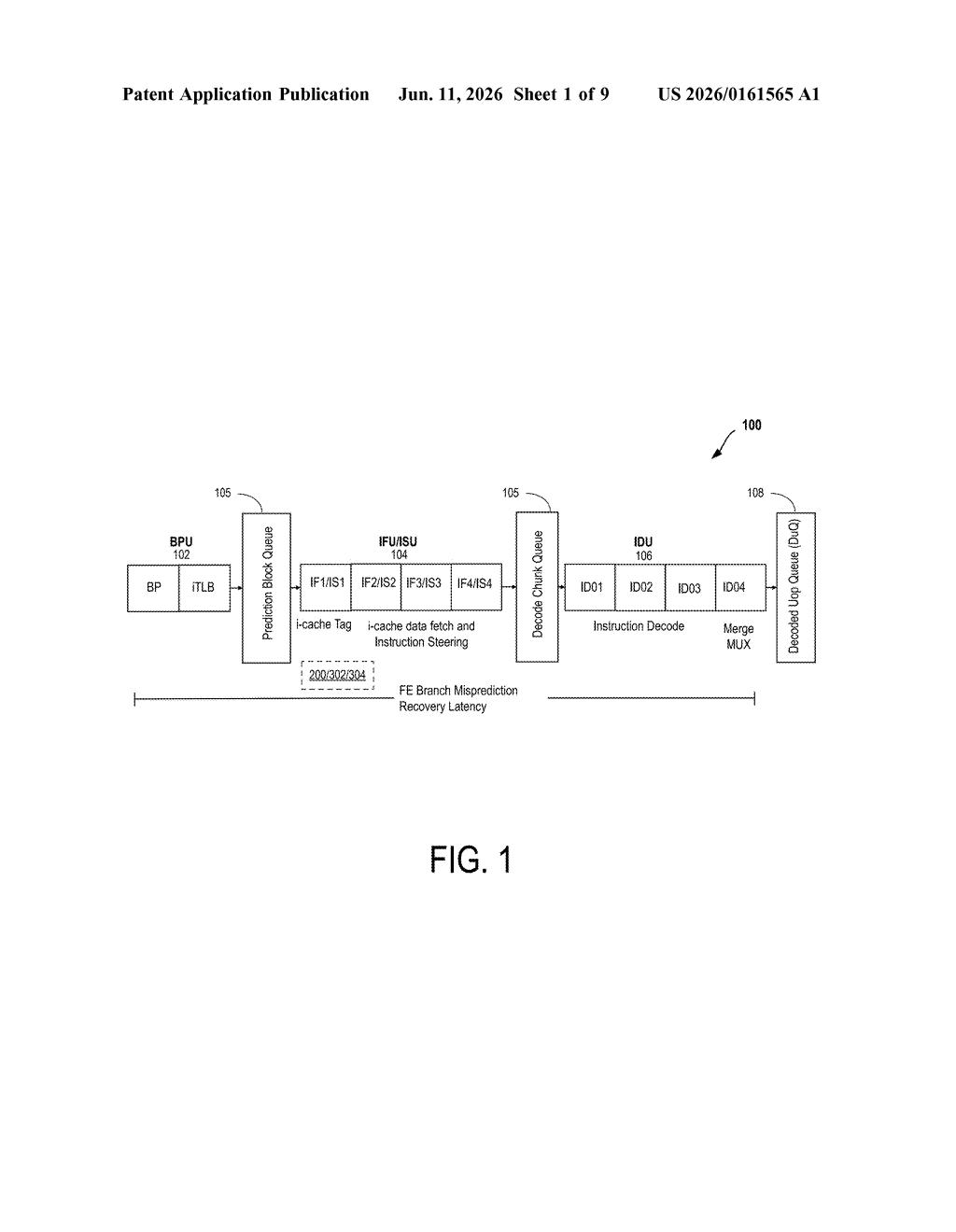
What Intel's branch-mistake memory actually does
Imagine driving to a destination and taking a wrong turn. The first time it happens, you have to stop, check your map, and figure out how to get back on track — that takes real time. But if you take the same wrong turn again next week, you already know exactly what to do. Intel's new patent applies that same logic to processors.
Modern chips are constantly predicting which instructions to run next. When a prediction is wrong — called a "branch misprediction" — the processor has to throw out the work it already started and scramble to recover. That recovery process is slow and wastes energy.
Intel's idea is to add a small dedicated memory called a Recovery Path Cache that stores everything the processor needed last time it made that same mistake. The next time it mispredicts the exact same branch, it can skip the scramble entirely and pull the recovery information straight from the cache — like already knowing the right route after that first wrong turn.
How the Recovery Path Cache stores and replays mispredictions
The Recovery Path Cache (RPC) is a small, dedicated hardware structure inside the processor that sits alongside the existing branch prediction machinery.
When the processor mispredicts a branch (meaning it started executing the wrong set of instructions), it normally has to flush the bad work from its pipeline and go back to fetch the correct instructions — a process that can cost dozens of clock cycles. The RPC intercepts this recovery process and records the information needed to perform it, keyed to the identity of the branch that caused the problem.
The next time that same branch is mispredicted, the processor's logic circuitry checks the RPC first. If there's a matching entry — a "hit" — it supplies the cached recovery data directly to the next stage of the processor pipeline, bypassing or accelerating the usual recovery sequence.
The patent's independent claim is broad: it covers any processor that includes an RPC structure and the logic to search it on a misprediction and forward stored data downstream. The specific format of the stored information and the definition of "next stage" are left flexible, which keeps Intel's design options open.
What this means for processor pipeline efficiency
Branch mispredictions are one of the most persistent performance drains in modern out-of-order processors. Anything that shortens recovery time directly improves throughput for workloads with unpredictable code — think database engines, JavaScript runtimes, or game logic, where branches are plentiful and hard to predict reliably.
For Intel, this kind of incremental pipeline optimization is core business. It doesn't require a new manufacturing process or a new instruction set — just smarter use of the silicon already inside the chip. If the RPC concept makes it into a shipping product, you'd likely never see it listed on a spec sheet, but it would quietly contribute to the per-core performance gains Intel publishes with each new microarchitecture generation.
This is unglamorous but real processor engineering. Branch misprediction penalties have been a known bottleneck for decades, and caching recovery paths is a sensible, targeted attack on the problem. It won't make headlines outside of microarchitecture forums, but the kind of cumulative optimizations like this are exactly what separates competitive CPU designs.
There are more where this came from
We read every patent application Big Tech publishes and send you the ones worth knowing. Plain English, free, every week.
Want this weekly breakdown for a company we don't cover? Patentlyze Pro →