
Microsoft Patents a Hardware Trick That Skips Unnecessary Math in AI Models
Every time an AI model processes information, it does an enormous amount of multiplication, much of it involving zeros or near-zero values that barely change the answer. Microsoft's new patent describes a hardware system that spots those throwaway numbers in advance and simply skips them.
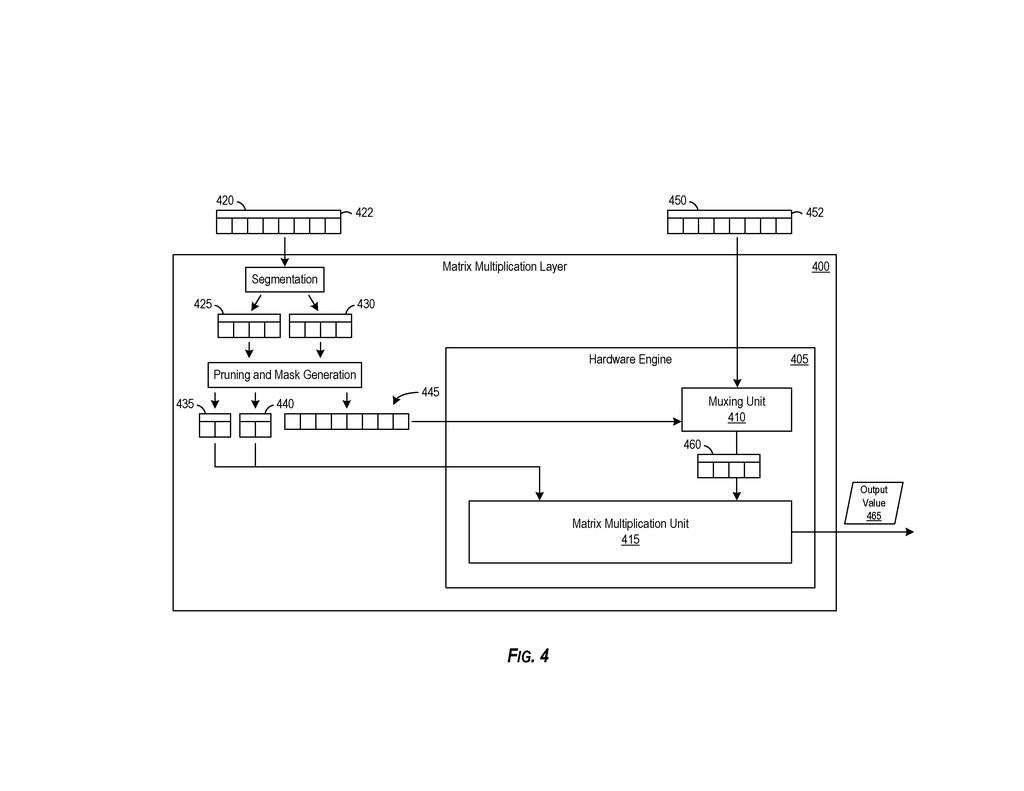
What Microsoft's neural network pruning system actually does
Imagine you're calculating a restaurant bill, but someone already knows that six of the ten items cost exactly zero dollars. You'd skip those lines entirely and only add up the ones that matter. Microsoft's patent applies that same idea to the math inside AI models.
Neural networks run on millions of tiny multiplications called matrix operations. A lot of the numbers involved are so small they're effectively zero, and multiplying by zero is pointless. This system generates a kind of checklist (called a mask) that marks which numbers on both sides of each multiplication are worth keeping. Only the survivors go to the actual math chip.
The result is that the hardware does less work per calculation, which can translate into faster AI processing or lower power consumption. That matters whether you're running a model in a data center or on a device in your hands.
How the alignment mask cuts weight and activation vectors
The patent describes a hardware pipeline with three cooperating pieces:
- Sparsification unit: Takes the model's weight values (the learned numbers that define what the neural network knows) and applies a pruning pass, flagging the lowest-value weights as expendable and generating a bit mask that records which ones survived.
- Muxing unit: Receives the network's activation values (the live data flowing through the model during inference) and uses the same mask logic to discard activations that correspond to pruned weights. A second bit mask covers the activation side, and both masks are combined into a single alignment mask via element-by-element multiplication.
- Matrix multiplication unit: Only ever sees the condensed, pruned vectors. Because both weight and activation vectors are shorter, fewer multiply-accumulate operations are needed to produce each output.
The key insight is that pruning both vectors using a shared alignment mask ensures the math still comes out correct: if a weight is gone, its paired activation is also dropped, so no information is lost in the final dot-product result.
The claim specifically targets narrow data formats (low-bit-width number representations common in modern AI accelerators), where sparsity is harder to exploit than in full 32-bit floating point. Getting sparsity to work well at low precision is a known challenge, and this is Microsoft's proposed hardware answer.
What faster, leaner AI math means for Microsoft's hardware bets
AI inference is already one of the largest and fastest-growing electricity consumers in cloud computing. Any technique that lets hardware do the same job with fewer operations directly reduces cost and energy use at scale. Microsoft operates one of the world's largest AI infrastructure deployments, and a hardware-level pruning system like this could be built into custom silicon, FPGAs, or AI accelerators.
For on-device AI, the benefits are even sharper: a phone or PC chip that skips redundant math can run models faster on a smaller battery budget. The patent names several Microsoft researchers who work on hardware acceleration and custom chips, suggesting this is aimed at real silicon design rather than a theoretical exercise.
This is a serious, specific piece of AI hardware engineering, not a high-concept AI feature patent. The problem it solves (exploiting sparsity in low-bit-width formats) is a real bottleneck that the chip industry has been wrestling with, and Microsoft's named inventors have track records in silicon and AI accelerator research. It won't make headlines the way a new Copilot feature does, but it's the kind of foundational work that makes everything else faster.
There are more where this came from
We read every patent application Big Tech publishes and send you the ones worth knowing. Plain English, free, every week.
The drawings
9 drawing sheets from US 2026/0220461 A1 · click any drawing to enlarge


Want this weekly breakdown for a company we don't cover? Patentlyze Pro →