
Google's New Patent Hides Your Real Identity Every Time a Website Asks for It
Every time you hand your email to a news site to read an article, that publisher can potentially link your identity to ad networks and data brokers. Google's new patent describes a system that intercepts that moment and replaces your real identity with a cryptographically scrambled token — one that looks different to every platform that sees it.
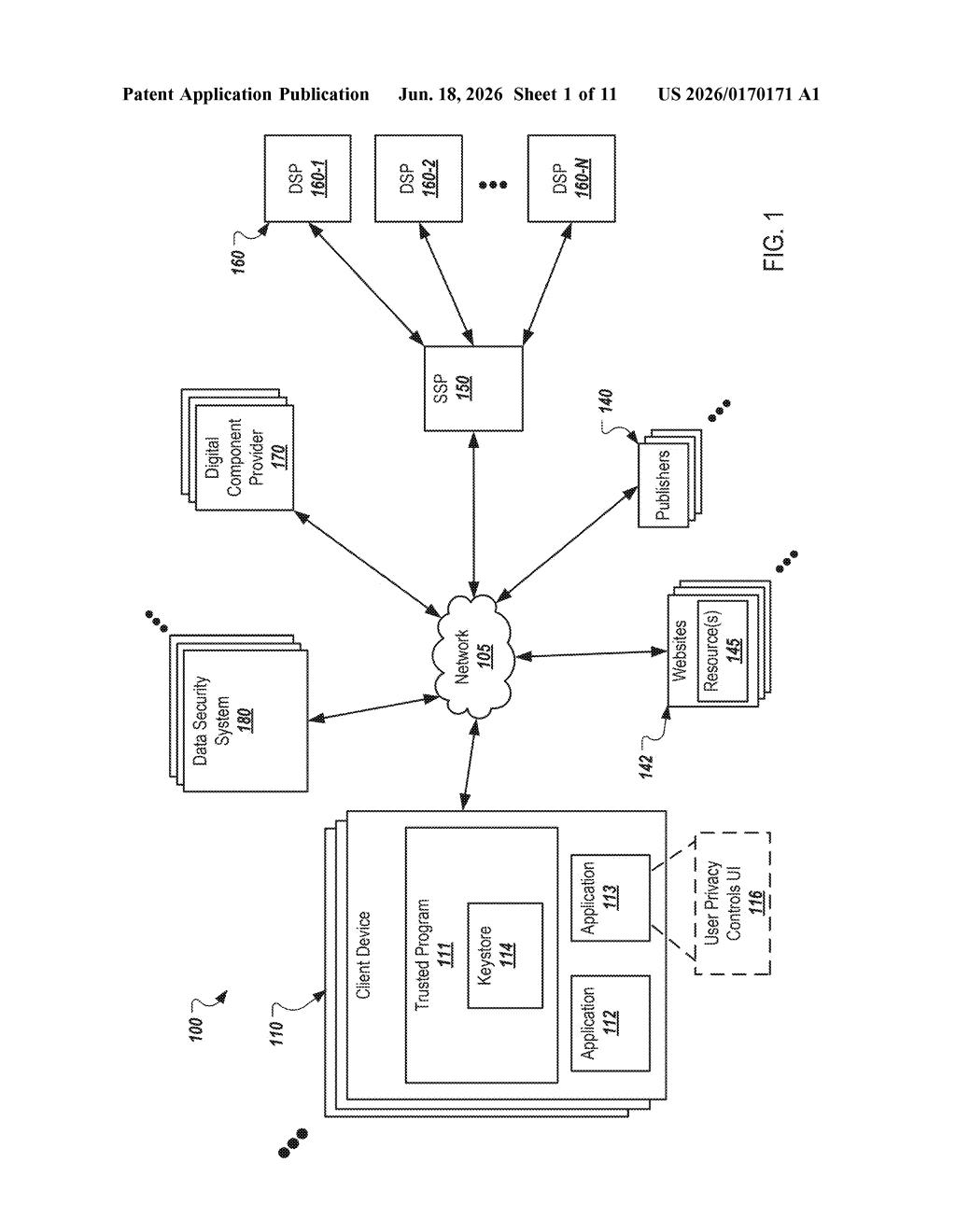
How Google's subscription token hides who you are
Imagine subscribing to your local newspaper online. You type in your email address, and the newspaper now knows who you are. They can share that with ad companies, data brokers, and anyone else they partner with. That's been the quiet trade-off of the internet for years.
Google's patent describes a way to break that chain. Instead of passing your real email or identity around, a middleman system (Google's "data security system") generates a special token — a kind of scrambled stand-in for you. Your real identity is encrypted so the publisher can't read it directly, and each advertising platform gets its own separate encrypted version that only that platform can decode.
The result is that no single company outside of the security system itself ever sees the full picture of who you are. The publisher knows you subscribed; the ad platform knows you're a real person; but neither can easily hand your raw identity to someone else.
How the token encodes separate IDs for each platform
When a user subscribes to a publisher's content, the publisher sends that user's identification information — typically an email address — to Google's data security system with a request for a subscription token.
The security system then does two things in parallel:
- It encrypts the user's identifier using its own private encryption key, producing a first encrypted ID that only Google's system can reverse.
- For each content platform (think ad networks or measurement services) attached to the publisher, it encrypts a second version of the user's identifier using that specific platform's encryption key — so each platform gets a ciphertext only it can decode.
All of these encrypted IDs are bundled into a single subscription token and sent back to the publisher. The publisher can pass the token along to platforms, but since each platform's piece is encrypted with that platform's own key, cross-platform linkage is structurally blocked — no party can combine the pieces to reconstruct the original identity without going back through the security system.
The architecture is essentially a privacy-preserving credential: it proves a user is real and subscribed without exposing the raw personal data to any downstream recipient.
What this means for user privacy across the open web
Publisher login data is one of the most valuable — and least regulated — pipelines for tracking people across the web. When you "subscribe with email," that email can flow to dozens of ad-tech vendors. Google's approach would let publishers authenticate real users to their ad partners without actually handing over the underlying identity. That's a meaningful structural change for privacy, not just a policy promise.
For you as a reader, this could mean your subscription to a news site no longer quietly becomes a tracking anchor across every site that shares the same ad network. For publishers and ad platforms, it shifts the architecture so that identity matching has to go through a privacy layer — which, notably, Google would control.
This is one of the more substantive privacy patents Google has filed in recent years — it's not just an incremental tweak but a real architectural approach to breaking the identity-sharing chain that underlies most ad-tech tracking. The catch is obvious: Google positioning itself as the trusted encryption middleman between publishers and ad platforms concentrates a lot of power in Google's hands. Worth watching closely as it relates to Google's Privacy Sandbox efforts.
There are more where this came from
We read every patent application Big Tech publishes and send you the ones worth knowing. Plain English, free, every week.
Want this weekly breakdown for a company we don't cover? Patentlyze Pro →