
Google Patents an AI That Catches You Up on What Changed in Shared Docs
You open a shared Google Doc after a long weekend and it's covered in edits. Google's new patent describes an AI that reads all those changes and hands you a plain-English summary instead of making you dig through revision history yourself.
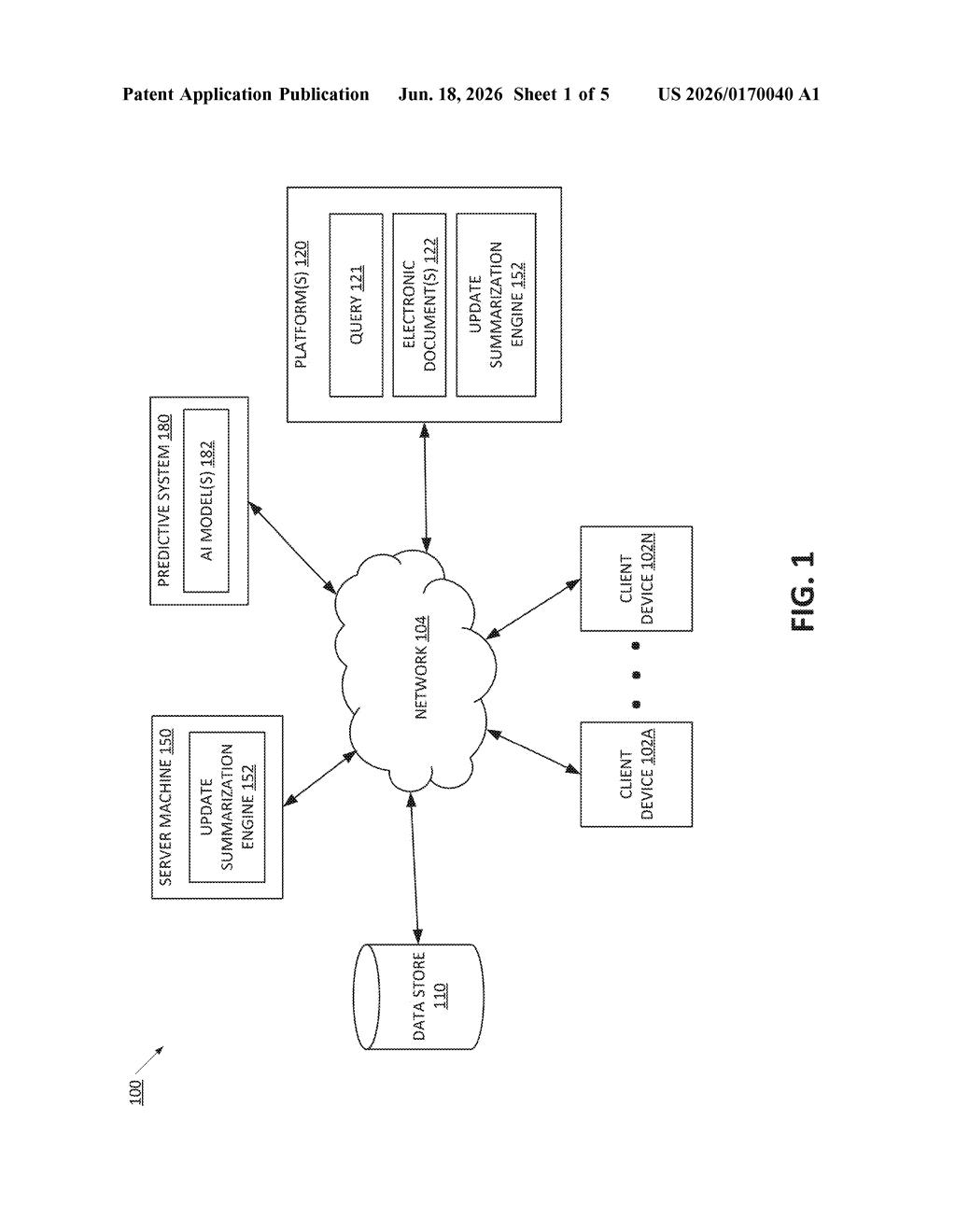
What Google's document-update AI actually does for you
Imagine opening a shared work document after a few days away and finding dozens of edits from your colleagues. Right now, you'd have to click through version history, scan highlighted changes, and piece together what actually shifted. Google's patent describes a system that does that reading for you.
The core idea is straightforward: you ask for a summary of what changed in a document (or a set of documents), and an AI model looks at only the parts that were edited during a relevant time window — not the whole thing — then writes up a plain description of those changes.
The time window is the clever part. The system figures out which period matters based on rules or context — your last visit, a deadline, a specific date range — so it's not summarizing edits from six months ago when you only care about this week.
How the system picks which edits to feed the AI model
The patent describes a pipeline with a few distinct steps:
- Request intake: A user asks for a summary of recent changes to one or more documents.
- Time window calculation: The system determines a relevant time range — called an update time window — using one or more criteria. This could be based on when the user last opened the document, a user-specified date, or some other rule.
- Selective extraction: Rather than feeding the entire document into an AI model, the system identifies only the portions that changed during that window. This is where the patent's mention of 'caching inputs' becomes relevant — by scoping what goes into the model, the system avoids reprocessing unchanged content every time.
- AI summarization: Those extracted edits, along with their surrounding context, are passed to an AI model, which generates a natural-language summary of what was updated.
The output is then returned to whoever made the request. The patent covers both a single document and sets of documents, suggesting the system could handle something like a shared project folder where multiple files are being edited simultaneously.
What this could mean for Google Docs and Workspace users
For anyone who works in Google Workspace — Docs, Sheets, Slides — this is a direct quality-of-life fix for one of the most tedious parts of collaborative work. Catching up on what changed in a busy document currently requires manual effort, and the bigger the team, the worse it gets. An AI that scopes itself to only the relevant edits, rather than summarizing the whole file, is faster and more useful.
Strategically, this fits Google's broader push to embed AI into Workspace through its Gemini features. The selective, time-windowed approach also matters for efficiency — processing only the changed portions keeps the system lean enough to run on large documents without blowing through compute resources.
This is a genuinely practical patent, not a moonshot. The specific insight — scope the AI to a time-windowed slice of edits, not the whole document — is the kind of engineering detail that makes the difference between a feature that works and one that's too slow or too vague to bother with. If this ships into Google Docs, most people will use it without thinking twice about the patent behind it.
There are more where this came from
We read every patent application Big Tech publishes and send you the ones worth knowing. Plain English, free, every week.
Want this weekly breakdown for a company we don't cover? Patentlyze Pro →