
Google Patents a System That Turns Documents Into Natural-Sounding Audio
Google has filed a patent for a system that reads a pile of documents and generates audio that sounds like a real conversation — not a robot reading bullet points. The filing specifically calls out problems with previous AI audio tools: preachy tones, excessive flattery, awkward transitions, and monotone delivery.
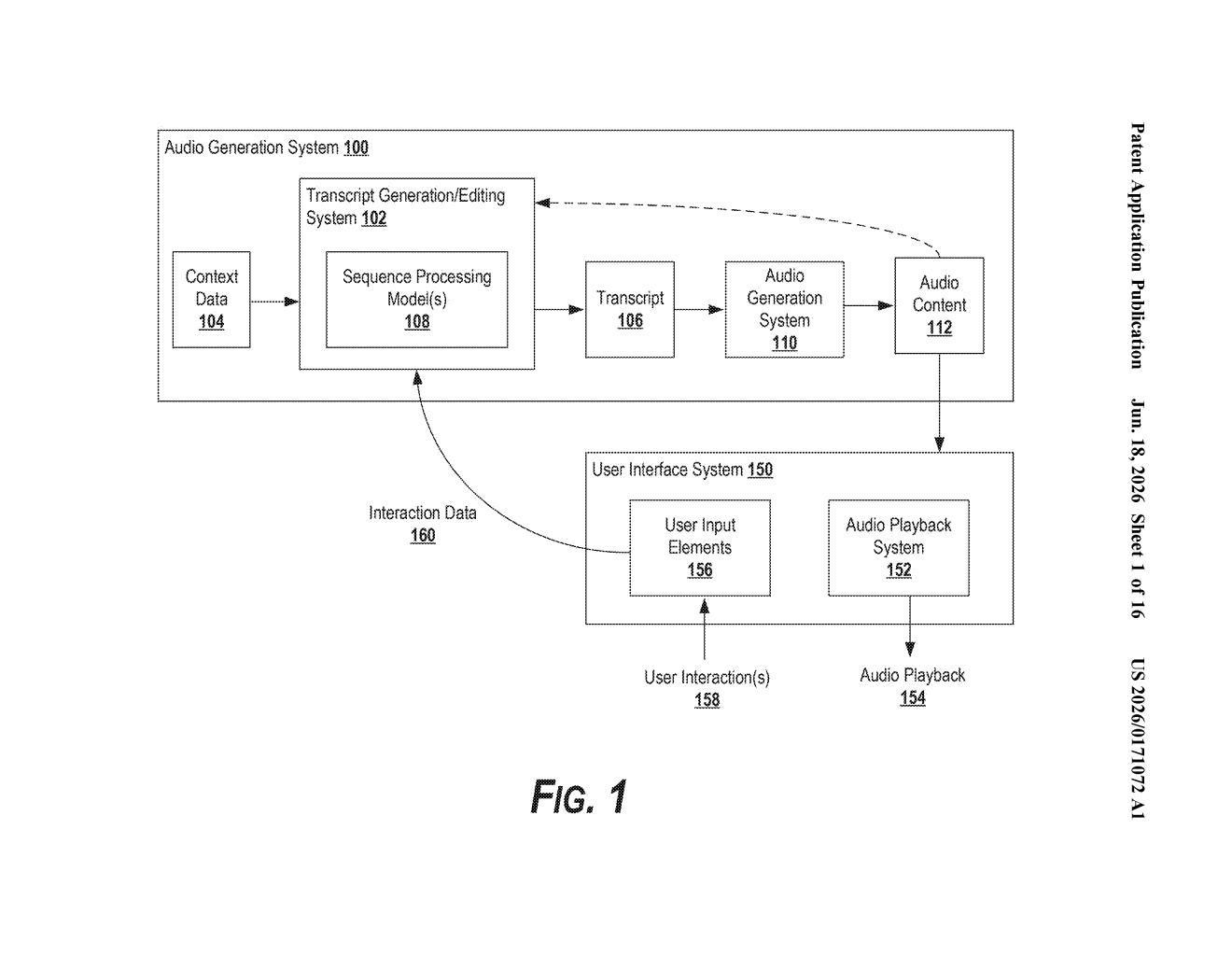
What Google's document-to-audio system actually does
Imagine you upload a long research report or a set of meeting notes and, instead of reading it yourself, you hit play and hear two people discussing the highlights in a natural back-and-forth. That's the core idea here.
Google's patent describes a system that takes any batch of text or data — what it calls "context data" — feeds it through an AI model, and produces a spoken audio conversation. The key claim is that it tackles the specific reasons earlier AI audio tools sounded weird: they were too formal, too flattering, or just droning and robotic.
The system first builds a written transcript that covers the main topics in your source material, then converts that transcript into actual speech audio and hands it back for playback. Think of it as an automated producer turning your documents into a podcast episode — without a human ever touching a microphone.
How Google's model builds a transcript from raw context data
The patent describes a pipeline with three main stages.
- Context ingestion: The system takes in a "corpus of context data" — this could be documents, articles, structured data, or other text sources — as raw input.
- Transcript generation: One or more machine-learned sequence processing models (think large language models, or LLMs — AI systems trained to read and write text) process that input and produce a written transcript. The transcript is designed to cover the key topics in the source material, not just summarize it robotically.
- Audio rendering: The transcript is converted into speech audio using a text-to-speech component, then made available for playback.
The filing's most interesting technical claim isn't the pipeline itself — it's that the system is specifically engineered to avoid common failure modes of earlier AI audio generators. Google enumerates these directly: preachy tones, excessive flattery, awkward transitions, monotone delivery, and limited conversation length. Those are unusually candid admissions about the state of AI-generated audio.
The patent doesn't detail exactly how the model avoids those problems (that may be in continuation filings), but the framing suggests training-level interventions — meaning the models were likely fine-tuned on examples of natural-sounding dialogue rather than just generic text generation.
What this means for AI-generated podcasts and audio tools
Google already ships a feature in NotebookLM — called Audio Overviews — that turns uploaded documents into AI-generated podcast-style conversations between two hosts. This patent reads as the formal IP claim behind that capability, or at least a close relative of it. The system described here maps almost exactly onto what NotebookLM Audio Overviews does in practice.
For you as a user, the practical implication is that this kind of tool could spread beyond NotebookLM into Google Docs, Drive, or Search — anywhere you have a document you'd rather listen to than read. For competitors building similar tools, this filing signals that Google is moving to lock down the core pipeline.
This is almost certainly the patent foundation for NotebookLM's Audio Overviews feature, which has genuinely impressed users since its launch. The filing is notable not for a surprising technical invention — the pipeline is fairly standard — but for the unusually honest list of AI audio problems Google says it solved. That specificity suggests real engineering work went into the training process, even if the patent doesn't fully expose it.
There are more where this came from
We read every patent application Big Tech publishes and send you the ones worth knowing. Plain English, free, every week.
Want this weekly breakdown for a company we don't cover? Patentlyze Pro →