
Microsoft Patents a Touch Screen That Cancels Its Own Interference for Cleaner Taps
Every touch screen has a dirty little secret: the display layer underneath the glass creates electrical interference that makes the touch sensor's job harder. Microsoft has a patent for a way to measure and cancel that interference in real time.
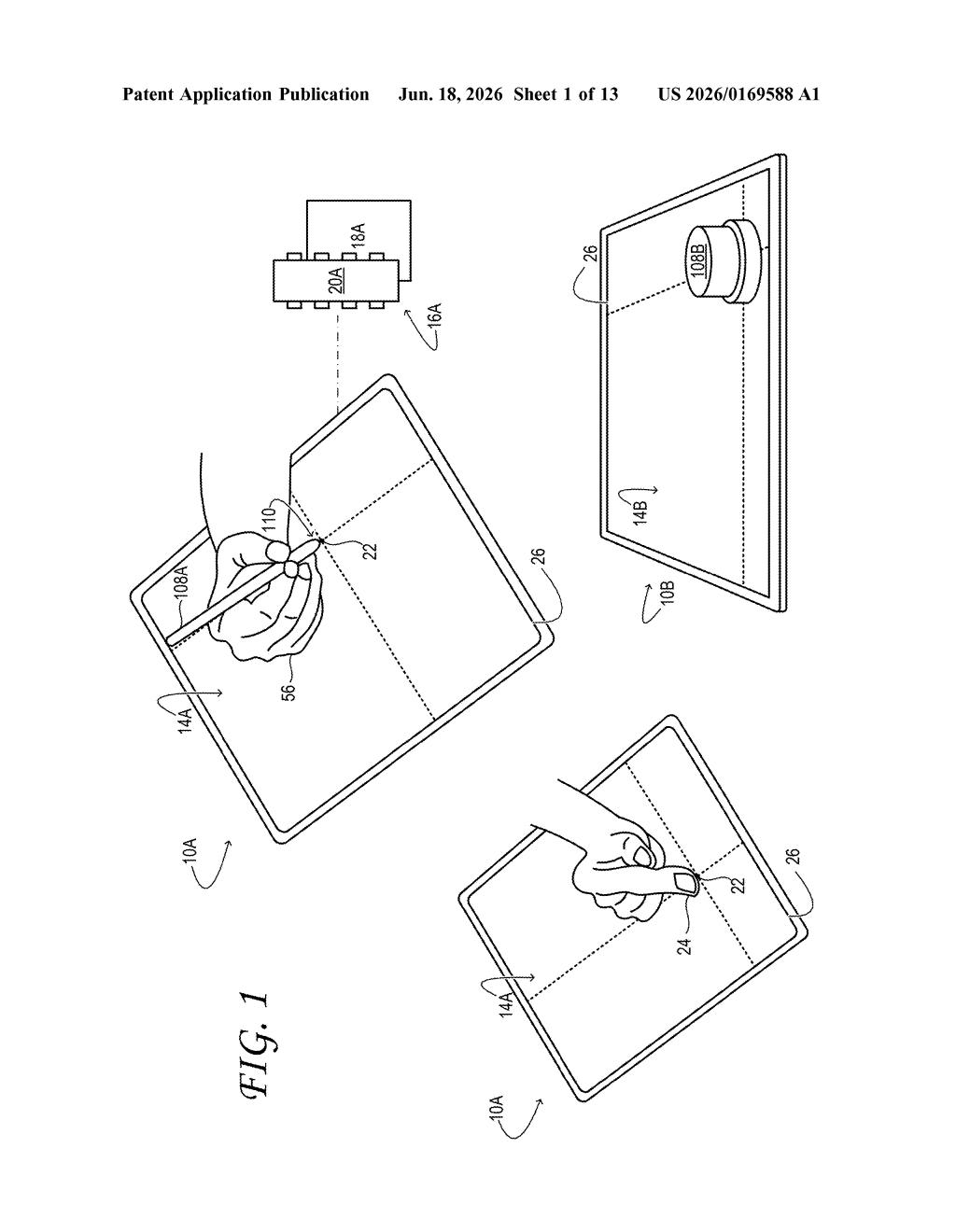
What Microsoft's touch-screen noise fix actually does
Imagine trying to have a phone conversation in a noisy café. You can hear the person talking, but the background noise makes it harder to catch every word. A touch screen faces a similar problem — the display panel sitting behind the touch sensor constantly creates electrical noise that can confuse the sensor about where your finger actually is.
Microsoft's patent describes a method where the touch screen periodically sends two different test signals through its electrodes — one at a higher frequency and one at a lower frequency. By comparing what comes back from each, the system can figure out how much of the signal is real touch input and how much is just interference from the display below.
The result is a corrected touch reading that's had the background noise mathematically subtracted out. This kind of self-calibrating approach could help touch screens stay accurate even as display hardware changes or as the screen ages — without requiring the user to do anything differently.
How the dual-frequency correction transform works
Touch screens work by laying a grid of electrodes over the display — row electrodes running one direction and column electrodes running the other. When you touch the screen, your finger changes the electrical impedance (think: resistance to the flow of an electrical signal) at the grid point nearest your fingertip. The sensor detects that change and maps it to a location.
The problem is that the electronic display layer sitting just behind those electrodes also generates electrical signals, and those bleed into the touch sensor's readings. Microsoft's patent tackles this by adding a compensation signal — an out-of-phase signal applied to nearby row electrodes at the same time as the main excitation signal. This is similar to how noise-canceling headphones work: play the exact opposite of the noise and the two cancel each other out.
Beyond that active cancellation, the patent adds a calibration step:
- The system normally runs at a high modulation frequency to scan for touches quickly.
- Periodically, it switches to a lower frequency and takes a second reading.
- It then computes a correction transform — essentially a mathematical recipe that describes how much the display is distorting the signal at any given moment.
- That recipe is applied to the normal high-frequency readings to produce a corrected output.
The lower frequency is chosen because the display layer's interference behaves differently at different frequencies, which lets the system isolate and measure the noise specifically.
What this means for future Microsoft touch devices
Touch accuracy problems are most noticeable in thin devices where the display and touch layers are packed tightly together, and in high-brightness modes where the display is working hardest. A correction system built into the electrode drive logic — rather than relying on software hacks or thicker hardware separation — could let Microsoft build thinner, more accurate touch devices without the usual trade-offs.
For everyday users, this is the kind of improvement you'd notice only by its absence: fewer mis-taps near the edges, more reliable stylus input, and touch that stays consistent whether the screen is dim or blazing bright. Microsoft makes Surface tablets, foldable devices, and increasingly touch-enabled laptops — all categories where display-to-touch interference is a real engineering headache.
This is unglamorous but genuinely useful engineering. Touch screens have had this display-interference problem for years, and most manufacturers paper over it with software filtering that degrades input latency. A hardware-level dual-frequency calibration approach is a cleaner solution. It's the kind of quiet patent that actually shows up in shipping products.
There are more where this came from
We read every patent application Big Tech publishes and send you the ones worth knowing. Plain English, free, every week.
Want this weekly breakdown for a company we don't cover? Patentlyze Pro →