
Samsung Patents a Notes Search That Understands Both Words and Hand-Drawn Shapes
Samsung is patenting a notes search that goes beyond simple keyword matching — it can take a word you type, figure out related words on its own, and even understand a shape you draw with your finger or stylus to find the note you're looking for.
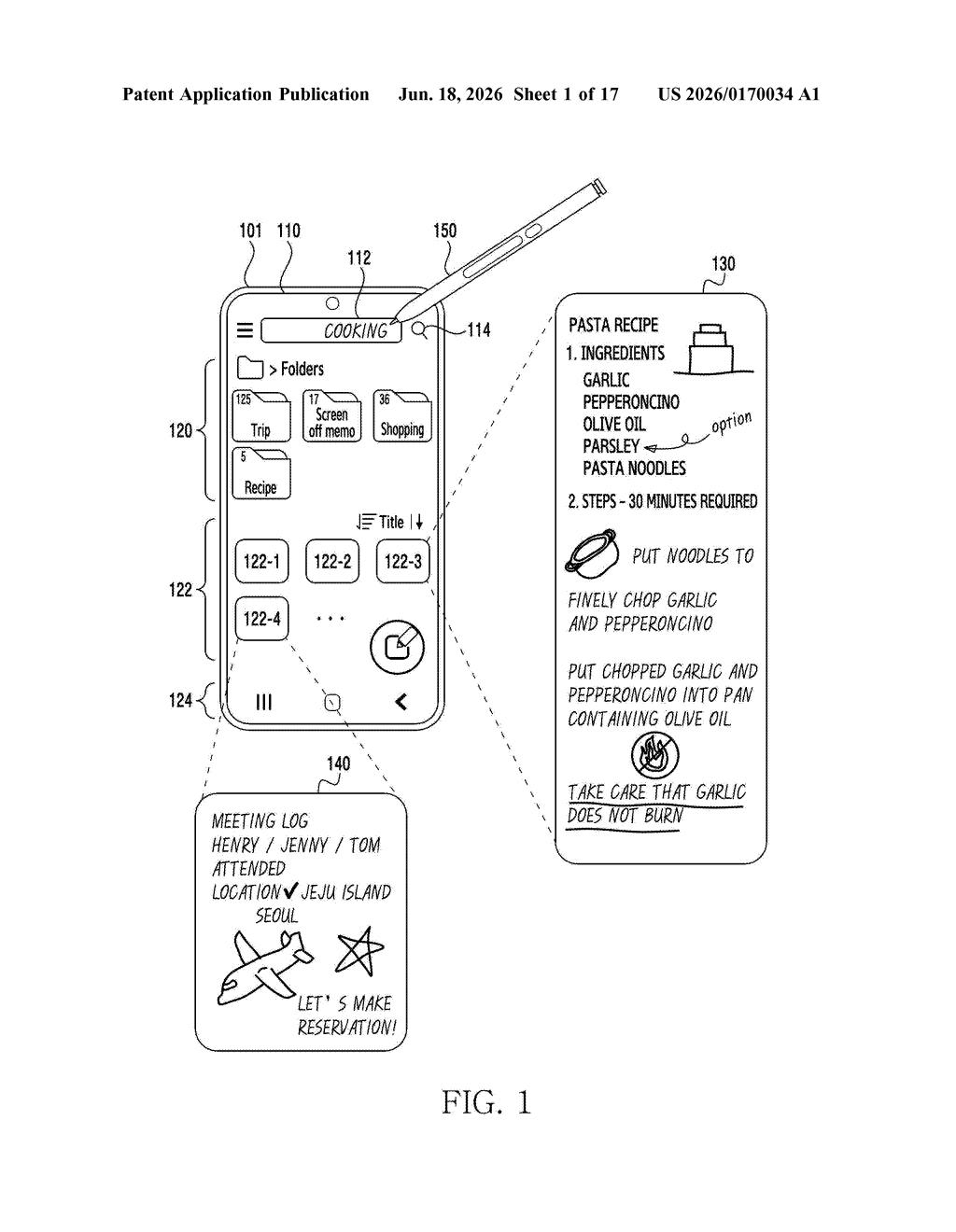
What Samsung's dual-input notes search actually does
Imagine you wrote a note about a "meeting" last week, but you search for "appointment" and get nothing. Or you sketched a quick arrow diagram and now you can't find it because there's no text to search. Both of those are real, frustrating problems with most notes apps today.
Samsung's patent describes a search system that handles both. When you type a word, an AI language model automatically figures out related words — so searching "appointment" might also pull up notes containing "meeting" or "calendar event." When you draw a shape on the screen, the system analyzes the path your finger or stylus took and looks for notes containing matching drawings.
The key idea is that you can mix both at once: type a word and draw a shape in the same search, and the system combines both signals to find the best matching note. It's a more natural way to search through handwritten and mixed-media notes.
How the language model and shape-matching work together
The patent covers an electronic device — likely a phone or tablet — with a notes search function that accepts two types of input simultaneously: typed text and drawn paths.
For the text side, when you type a search word, a language model (an AI trained on word relationships, similar in concept to what powers autocomplete) identifies related words automatically. So your query expands beyond the exact word you typed to include semantically similar terms without you having to think of them yourself.
For the drawing side, when you drag a finger or stylus across the screen, the system records the path — the shape and direction of that stroke — and extracts "feature information" from it. That feature data is then used to search for notes containing drawings that match the shape you traced.
The search function then runs against a database of stored note contents using whichever inputs were provided — text, drawing, or both combined. Matching notes are displayed on screen. The patent specifically covers:
- Text-only searches with AI-expanded related terms
- Drawing-only searches based on stroke shape
- Combined text-plus-drawing searches
What this means for Galaxy Notes and stylus users
For anyone who uses Samsung's Galaxy Notes app with an S Pen — or really any notes app with mixed handwritten and typed content — finding old notes is genuinely painful today. Standard search only catches exact text matches, which means anything sketched, diagrammed, or labeled with a synonym is effectively invisible.
This patent points toward a notes search that works more like human memory: you remember roughly what something looked like or roughly what it was about, and the search meets you there. Whether this appears in Samsung's stock Notes app or a future Galaxy AI feature, it would be a meaningful practical improvement for the large share of Galaxy users who rely on S Pen note-taking.
This is a practical, well-scoped patent that solves a real annoyance rather than chasing a flashy AI demo. The combination of semantic text expansion and drawn-shape recognition in a single search query is genuinely useful for stylus-heavy devices like the Galaxy S Ultra or Galaxy Tab S series. It's not earth-shattering, but it's the kind of feature that, once you have it, you'd miss immediately if it were taken away.
There are more where this came from
We read every patent application Big Tech publishes and send you the ones worth knowing. Plain English, free, every week.
Want this weekly breakdown for a company we don't cover? Patentlyze Pro →