
Samsung Patents an AI System That Breaks Robot Instructions Into Step-by-Step Plans
Tell a robot to 'make coffee' and it needs to figure out every tiny step on its own. Samsung's latest patent describes an AI system that handles exactly that — breaking a single high-level instruction into an ordered list of actions, then guiding the robot through each one using live camera input.
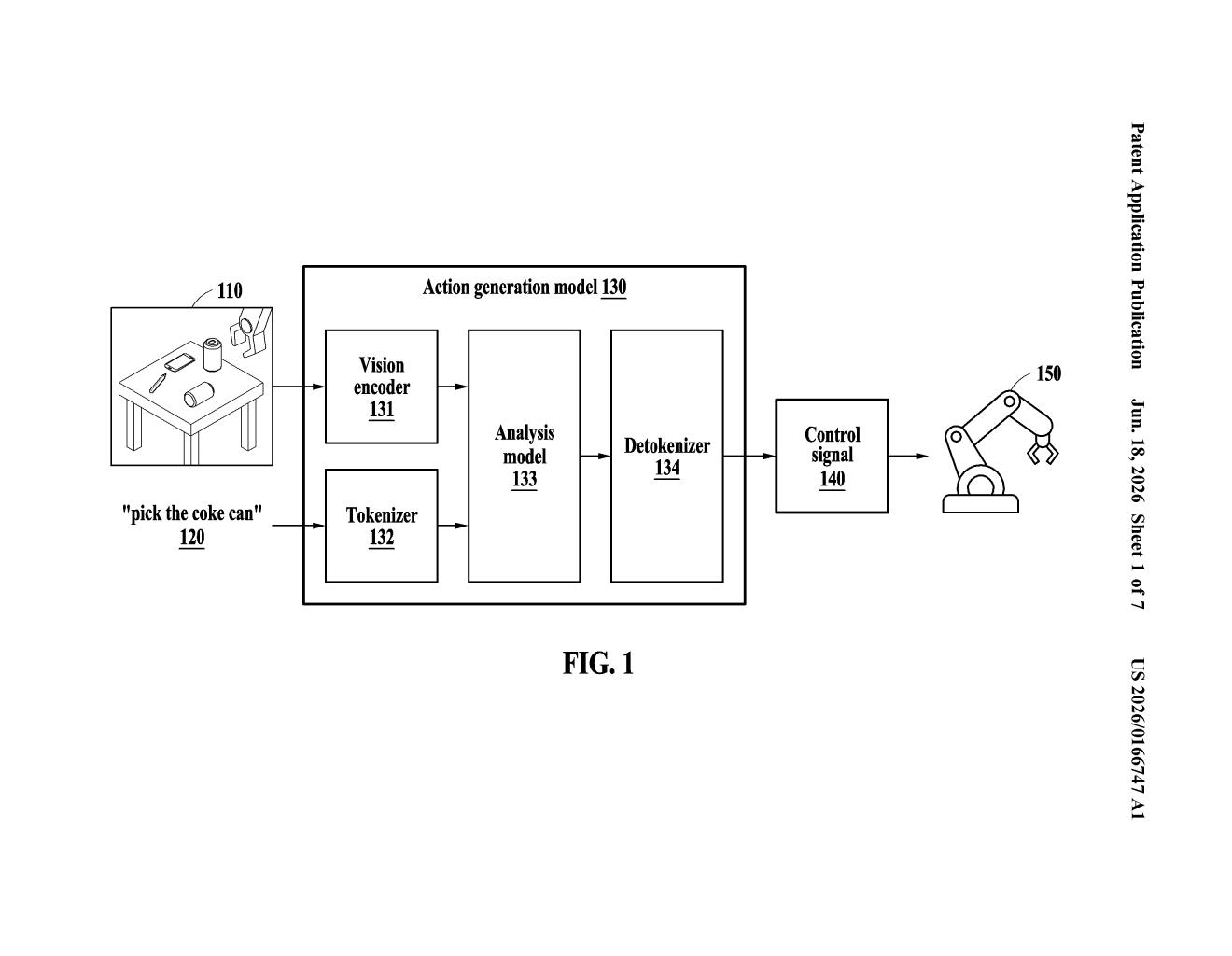
How Samsung's robot task-planning system actually works
Imagine telling a robot, 'put the cup on the table.' That sounds simple, but for a robot it's a chain of smaller moves: find the cup, reach for it, grip it, lift it, move it, place it. Someone — or something — has to figure out that chain and keep the robot on track as it works through each step.
Samsung's patent describes an AI model that does exactly this in two modes. The first time a robot gets a new instruction, the AI reads the prompt and a camera image, then produces both a full to-do list and the first movement command in one shot. After that, for every subsequent step, the AI looks at the same image feed plus a history of the commands already sent, and generates the next move from there.
The key idea is that the system knows which mode it's in — planning from scratch versus continuing mid-task — and picks the right approach automatically. That could make robots more reliable when handling multi-step jobs in the real world, where a single static instruction isn't enough to get the job done.
How the analysis model switches between planning and acting
The patent centers on an analysis model — an AI that receives text and image inputs and returns both a structured plan and motor control signals for a robot.
The system operates in two distinct modes:
- First process (planning mode): When no sub-task list exists yet, the AI takes the user's text prompt and a camera image, then simultaneously outputs a full ordered list of sub-tasks and an initial control signal (a movement command) to start the first sub-task.
- Second process (execution mode): Once a sub-task list is active and the robot is mid-task, the AI takes the same prompt plus the history of control signals already issued, along with a fresh camera image, and generates the next movement command.
The inclusion of past control signals in the second mode is notable — it functions like a short-term memory, letting the AI understand where the robot is in a sequence without needing to restart planning from zero. Think of it as the difference between writing a recipe and following one you're already halfway through.
The first image referenced in the claim is the robot's camera view of its environment, giving the AI spatial context it needs to translate abstract instructions into physically grounded movements.
What this means for Samsung's robotics ambitions
Samsung has been investing heavily in humanoid and service robotics, and a reliable task-planning layer is one of the core unsolved problems in making robots useful in unstructured environments — homes, warehouses, hospitals. A system that can take a plain-language instruction and autonomously decompose it into executable steps, while adapting to what the robot has already done, is exactly the kind of middleware that would sit between a user and a physical robot.
For you as a potential future robot owner, this is the difference between a robot that needs to be programmed for every specific chore and one you can simply instruct. Whether Samsung's approach holds up in noisy, real-world conditions remains to be seen, but the architecture described here is a reasonable step toward that goal.
This is solid, practical robotics engineering — not a moonshot. The two-mode planning-versus-execution architecture is a sensible way to handle the cold-start problem (no plan yet) versus mid-task adaptation (plan already running). It's not the most original idea in robot task planning, but a patent like this signals Samsung is building the foundational control infrastructure it would need to ship a general-purpose home robot.
There are more where this came from
We read every patent application Big Tech publishes and send you the ones worth knowing. Plain English, free, every week.
Want this weekly breakdown for a company we don't cover? Patentlyze Pro →