
Samsung Patents a Way to Hide the Seams in See-Through Displays
Transparent LED screens are already appearing in store windows and architecture — but the one thing that gives them away is the visible grid of seams where panels meet. Samsung's new patent targets exactly that problem.
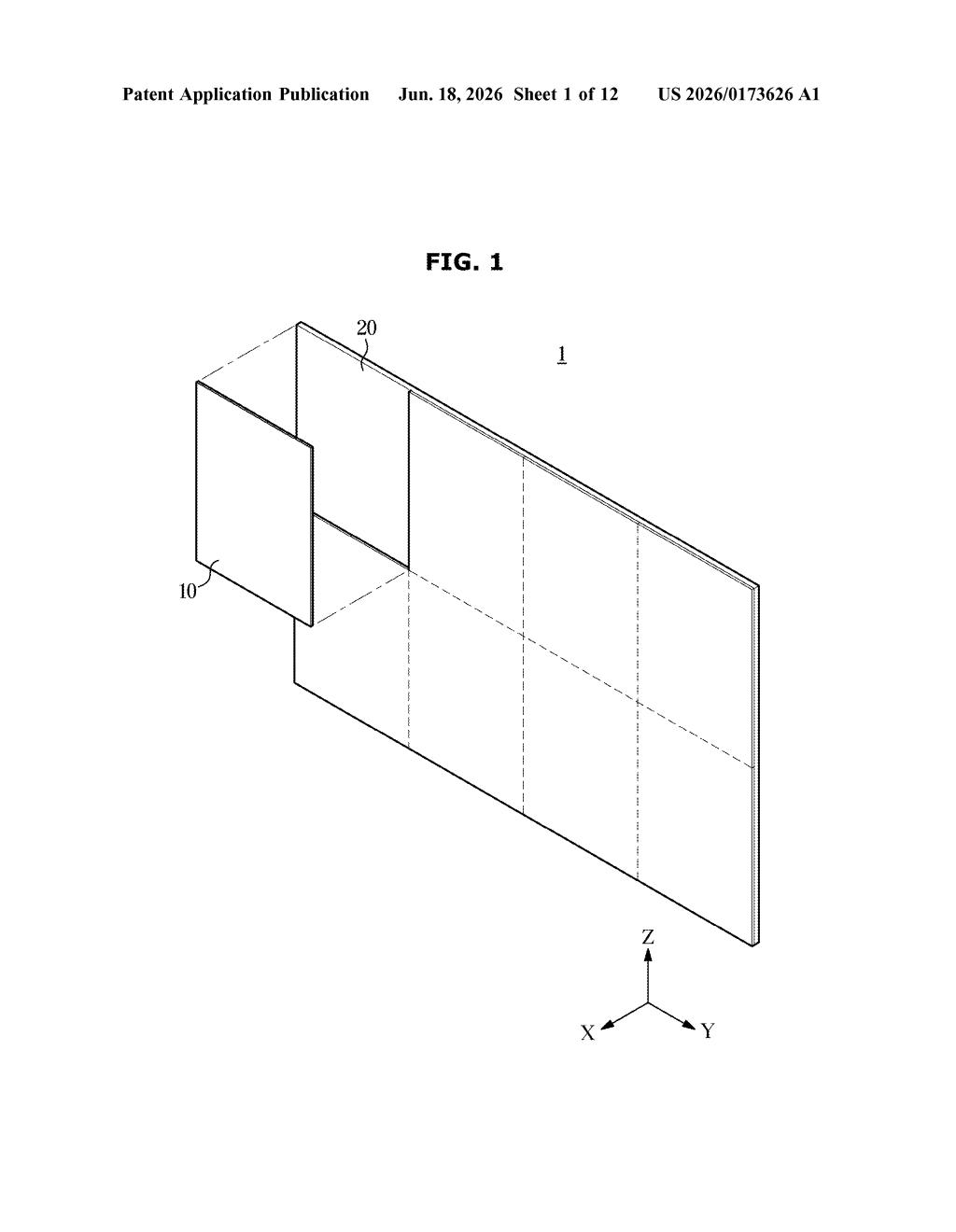
What Samsung's seamless transparent display actually does
Imagine a floor-to-ceiling window at a luxury store that doubles as a display screen. You can see through it, but when it's showing content, you notice a faint grid of lines — the edges where individual screen panels are bolted together. That grid breaks the illusion.
Samsung's patent describes a way to fill those gaps so carefully that the eye stops seeing them. The trick is a two-part filler material. One part is matched to the glass substrate of the panels so light bends through it at exactly the same angle. The other part is matched to the color of the front surface — the layer that holds the tiny LEDs — so there's no color shift at the seam.
The result, in theory, is a tiled transparent display that looks like a single continuous sheet of glass. Both what you see through the screen and the content on the screen would look uninterrupted.
How the two-layer filler erases the gap lines
The patent covers a transparent display built from a grid of individual modules — think tiles — each containing a light-transmitting substrate (essentially a clear glass or plastic backing) and a front layer studded with miniature light-emitting elements (LEDs mounted directly on the substrate's surface).
When you tile these modules together, you get two distinct types of gaps: one between the substrates and another between the front layers. Each gap creates a different kind of visual disruption — one optical (light bending differently) and one colorimetric (a visible color stripe).
Samsung's solution is a two-layer filler:
- First resin layer — fills the gap between substrates. Its refractive index (the measure of how much it bends light) is tuned to match the substrate material, so light passes through the joint without deflecting or glinting.
- Second resin layer — fills the gap between front layers. Its color value is tuned to match the color of the mounting-surface cover (the translucent material encasing the LEDs), so no visible stripe appears at the seam.
A single light-transmitting cover then lays over the whole assembly — modules and filler together — giving the display a unified front face. The engineering goal is that both the passthrough view and the displayed image appear continuous across all the tiles.
What this means for retail windows and large-format displays
Transparent LED displays are already in use — airport terminals, car showrooms, retail flagship stores — but the visible tile grid has kept them from looking truly polished. If Samsung can manufacture this filler system reliably and at scale, it removes one of the main aesthetic objections buyers have to large transparent installations.
For you as a consumer, this probably shows up first in high-end retail environments or architectural installations rather than in something you own. But the underlying approach — using optically matched materials to erase joints — could inform future see-through screen technology in vehicles, smart windows, or even head-mounted displays where panel boundaries are currently a known weakness.
This is patient, detail-oriented engineering work on a real and well-documented problem in the transparent display industry. It won't make headlines the way a new phone launch does, but the seam-visibility issue has genuinely held back transparent displays as an architectural product. Whether Samsung can translate this into a manufacturable filler process at large scale is the interesting open question.
There are more where this came from
We read every patent application Big Tech publishes and send you the ones worth knowing. Plain English, free, every week.
Want this weekly breakdown for a company we don't cover? Patentlyze Pro →