
IBM Patents an Interleaved Wiring Layout to Cut Signal Interference in Quantum Computers
Quantum computers are exquisitely sensitive machines — even a faint electrical signal leaking from one wire to a neighbor can scramble a calculation. IBM's latest patent addresses that problem at the cable level, before it ever reaches a qubit.
What IBM's interleaved quantum wiring actually does
Imagine you're trying to have two separate phone conversations at once through a single bundle of cables. If the signals bleed into each other — a problem called crosstalk — both conversations turn to noise. Quantum computers face exactly this problem, except instead of voices, it's the delicate control signals that tell qubits what to do.
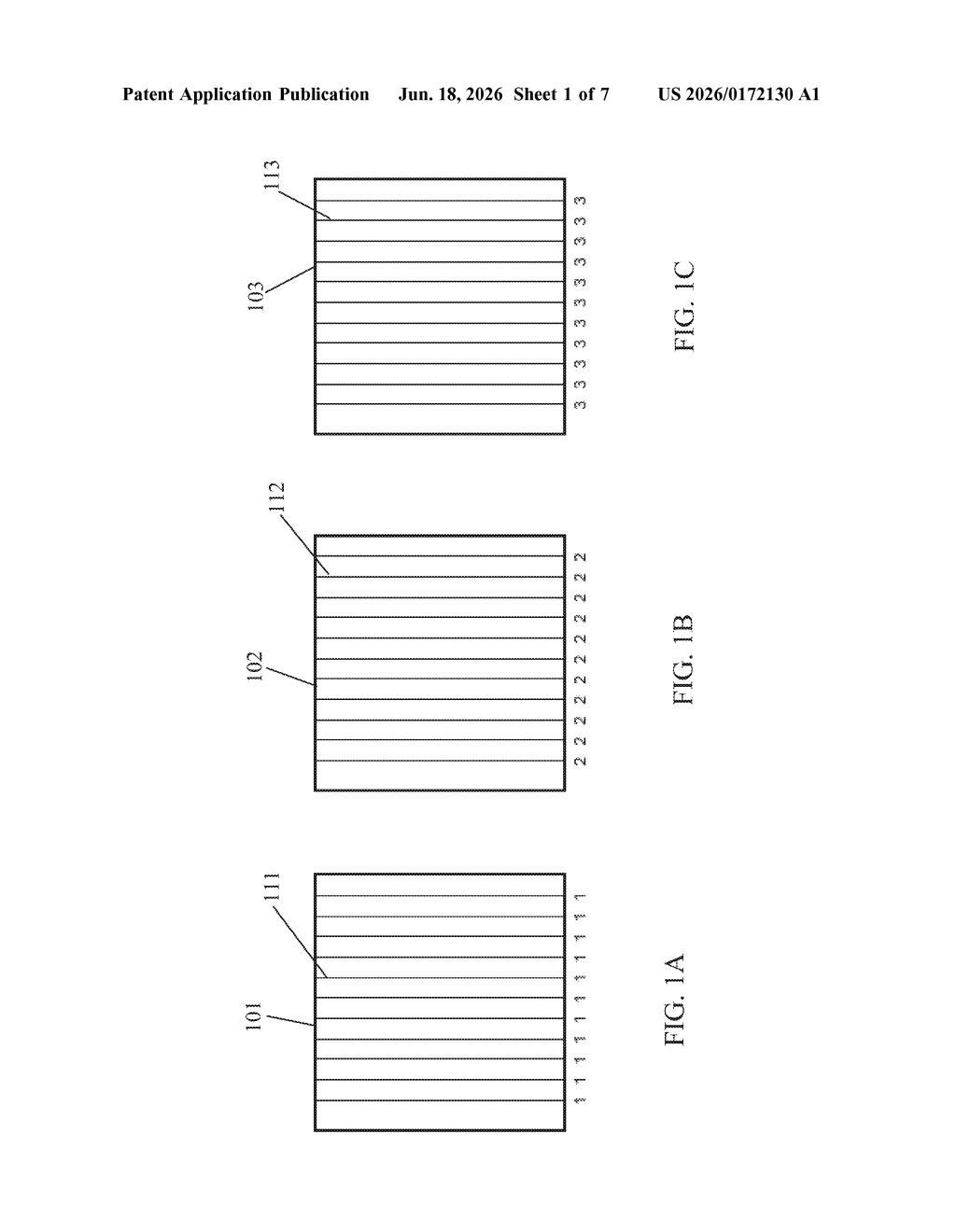
IBM's patent describes a wiring arrangement where two types of signal lines share the same physical cable but operate on different frequency bands — think of it like AM and FM radio coexisting on the airwaves without interfering. The lines are physically interspersed, or woven together, on the cable rather than grouped separately.
The goal is to pack more control wiring into less space without the signals stepping on each other. That's a surprisingly important engineering challenge as IBM and others try to build quantum computers with thousands — eventually millions — of qubits, each needing its own set of carefully routed control lines.
How it works
The patent describes a signal delivery wiring system built around two key ideas working together: physical interleaving and frequency separation.
- Physical interleaving: Instead of grouping all lines of one type together on one side of the cable and all lines of another type on the other side, the two sets of signal lines are mixed — interspersed — along the shared wiring cable. This prevents any one region of the cable from concentrating a single signal type.
- Frequency separation: The first set of lines carries its signals on one frequency band, and the second set carries its signals on a different, non-overlapping frequency band. Since the frequencies don't overlap, the signals don't interfere with each other even when the wires are physically close.
Together, these two approaches are meant to eliminate crosstalk (the unwanted leakage of a signal from one wire into an adjacent wire — the same phenomenon that causes electrical hum in poorly shielded audio gear). In a quantum computer, crosstalk can corrupt qubit states entirely, so avoiding it is essential.
The patent is written broadly enough to cover any quantum computing wiring scenario where two signal types — likely qubit control signals and readout signals — need to share a cable without mutual interference.
What this means for scaling up quantum hardware
Scaling a quantum computer from dozens of qubits to thousands requires a proportional increase in control wiring, and that wiring has to fit inside a cryogenic refrigerator that is roughly the size of a large water heater. Space inside that fridge is extremely limited, and every extra wire risks heating the system or introducing noise. IBM's approach lets engineers pack more signal lines into the same physical footprint without sacrificing signal integrity.
This is the kind of unglamorous infrastructure work that tends to be invisible to users but essential for the industry's long-term goals. If IBM — or anyone adopting a similar scheme — can route control signals more efficiently, that removes one of the many bottlenecks standing between today's small quantum processors and the large-scale machines that would be needed to outperform classical computers on practical problems.
This is not a headline-grabbing qubit breakthrough — it's cable management for quantum hardware. But that framing undersells it: wiring is one of the genuine physical limits on how many qubits you can control at once, and IBM has been more transparent than most about how hard that problem is. A credible solution to crosstalk in shared cables is worth paying attention to, even if it's never going to be a product name on a press release.
There are more where this came from
We read every patent application Big Tech publishes and send you the ones worth knowing. Plain English, free, every week.
Want this weekly breakdown for a company we don't cover? Patentlyze Pro →