
Qualcomm Patents a Chip Shortcut That Skips Drawing Blank Screen Regions
Qualcomm's latest patent describes a way for a phone's graphics chip to check how much of a screen region actually needs drawing — and simply skip regions that are mostly empty, saving time and battery in the process.
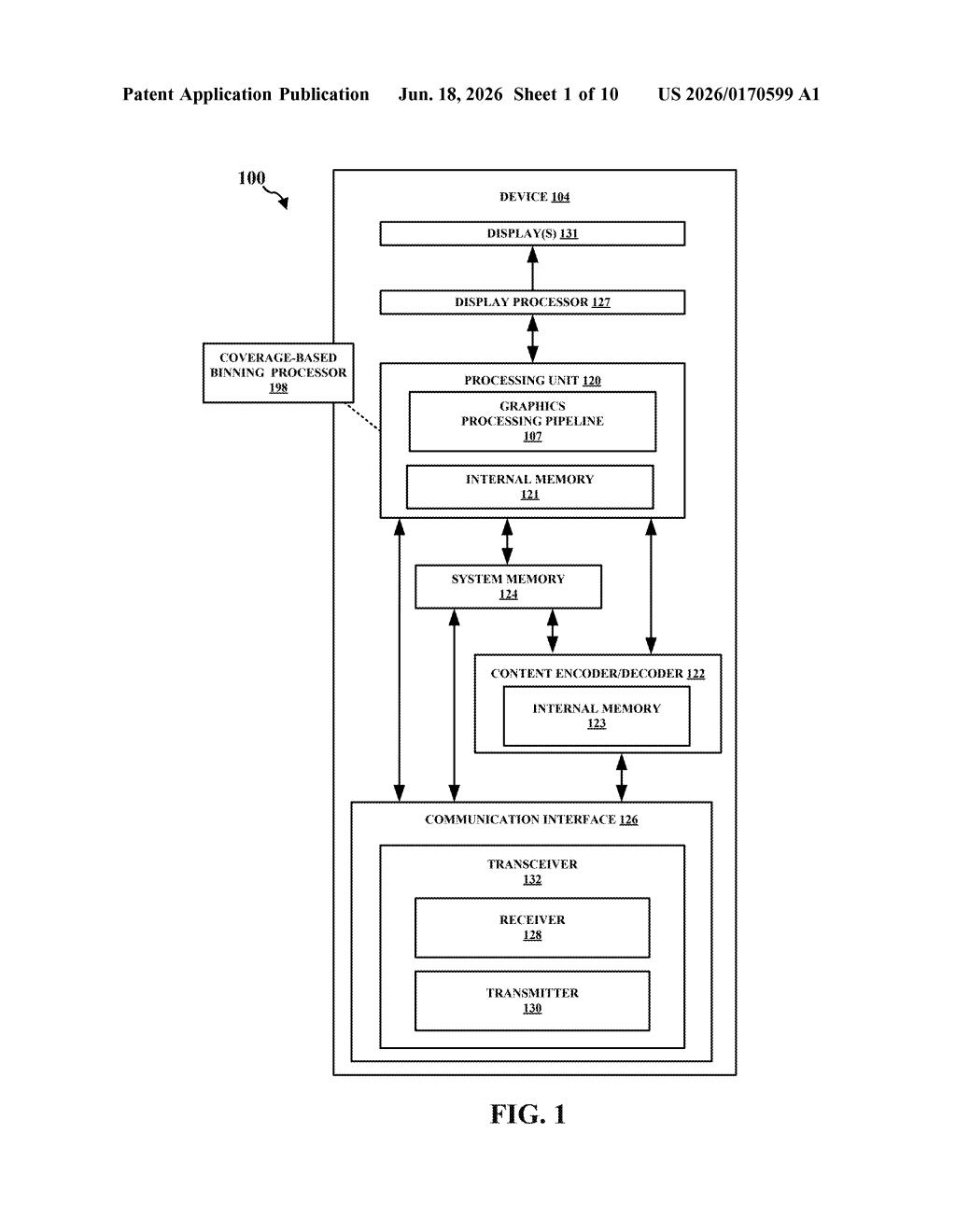
How Qualcomm's coverage-based tile skipping works
Imagine your phone is drawing a 3D game scene. Instead of carefully painting every single tile of the screen, even ones that are nearly invisible or completely empty, what if the chip could take a quick look first and skip the tiles that don't need work? That's roughly what this patent describes.
Qualcomm's graphics processor does a fast "visibility pass" — a preliminary scan that checks how much of each screen tile, called a bin, is actually covered by visible objects. If a tile falls below a certain threshold of coverage, the chip decides not to bother loading or saving that tile's image data to memory at all.
The payoff is less memory traffic, fewer wasted calculations, and ultimately lower power consumption — all things that matter a great deal on a smartphone where the battery is tight and the chip shares resources with everything else you're doing.
Inside the visibility-pass and bin coverage threshold
The patent centers on a rendering technique called tile-based deferred rendering — the standard way mobile GPUs like Qualcomm's Adreno chips draw graphics. In this approach, the screen is divided into rectangular tiles (bins), and each bin is processed one at a time, ideally without repeatedly reading and writing large chunks of data to main system memory.
The new wrinkle here is a dedicated visibility pass: before the GPU commits to fully rendering a bin, it first calculates an indication of bin coverage — essentially a score representing how much of that tile is actually occupied by drawable geometry or pixels.
That coverage score is then compared against a coverage threshold. If the score comes in under the threshold — meaning the tile is mostly empty or obscured — the GPU is told to skip the normal load-from-memory and store-to-memory steps entirely. Those memory operations are among the most expensive things a mobile GPU does in terms of power and bandwidth.
- Visibility pass runs first, scoring each bin for coverage
- Coverage score is checked against a configurable threshold
- Low-coverage bins bypass memory load and store operations
- Only bins that clear the threshold get fully rendered
What this means for mobile GPU power and game performance
For mobile devices — phones, tablets, XR headsets — memory bandwidth is the hidden enemy of battery life. Every time a GPU reads or writes data to main memory, it burns power and competes with the CPU, modem, and everything else on the chip. Qualcomm's approach turns that cost into an optional one: if a screen tile isn't doing much, the chip doesn't pay the price of touching memory at all.
This matters most in scenes with lots of occlusion — objects blocking other objects, dark areas, transparent layers — where a naive renderer wastes energy on tiles no one will ever see. For Qualcomm's Snapdragon platform, which powers a huge share of Android flagship phones and XR headsets, this kind of efficiency improvement compounds across millions of frames per day on billions of devices.
This is a solid, practical optimization patent rather than a flashy research concept. Tile-based rendering efficiency is a well-understood battleground for mobile GPU makers, and shaving memory bandwidth through smarter visibility checks is exactly the kind of incremental work that actually ships in silicon. It won't make headlines at a product launch, but this is the unglamorous work that keeps Snapdragon chips competitive on battery life.
There are more where this came from
We read every patent application Big Tech publishes and send you the ones worth knowing. Plain English, free, every week.
Want this weekly breakdown for a company we don't cover? Patentlyze Pro →