
Sony's New Patent Keeps Tracking Cameras Off Until Something Worth Tracking Gets Close
Sony has filed a patent for a positioning system where cameras don't bother turning on unless the thing they're supposed to track is actually close enough to matter — a simple idea that could meaningfully cut power draw in tracking setups.
What Sony's distance-triggered camera system actually does
Imagine a security camera that stays off until someone walks into the room — not just recording nothing, but genuinely powered down until it's needed. Sony's new patent applies that same logic to motion-tracking cameras.
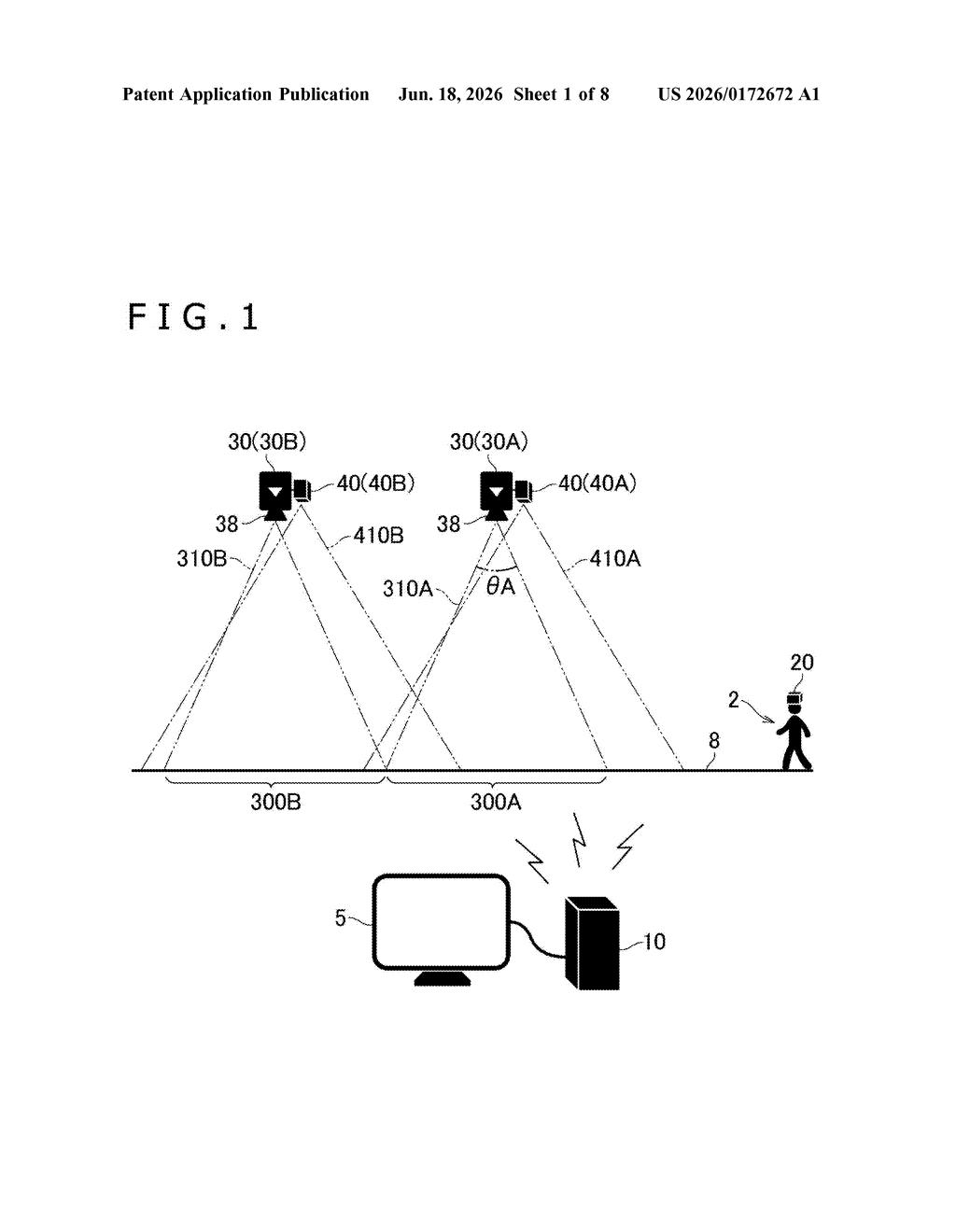
The system works like this: a small wireless device is attached to or carried by whatever object is being tracked — say, a game controller or a player's body. Each camera in the setup has a paired antenna. That antenna constantly measures how far away the wireless device is. If you're close enough, the camera wakes up and starts capturing. If you wander out of range, it goes back to sleep.
The result is that cameras only do real work when there's actually something worth tracking in front of them. For a system with multiple cameras spread around a room — like a VR play space — that could add up to a meaningful reduction in power use.
How the antenna calculates distance to wake the camera
The patent describes a positioning system built around three main components: one or more cameras for tracking a moving object, antennas co-located with each camera, and a wireless communication apparatus carried by the object being tracked.
The core mechanism is distance-gating. The antenna and the wireless device exchange signals, and from that exchange, the system calculates the distance between them — similar in concept to how a phone estimates distance from a Bluetooth beacon using signal strength or time-of-flight measurements. If that calculated distance falls within a preset range, the camera is cleared to start capturing images. If the object moves outside that range, the camera restricts or halts image capture.
The arithmetic apparatus — essentially the compute unit doing the math — can live in the antenna hardware, in the wireless device itself, or in a separate processor. The patent is flexible on where the calculation happens.
- Antenna: co-located with each camera, handles wireless ranging
- Wireless device: carried by the tracked object (controller, person, etc.)
- Arithmetic apparatus: calculates position from captured images and distance from radio signals
- Camera: activates or sleeps based on the distance result
What this means for PlayStation motion tracking hardware
For PlayStation VR and similar motion-capture setups, power efficiency matters — both for standalone headsets running on batteries and for always-on camera arrays in larger spaces. A system with several tracking cameras all polling continuously burns more power than one where each camera only activates when a tracked device is actually in its zone.
This patent also points toward a tighter integration between radio-based ranging (think Ultra-Wideband or Bluetooth-style distance estimation) and optical tracking — two techniques that are usually treated as separate systems. Combining them so that wireless proximity acts as a gating signal for camera activation is a practical engineering approach that could show up in future PlayStation hardware or in Sony's broader location-tracking products.
This is a genuinely practical patent — not flashy, but the kind of engineering detail that makes a real difference in a shipping product. The idea of using wireless ranging to gate camera activation is straightforward, and that simplicity is actually a point in its favor. Sony clearly has motion-tracking cameras on its mind, and this filing fits neatly into the ongoing evolution of PlayStation VR hardware toward lower power draw and smarter sensing.
There are more where this came from
We read every patent application Big Tech publishes and send you the ones worth knowing. Plain English, free, every week.
Want this weekly breakdown for a company we don't cover? Patentlyze Pro →