
AMD Patents a Way to Decode Video Using Built-In JPEG Hardware
AMD's chips already contain dedicated JPEG-decoding hardware — and a new patent describes a way to trick that existing hardware into decoding video formats it was never originally designed for.
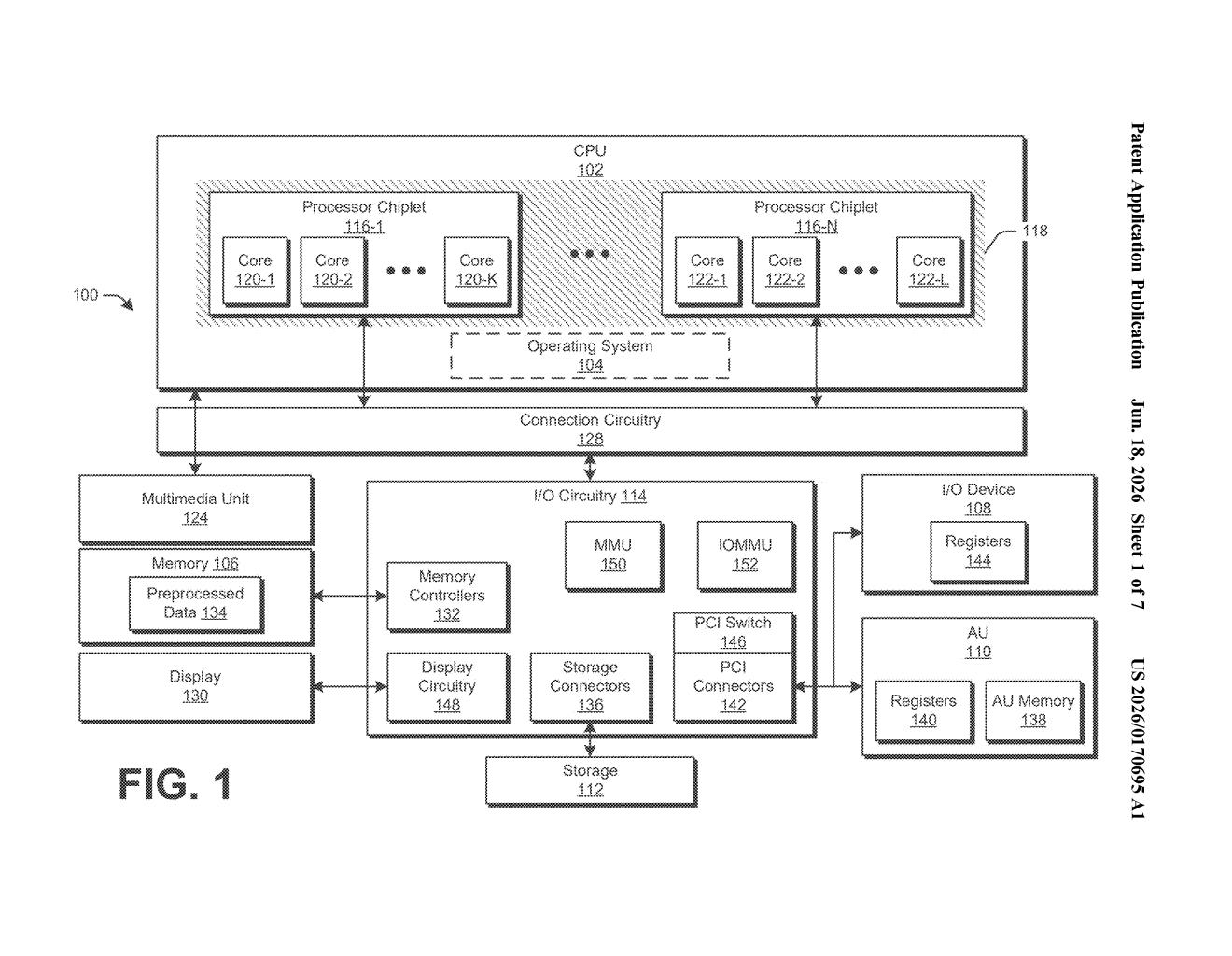
What AMD's JPEG-reuse trick actually does
Your phone, laptop, and GPU all contain dedicated chips designed to handle specific tasks quickly and efficiently. One of those chips — baked into AMD graphics cards — is purpose-built to decode JPEG images. It's fast and uses little power, but it only speaks one language: JPEG.
AMD's new patent describes a clever workaround. Certain video formats share a lot of DNA with JPEG — they use similar compression techniques. Instead of building brand-new hardware to handle those formats, AMD's approach is to translate the incoming video data just enough so that the existing JPEG chip can understand it. Think of it like a language adapter: the video data gets lightly reformatted before being handed off to the chip.
The result is that AMD's graphics hardware could decode a wider range of video formats without needing extra silicon. That's useful when you're trying to keep chips small, cheap, and power-efficient — all things that matter whether you're buying a laptop GPU or a data-center accelerator.
How AMD preprocesses video data for JPEG hardware
The patent describes a three-step process running on AMD hardware that already contains a dedicated multimedia unit (a fixed-function chip block designed to decode JPEG images quickly in hardware).
- Receive: The processor pulls in video data encoded with a JPEG-like codec — a compression format that shares the same mathematical foundation as JPEG (specifically the Discrete Cosine Transform, or DCT, a standard way of representing image data as frequency patterns) but isn't technically JPEG itself.
- Preprocess: Software on the main processor reformats that incoming data into a shape the JPEG hardware expects. This is the key insight: rather than decoding the video in software (slow and CPU-hungry) or building a separate hardware decoder (expensive), AMD does a lightweight conversion pass first.
- Decode: The preprocessed data is handed off to the existing JPEG multimedia unit, which finishes the job using its normal hardware decoding pipeline.
The patent is specifically targeted at codecs that are structurally similar to JPEG — meaning formats like Motion JPEG (MJPEG), which encodes video as a sequence of individual JPEG frames, or other formats that lean on DCT-based compression. The preprocessing step bridges the gap between what those formats require and what the JPEG chip natively understands.
What this means for graphics card media support
For AMD, this is fundamentally about getting more mileage out of hardware that already exists. Every AMD GPU ships with dedicated multimedia decode blocks. If those blocks can handle a wider range of formats with only a software-side preprocessing step, AMD avoids the cost and die area of adding new fixed-function decode engines — which matters a lot in competitive chip design.
For end users, the practical upside would be smoother, lower-power video playback for formats that currently fall back to software decoding on AMD hardware. Software decoding burns CPU cycles and shortens battery life. Offloading that work to a dedicated hardware block — even via a preprocessing trick — is a real efficiency win, particularly on laptops or power-constrained devices.
This is a solid piece of practical engineering — not the sort of patent that makes headlines, but exactly the kind of incremental optimization that actually ships in drivers and saves battery life. The real question is which specific codecs AMD is targeting, and that detail is conspicuously absent from the filing.
There are more where this came from
We read every patent application Big Tech publishes and send you the ones worth knowing. Plain English, free, every week.
Want this weekly breakdown for a company we don't cover? Patentlyze Pro →