
Salesforce Patents an AI That Writes Customer Service Plans and Flags Its Own Guesses
Customer service agents often spend as much time figuring out what to do as actually doing it. Salesforce wants an AI to draft that plan for them — and, crucially, be honest about which steps it's inventing.
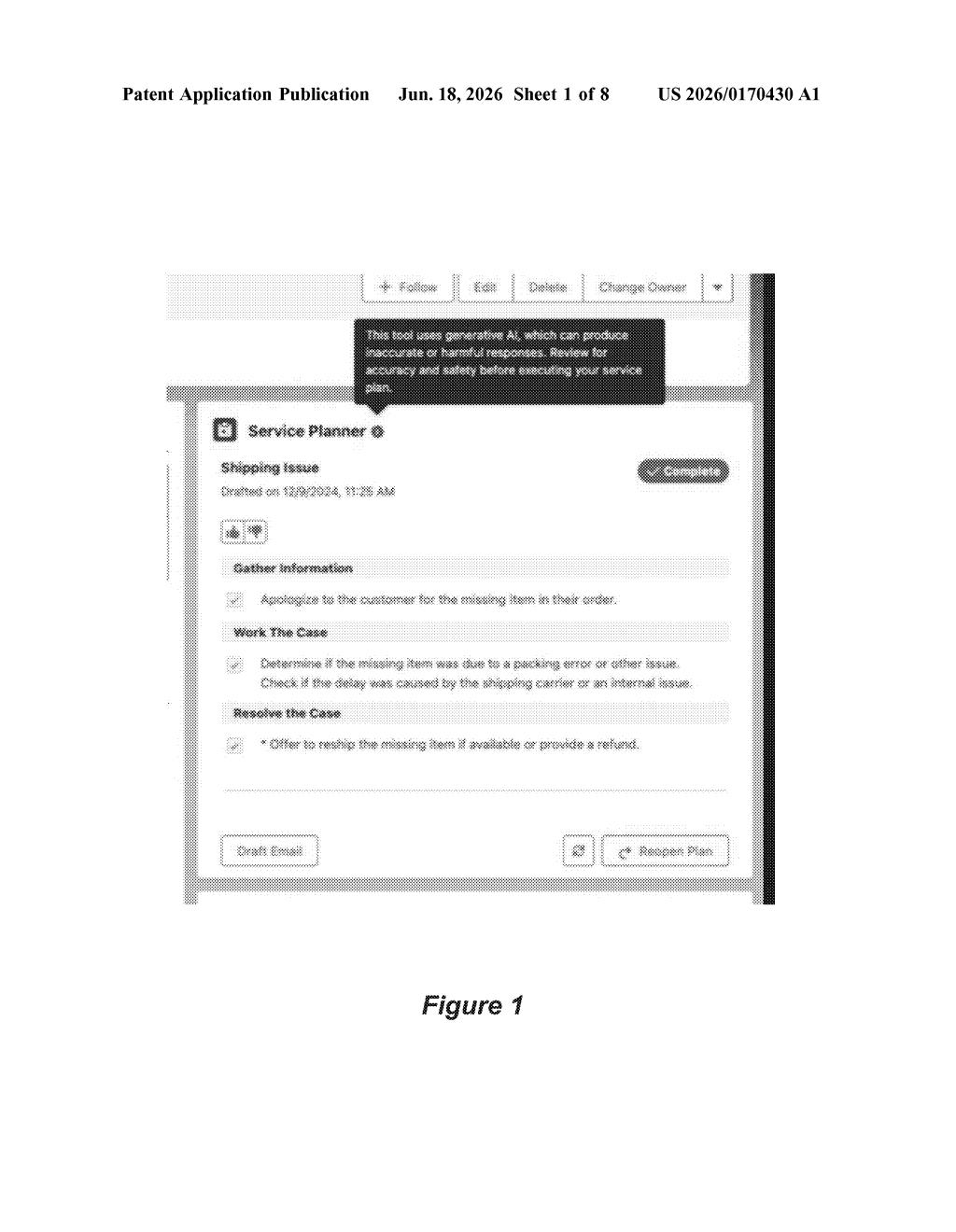
What Salesforce's AI service-plan generator actually does
Imagine a support agent gets a tricky customer complaint that doesn't fit neatly into any company handbook. Right now, they either dig through documentation or improvise. Salesforce's new patent describes a system that hands that job to an AI: feed it the case details, the company's policies, and a list of available tools, and it spits out a step-by-step action plan.
The interesting part is what happens when the AI doesn't have a policy to draw from. Instead of quietly making something up, the system labels those steps as "suggested steps" — a clear signal to the agent that this wasn't pulled from official guidance, it's the AI's best guess.
That transparency matters. It means agents aren't blindly following AI-generated instructions without knowing which parts are grounded in company rules and which parts are improvised. Think of it like GPS giving you a route and telling you upfront which roads are confirmed open versus which ones it's estimating.
How the LLM separates policy steps from suggested ones
The system works by sending a carefully constructed prompt to a large language model (LLM) — the same class of AI behind tools like ChatGPT. That prompt includes three things: the company's relevant policies, a list of available software tools the agent can actually use, and instructions telling the AI how to format its output.
The LLM then generates a service plan — a numbered list of steps for resolving the case. Each step is either:
- Grounded in a specific policy or tool the AI was given (verified steps), or
- A suggested step — labeled explicitly as such — where the AI filled a gap without any backing policy or tool to cite.
The labeling distinction is the core of the patent. The AI isn't just generating a to-do list; it's annotating its own confidence and source. Steps derived from policy are treated as authoritative; suggested steps are flagged so the human agent knows to apply their own judgment.
This fits into Salesforce's existing Service Cloud platform, where agents manage customer cases. The patent describes this as a way to reduce the time agents spend planning a response while keeping humans in control of decisions the AI can't fully back up.
What this means for customer support teams using Salesforce
For companies running large customer support operations, the bottleneck is often consistency — not every agent handles the same situation the same way. An AI that drafts a structured plan at the start of each case could reduce that variation and speed up resolution times. Salesforce is betting this becomes a standard feature inside its Service Cloud.
The transparency angle is worth watching. A lot of AI-in-the-workplace criticism centers on systems that don't tell you when they're guessing. By forcing the model to label its improvised steps differently from policy-backed ones, this patent takes a practical stance on AI accountability — one that enterprise buyers increasingly demand before rolling out AI tools to front-line staff.
This is a genuinely sensible approach to a real problem in enterprise AI: the gap between what an AI was told and what it decides to infer. The 'suggested step' label is a small design choice with real operational consequences — it keeps human agents in the loop on exactly the decisions where they most need to be. It's not flashy, but it's the kind of thing that makes AI deployable in regulated or high-stakes support environments.
There are more where this came from
We read every patent application Big Tech publishes and send you the ones worth knowing. Plain English, free, every week.
Want this weekly breakdown for a company we don't cover? Patentlyze Pro →