
Google Patent Targets Full-Range Blind Spot Detection With Three-Camera Vehicle System
A self-driving car needs to see a pedestrian stepping off a curb two feet away and a stopped truck two blocks ahead, at the same time. Waymo's latest patent describes a camera setup designed to handle both ends of that range without compromise.
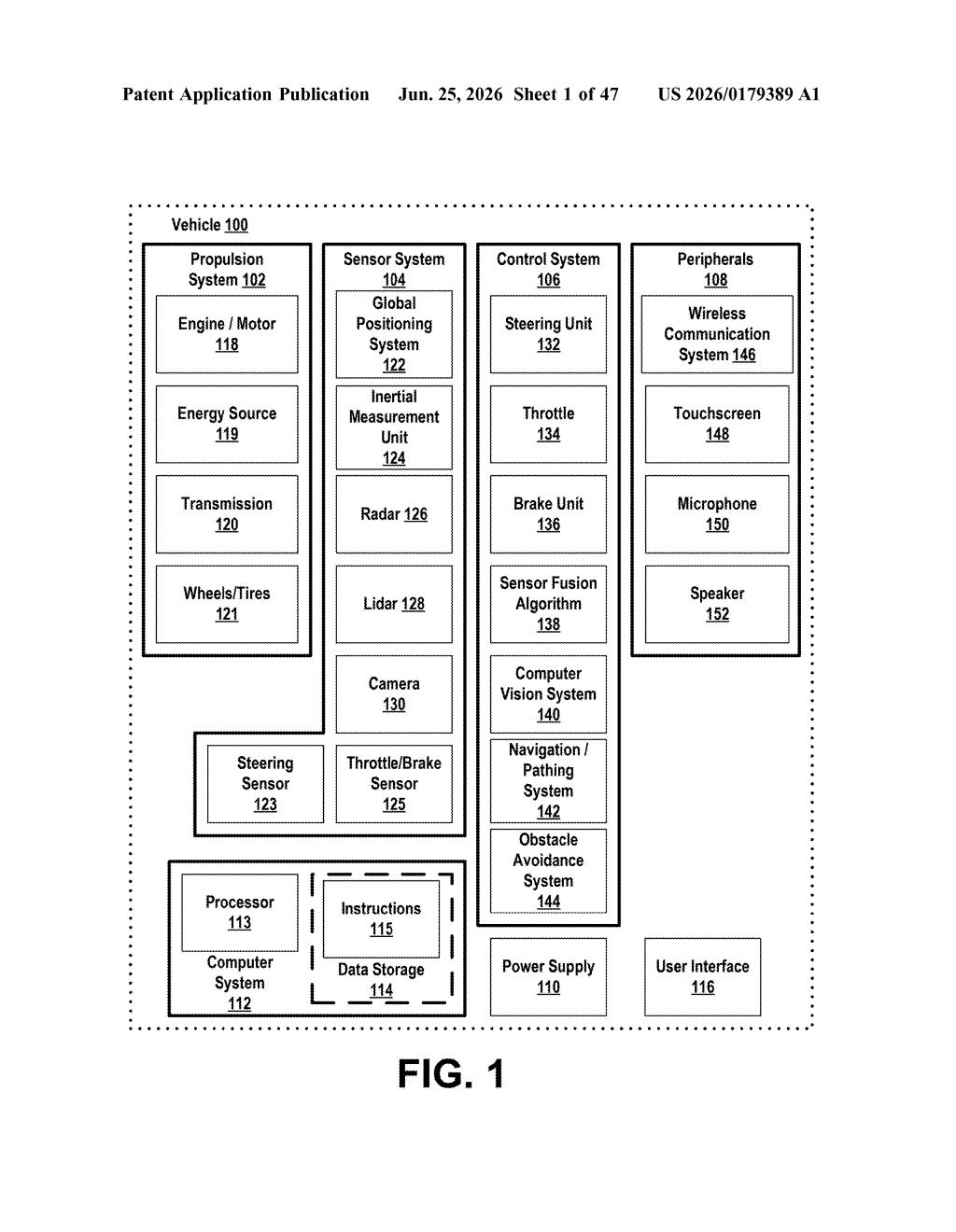
What Waymo's layered camera system actually does
Imagine trying to drive while wearing two pairs of glasses at once: one pair for reading up close, another for seeing far down the road. That's roughly the problem self-driving cars face, and a single camera can't do both jobs well.
Waymo's patent describes mounting three different types of cameras on a single vehicle, each one specialized for a different distance zone. One type watches for objects far away, another handles things nearby with a wide view that spans nearly your entire peripheral vision, and a third fills in the middle ground. The car's computer then combines all three feeds to build a complete picture of everything around it.
The wide-angle cameras in the system cover at least 170 degrees of horizontal view, which is close to what a human sees without turning their head. That wide sweep is meant to catch things that a narrow, long-range lens would simply miss, like a cyclist pulling out from a side street just ahead of you.
How each camera type covers a different distance zone
The patent defines a system with at least two distinct camera types, each assigned to a specific detection job based on distance from the vehicle.
- First camera type (long range): A narrow field of view tuned to spot objects at greater distances. Think of a telephoto lens that lets the car "see" far down a highway or intersection.
- Second camera type (short/medium range, wide angle): A field of view spanning at least 170 degrees in yaw (horizontal rotation around the vehicle's vertical axis), wider than the first type. This camera is meant to catch nearby objects, especially those approaching from the sides.
- Third camera type (implied in the abstract): A middle-distance tier filling the gap between the other two ranges.
The computing device pulls images from all cameras simultaneously and runs object identification on each feed separately, matching the results to the appropriate distance band. That separation matters because algorithms optimized to find a car 200 meters away look very different from ones tuned to catch a pedestrian three meters out.
By splitting the detection problem by range, the system can apply the right tool to each zone rather than asking one camera and one algorithm to cover everything at once.
What this means for self-driving car safety gaps
Current self-driving sensor suites already use a mix of cameras, lidar, and radar, but camera placement and field-of-view decisions have a direct effect on what the car can detect and how fast it can react. A 170-degree wide-angle camera placed to watch nearby space directly addresses one of the harder edge cases in urban driving: objects that appear suddenly in your immediate surroundings, not far ahead.
For Waymo's commercial robotaxi service, tighter object detection at close range could reduce low-speed incidents in dense city environments, where most real-world self-driving problems actually occur. The patent also suggests a modular design logic, where each camera tier can be tuned independently, which matters when the company rolls out hardware across different vehicle platforms.
This is methodical engineering work, not a flashy AI story. Waymo is essentially patenting a specific geometry and assignment logic for camera tiers on a self-driving vehicle. It won't make headlines, but camera arrangement decisions compound over millions of miles of real-world driving, and getting the coverage zones right is exactly the kind of detail that separates reliable autonomy from occasional near-misses.
There are more where this came from
We read every patent application Big Tech publishes and send you the ones worth knowing. Plain English, free, every week.
Want this weekly breakdown for a company we don't cover? Patentlyze Pro →