
Samsung Patent: Programmable Wall Panels Extend 5G Sync Signal Reliability
Samsung is patenting a way to bounce 5G synchronization signals off programmable reflective panels, with a timing trick that makes sure your phone can always lock on to the network even when the panel is mid-cycle.
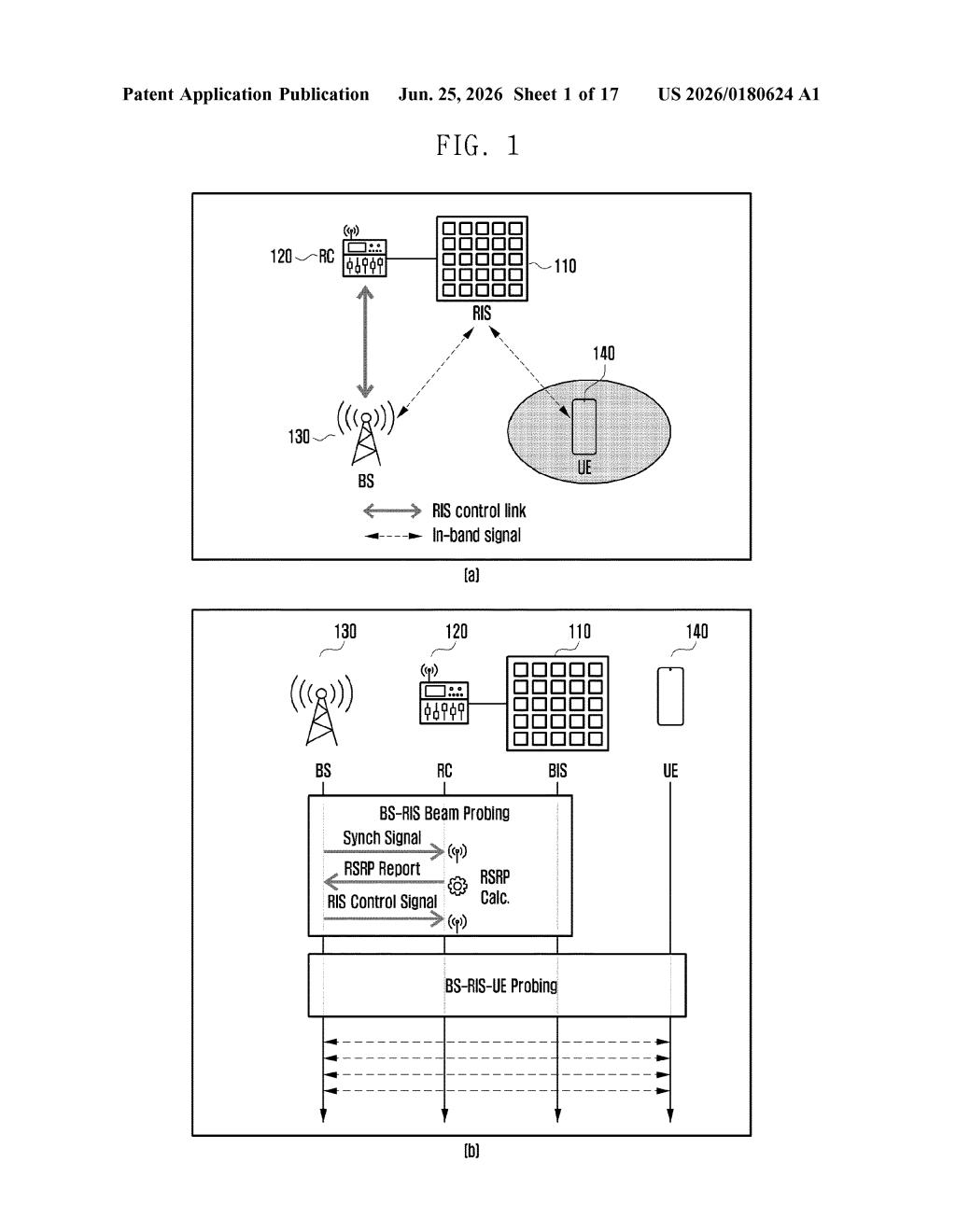
What Samsung's reflective panel trick actually does for 5G
Imagine a mirror that, instead of reflecting light, reflects Wi-Fi or cell signals, and you can electronically steer where those signals go without any moving parts. That's roughly what a reconfigurable intelligent surface (RIS) is: a flat panel lined with tiny electronic elements that redirect wireless signals on demand. Telecom engineers are betting these panels will be everywhere in 6G networks, bouncing signals around corners and through building lobbies.
The catch is that these panels constantly cycle through different configurations, each one pointing the signal in a different direction. If a cell tower sends out a one-time "here I am" ping while the panel is pointed the wrong way, your phone never hears it. Samsung's patent fixes that by having the tower repeat the exact same synchronization signal for at least as long as it takes the panel to run through its full rotation of settings, so every direction gets covered.
It's a small but necessary piece of plumbing that makes RIS actually usable in a real network, where phones need to find and lock onto a signal before anything else can happen.
How the base station times its SSB repeats around the RIS cycle
The patent describes how a base station (the cell tower equipment) should handle a specific kind of signal called a Synchronization Signal Block (SSB), which is the very first message a phone listens for when connecting to a network. Without receiving the SSB, a device can't do anything else on the network.
The problem: an RIS panel cycles through a sequence of beam directions, called its maximum period, sweeping across different angles over time. If the tower sends the SSB only once, and the panel is currently pointed away from a target device, that device misses it entirely.
The solution in the patent is straightforward. The base station:
- Reads the RIS's configuration (how long its full cycle takes, how many beam directions it covers)
- Decides to route the SSB through the RIS rather than a direct path
- Repeats the identical SSB continuously for a duration that equals or exceeds the RIS's full sweep cycle
This guarantees that every beam direction the panel can produce will carry the SSB at least once, so any phone in the vicinity, regardless of its position relative to the panel, has a chance to hear it. The core coordination happens through what the patent calls a pre-configuration step, where the base station acquires the RIS timing parameters before transmission begins.
What this means for 6G coverage in dense buildings
RIS panels are one of the defining technologies being studied for 6G, largely because they can extend coverage into indoor spaces and blind spots without requiring additional active transmitters. But they introduce a fundamental timing problem: a panel that is sweeping through beam angles is essentially a moving target for any protocol that was designed around static antennas. This patent addresses the very first step a phone takes on any network, meaning it's foundational rather than optional.
For Samsung, which manufactures both network equipment and consumer devices, having IP on the core coordination methods for RIS-assisted networks positions it well as 6G standards are finalized. This is the kind of patent that ends up referenced in standards bodies like 3GPP, not one that shows up in a product brochure.
This is infrastructure standards work, not a consumer product announcement. It's genuinely useful to the 6G standards process, and Samsung filing it now makes sense given the current 3GPP timeline for RIS discussions. Don't expect to see it mentioned on a Galaxy spec sheet, but it's the kind of foundational filing that matters when royalty negotiations happen years from now.
There are more where this came from
We read every patent application Big Tech publishes and send you the ones worth knowing. Plain English, free, every week.
Want this weekly breakdown for a company we don't cover? Patentlyze Pro →