
Qualcomm Patents a Way to Ignore Corrupted Location Signals on 5G Phones
Your phone's location fix is only as good as the signals it trusts. Qualcomm's new patent teaches a 5G chip to recognize when those signals are garbage and throw them out before they do any damage.
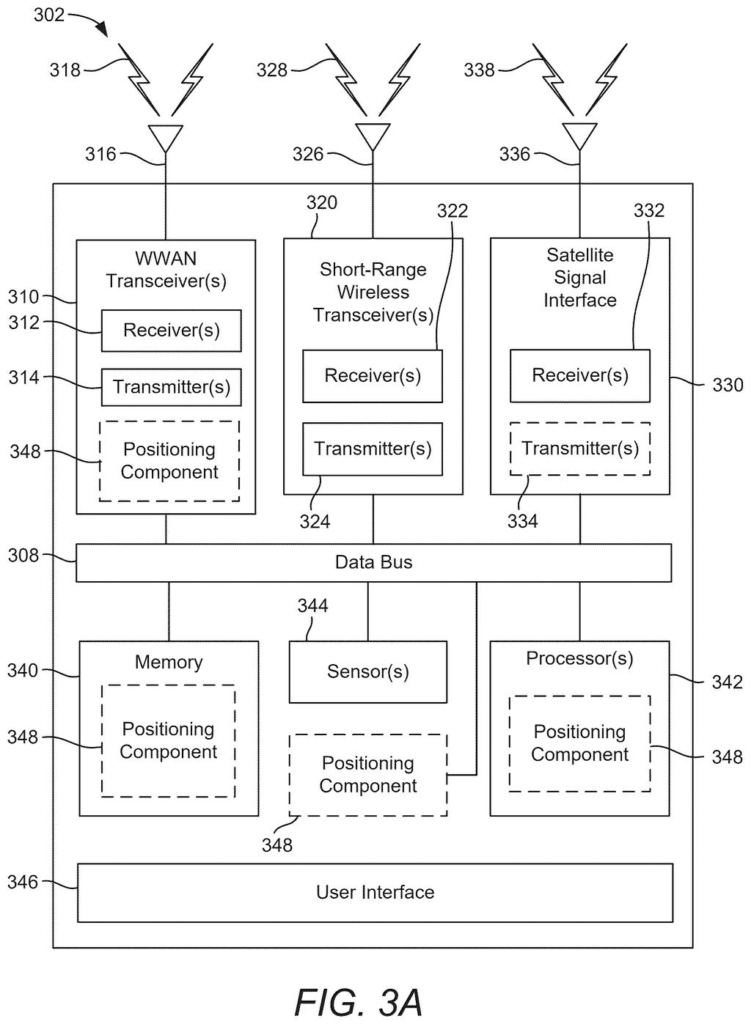
How Qualcomm keeps bad signal data from throwing off your location
Imagine your phone is trying to figure out where you are, and one of the cell towers it's listening to has a burst of static or interference at exactly the wrong moment. If your phone uses that noisy data anyway, your location could jump by hundreds of meters for no obvious reason.
Qualcomm's patent describes a way for the radio chip inside your phone to catch that problem early. When the chip collects a batch of location-related signals from the network, it checks whether any chunk of that batch looks corrupted or too weak to trust. If it does, those bad chunks get discarded before they can poison the final position calculation.
The result is a cleaner, more consistent location reading, especially in crowded urban areas or indoors where interference is common. It's a quiet fix to a problem most people never know they're experiencing.
… determine that one or more portions of the one or more TRS buffer samples at the first TRS measurement occasion are desensed or corrupted; and discard at least the one or more portions of the one or more TRS buffer samples that are desensed or corrupted.
Translation: The phone identifies specific parts of the incoming location data that are noisy or broken and throws them away.
How the UE detects and discards desensed TRS samples
The patent centers on a component called a Tracking Reference Signal (TRS), which is a 5G network signal used partly to help a phone calculate its own position. At set intervals called measurement occasions, the phone's modem collects a buffer of these TRS samples.
The new technique adds a validation step to that collection process. The modem checks each portion of the buffer for signs of desensitization (when the receiver is temporarily blinded by a strong interfering signal, like from the phone's own transmitter firing at the same time) or outright corruption (data that arrived garbled).
- The modem collects TRS buffer samples at a scheduled measurement window.
- It flags any portion of the buffer that appears desensed or corrupted.
- Those flagged portions are discarded rather than passed along to the positioning engine.
By dropping bad samples before they enter the position calculation, the system avoids the kind of random location jumps that bad data can cause. The patent doesn't specify the exact detection method, leaving room for different implementations inside Qualcomm's modem hardware.
Disclosed are techniques for wireless positioning. In some aspects, a user equipment (UE) may obtain one or more tracking reference signal (TRS) buffer samples at a first TRS measurement occasion.
Translation: This patent describes a method for a 5G device to collect raw signal data used to calculate its physical location.
What cleaner positioning signals mean for 5G devices
5G networks are being used for much more than calls and streaming. Precise indoor positioning, emergency 911 location accuracy, and future connected-vehicle applications all depend on the phone's modem producing reliable location data. A chip that silently discards corrupted samples is a meaningful quality-of-life improvement for any application that needs to know where you actually are.
For Qualcomm, which supplies modems to most major Android phone makers and several other device categories, even a small improvement in positioning reliability affects a very large number of devices. This kind of modem-level fix also doesn't require any change to apps or the network, so it could ship inside a future Snapdragon modem update.
This is unglamorous but genuinely useful work. Positioning errors caused by self-interference are a known, documented problem in 5G devices, and fixing it at the modem level is the right place to fix it. Don't expect a press release, but do expect this to appear in a future Snapdragon modem.
There are more where this came from
We read every patent application Big Tech publishes and send you the ones worth knowing. Plain English, free, every week.
The drawings
22 drawing sheets from US 2026/0231081 A1 · click any drawing to enlarge


Want this weekly breakdown for a company we don't cover? Patentlyze Pro →
Be the first to weigh in