
Samsung Patents Bluetooth Earbuds That Share One Identity to Stay in Sync
Pairing wireless earbuds sounds simple, but behind the scenes each earbud has to juggle multiple Bluetooth connections at once. Samsung's new patent describes a method for two earbuds to share Bluetooth addresses and split that work more efficiently.
What Samsung's shared-address earbud pairing actually does
Imagine putting on a pair of wireless earbuds. Your phone sees them as one device, music starts playing, and both ears hear the same thing. What you don't see is the tangle of wireless connections happening under the hood to make that work.
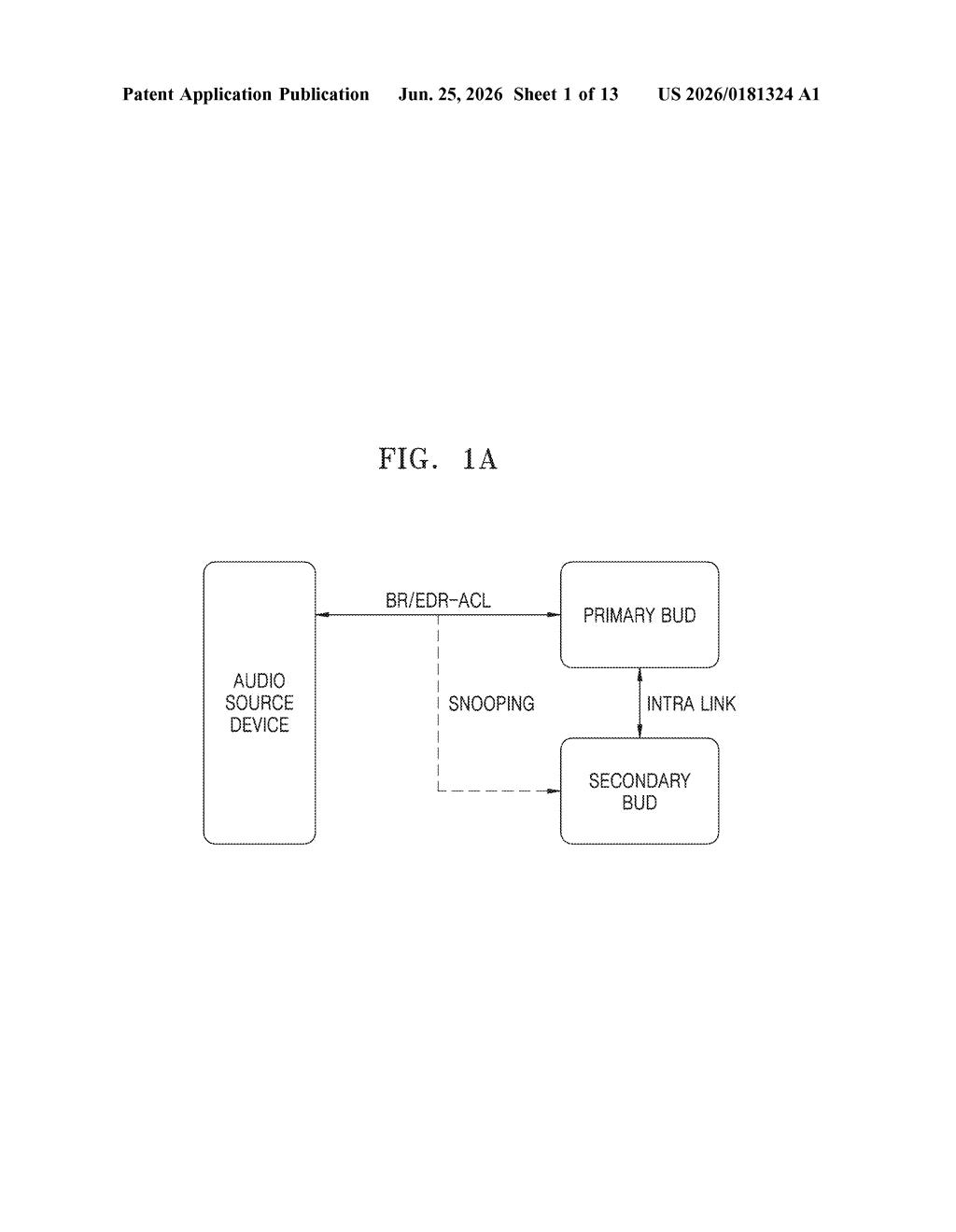
Samsung's patent describes a system where two earbuds (left and right) share the same Bluetooth identifiers, almost like two people carrying the same business card. One earbud acts as the main hub: it talks to your phone in two different Bluetooth modes at once, handling both audio streaming and control signals. The second earbud connects to your phone too, but leans on the shared address and relies on the first earbud to coordinate.
The goal is to make the connection between your earbuds and your phone more reliable and less likely to drop, while keeping the pairing experience simple for you.
How the left and right earbuds split Bluetooth connections
The patent describes a connection architecture for a pair of audio playback devices (think wireless earbuds) where both earbuds share two Bluetooth addresses rather than each having unique ones.
The primary earbud does the heavy lifting. It:
- Opens a connection to the secondary earbud using the first shared address (so they can communicate with each other).
- Opens two separate connections to the audio source device (your phone) using the second shared address: one over Classic Bluetooth (the older, high-bandwidth mode used for streaming audio) and one over Bluetooth Low Energy (a newer, lower-power mode used for control data and metadata).
The secondary earbud then opens its own connection back to your phone using the first shared address, keeping it in the loop without requiring a completely independent pairing process.
By sharing addresses, both earbuds can appear to your phone as a single, coordinated unit. The dual-mode connection (Classic Bluetooth plus Low Energy simultaneously) lets audio data and control signals travel on separate, optimized channels at the same time.
What this means for Galaxy Buds and wireless audio reliability
For consumers, the practical upside is fewer dropped connections and a more consistent audio experience, especially when one earbud is low on battery or briefly out of range. The shared-address approach also means the pairing process from your phone's perspective stays simple: you see one device, not two.
For Samsung, this is directly relevant to its Galaxy Buds lineup, where connection reliability is a persistent competitive pressure against Apple's AirPods. A patent like this signals Samsung is refining the low-level Bluetooth coordination that most users never think about but always notice when it goes wrong.
This is unsexy infrastructure work, but it's exactly the kind of thing that separates earbuds people love from earbuds people tolerate. Connection stability rarely shows up in spec sheets, yet it's one of the top complaints about wireless earbuds. Samsung filing a patent specifically for smarter multi-connection coordination suggests this is an area they're actively trying to improve rather than just marketing around.
There are more where this came from
We read every patent application Big Tech publishes and send you the ones worth knowing. Plain English, free, every week.
Want this weekly breakdown for a company we don't cover? Patentlyze Pro →