
IBM Patents a System to Split Its Number-Crunching Hardware Into Independent Work Zones
IBM wants quantum computers to stop sitting idle between jobs. A new patent describes a system that carves a single quantum machine into multiple independent sections, each running a different program at the same time.
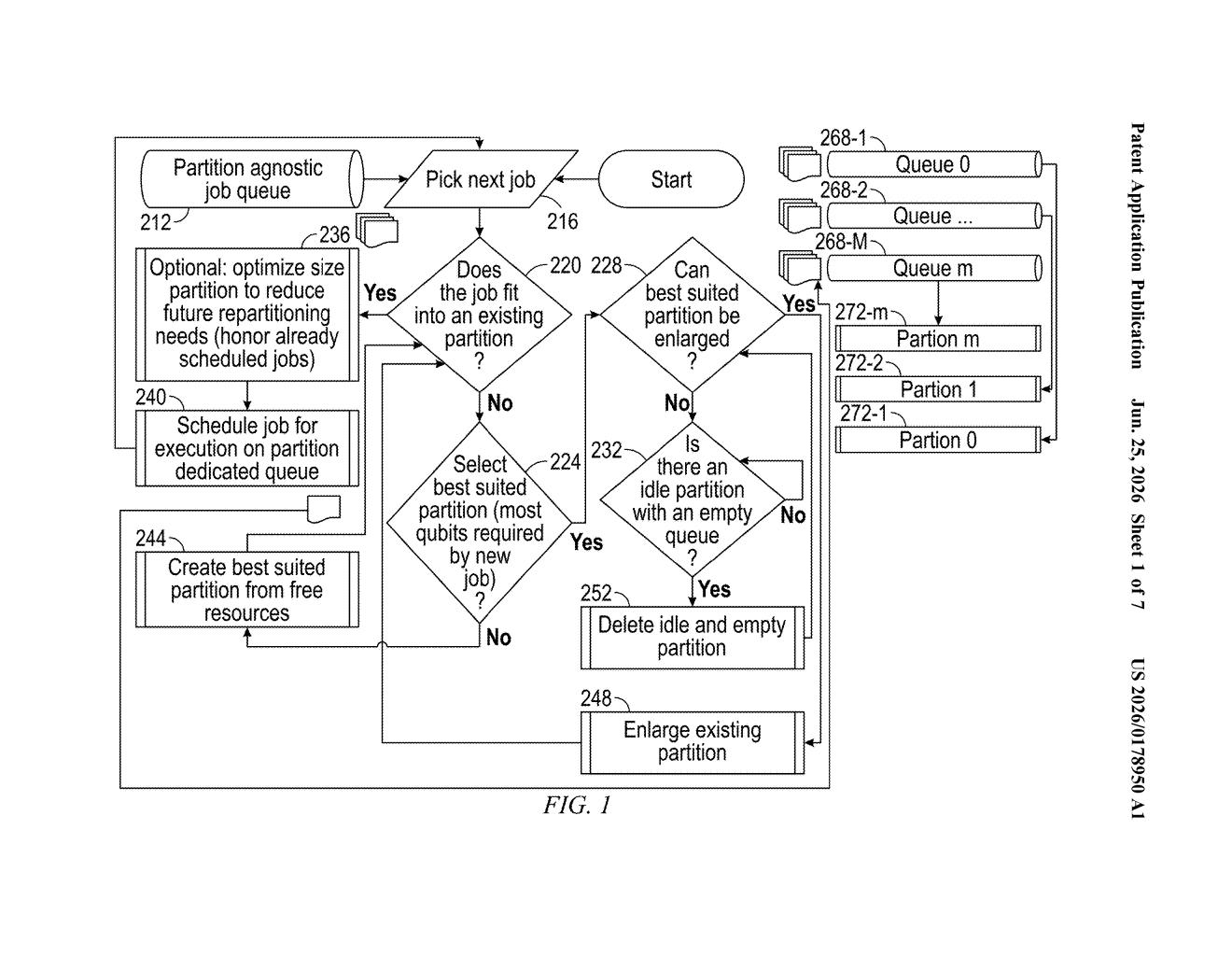
What IBM's quantum partitioning system actually does
Imagine a quantum computer like a very expensive concert hall. Right now, one performer books the whole venue even if they only need half the stage. Everyone else waits outside. IBM's new patent is essentially a plan to divide that stage into separate sections, so multiple performers can rehearse at once.
The system looks at the queue of waiting programs, figures out which qubits (the quantum computer's basic processing units) each program needs, and then carves the machine into custom-sized sections. Each section gets its own dedicated control electronics, the hardware that actually drives the qubits.
The result: a single quantum machine can work on several programs in parallel instead of one at a time. For researchers or businesses paying to access IBM's quantum systems, this could mean shorter wait times and more efficient use of expensive hardware.
How IBM allocates qubits and electronics per job
The patent describes a scheduling and allocation method that treats a quantum computer's hardware as a flexible resource rather than a fixed, all-or-nothing block.
When new jobs arrive, the system:
- Identifies which qubits (the fundamental units of quantum computation) each program requires
- Maps those qubits to their associated control electronics (the classical hardware that sends microwave pulses or other signals to operate the qubits)
- Analyzes the full queue of pending jobs to figure out the best way to group hardware
- Creates a set of partitions, essentially isolated sub-machines, and assigns qubits and electronics to each
The critical detail is that control electronics are partitioned alongside the qubits, not just the qubits alone. That matters because qubits without their dedicated control hardware are useless. By treating both as co-allocated resources, the system ensures each partition is genuinely independent and can run without interfering with neighboring partitions.
This is similar in spirit to how classical data centers use virtualization (splitting one physical server into many virtual ones), but applied to quantum hardware where the physics of the underlying components makes isolation significantly harder to achieve.
What this means for quantum computing access and cost
Quantum computers are extraordinarily expensive and, at current scale, relatively small in terms of qubit count. Any technique that lets them serve more users simultaneously directly improves the economics of quantum computing as a service. IBM already offers cloud-based quantum access through its IBM Quantum platform, and a dynamic partitioning layer would let the company serve more concurrent users on the same physical machine.
For you as a potential user, shorter queue times and more predictable access windows are the practical payoff. For IBM, it is a way to extract more commercial value from hardware that costs tens of millions of dollars to build and operate. Whether this scales to the larger, fault-tolerant quantum machines of the future is an open question, but as a near-term scheduling improvement it is a straightforward and sensible step.
This is infrastructure plumbing, not a physics breakthrough, but it is the kind of practical engineering that determines whether quantum computing becomes a real commercial service or stays a research curiosity. IBM is the right company to be filing this, given its existing cloud quantum business. It is worth a close read for anyone building on or competing with IBM Quantum.
There are more where this came from
We read every patent application Big Tech publishes and send you the ones worth knowing. Plain English, free, every week.
Want this weekly breakdown for a company we don't cover? Patentlyze Pro →