
Red Hat Files Patent for Automatic Quantum Program Rewriting Across Different Hardware
Every quantum computer speaks a slightly different hardware dialect — and Red Hat thinks the answer is a translation layer that rewrites your quantum program on the fly before it ever touches the machine.
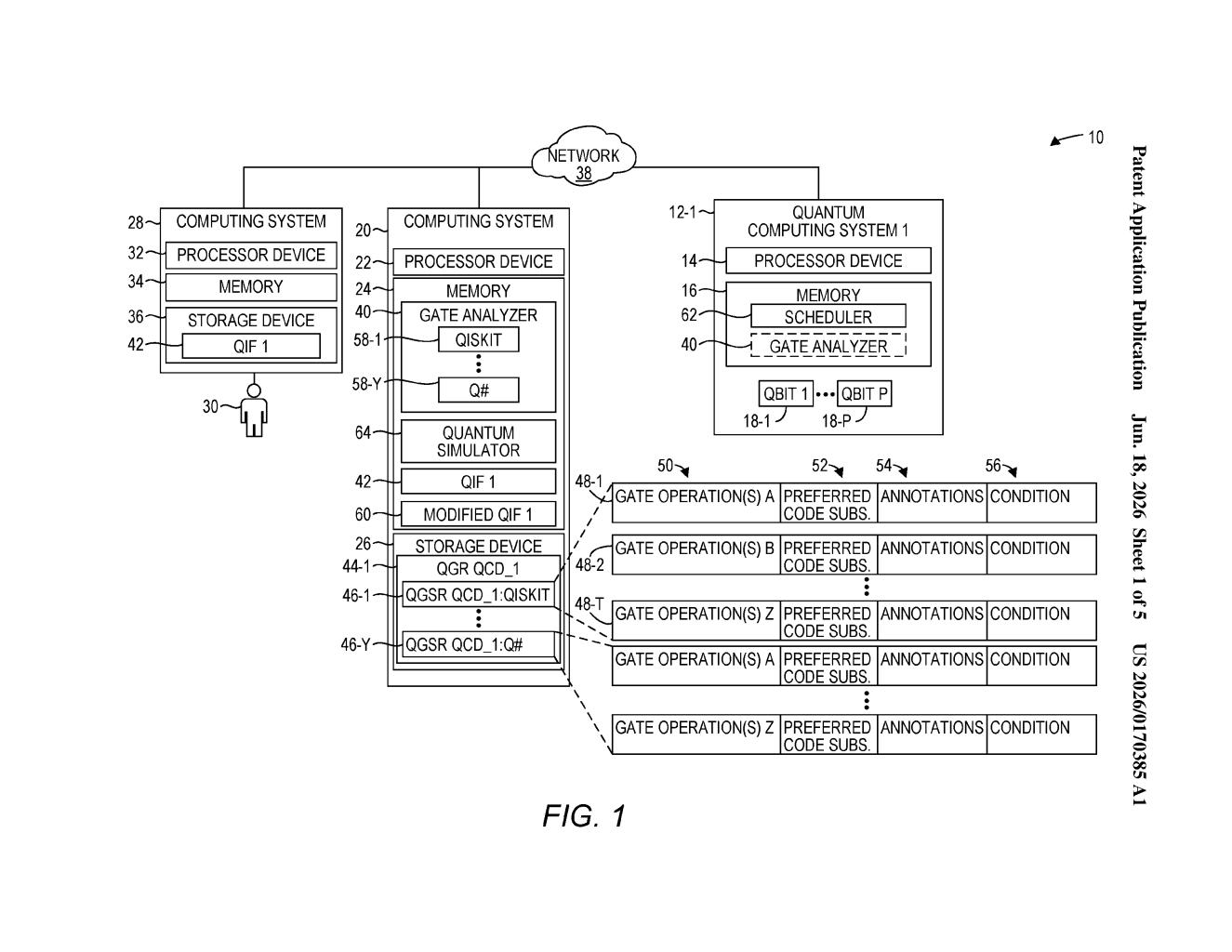
What Red Hat's quantum translation system actually does
Imagine writing a document in one word processor, then needing to open it on a completely different app that doesn't support half the formatting. You'd have to manually reformat everything. Quantum computing has the same problem: a program written for one quantum chip often won't run correctly on a different one, because each machine supports a different set of basic operations (called quantum gates).
Red Hat's patent describes a system that handles that translation automatically. Before your quantum program runs, the system checks what operations the target machine actually supports, then rewrites the program to use only those operations — producing what the patent calls a modified quantum instruction file.
This is essentially a compatibility layer for quantum software, similar to how your phone can run apps built for slightly different hardware generations without you noticing. The goal is to make quantum programs more portable across different machines without developers having to rewrite them by hand each time.
How the gate record drives instruction rewriting
The patent describes a workflow built around three core pieces:
- Quantum Instruction File (QIF) — the quantum program itself, containing a sequence of operations (gates) that manipulate qubits (the quantum equivalent of a classical bit).
- Quantum Gate Record — a lookup table that describes exactly which gate operations a specific quantum computing system supports. Think of it as a hardware capability manifest.
- Translation engine — the software layer that reads both, identifies any gates in the program that the target hardware can't execute natively, and rewrites those instructions into equivalent ones the hardware does support.
The process happens at runtime, before execution. The system identifies a gate operation in the QIF that needs to run on a specific quantum computer, checks the gate record for that machine, rewrites the QIF accordingly, and then schedules the modified program for execution.
The patent's first claim covers a general-purpose method, but the framing around a "first quantum computing system" and "first quantum gate record" suggests the architecture is designed to support multiple backend machines — meaning the same QIF could potentially be translated differently for different quantum hardware targets.
What this means for running quantum software at scale
Right now, quantum computing is deeply fragmented. IBM, Google, IonQ, and others each build machines with different native gate sets, different qubit topologies, and different instruction formats. A program that runs on one may need significant manual rework to run on another. That friction discourages developers from writing hardware-agnostic quantum software in the first place.
Red Hat — which sits in the middle of enterprise software infrastructure through its OpenShift and open-source tooling — is positioning itself to be the compatibility layer that quantum computing currently lacks. If this kind of automatic translation becomes standard, you (or your organization) could theoretically write a quantum program once and let the infrastructure handle the hardware-specific rewriting. That's the same promise containers made for classical cloud computing, and it's a space Red Hat knows well.
This is a genuinely practical problem in quantum computing, and Red Hat is well-positioned to address it — compatibility infrastructure is exactly what they built their business on in classical computing. The patent itself is narrow and method-focused, which gives it a reasonable shot at being granted, but the real question is whether Red Hat can build enough of an ecosystem around quantum middleware to matter before the hardware vendors solve this problem themselves.
There are more where this came from
We read every patent application Big Tech publishes and send you the ones worth knowing. Plain English, free, every week.
Want this weekly breakdown for a company we don't cover? Patentlyze Pro →