
IBM Patents an AI System That Automatically Sorts and Stores Table Data for Faster Retrieval
Every time an AI has to answer a question about a spreadsheet, it has to re-read the whole thing. IBM's new patent describes a way to pre-sort that data so the AI already knows where everything lives.
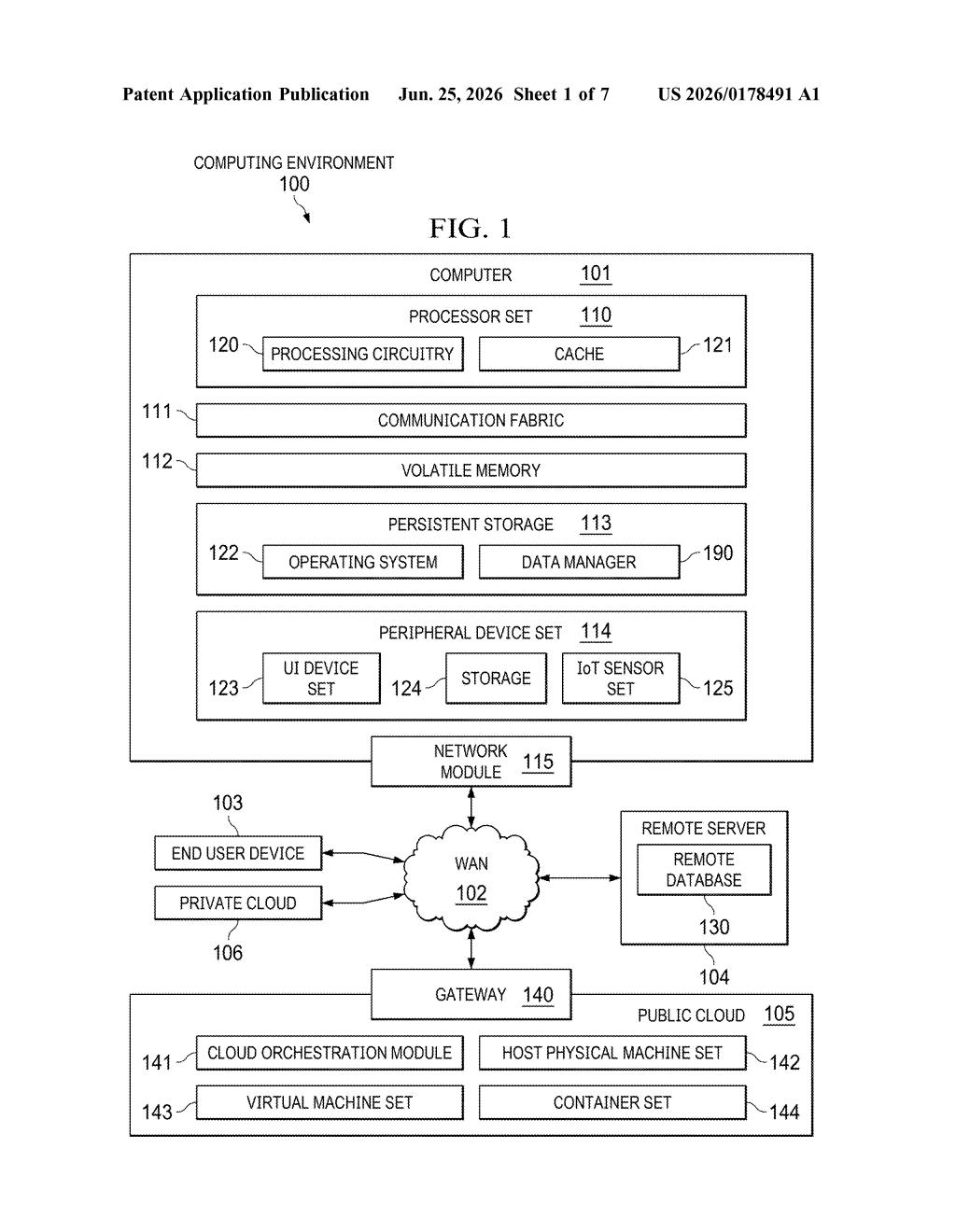
How IBM's AI groups spreadsheet data automatically
Imagine you have a massive spreadsheet full of customer orders, product names, and delivery dates. Every time you ask an AI assistant a question about it, the AI has to scan the entire thing from scratch. That's slow and expensive.
IBM's patent describes a smarter prep step. Before you ever ask a question, the AI reads through the spreadsheet, finds the recurring categories (things like product names or cities that keep showing up), and groups all the relevant rows under each one. Those organized groupings get saved in a fast-access memory store called a cache.
When a question finally comes in, the AI can go straight to the right group instead of rereading everything. Think of it like a librarian who pre-sorts books by topic so you don't have to search every shelf each visit.
How the LLM annotates, clusters, and caches data pairs
The patent describes a pipeline built around data pairs, meaning each input (a table row or cell value) is paired with a known correct output (an answer or label). This gives the system ground truth to work from.
The large language model (LLM) first annotates the input data, tagging items with the categories or entities they belong to. For example, in a table of sales records, "Chicago" and "New York" might both get tagged as city entities.
Next, the system identifies a set of common entities that appear frequently across inputs and that are directly tied to the paired outputs. This step filters out noise so only the entities that actually matter for answering questions get carried forward.
Finally, the LLM generates an item list for each entity (all rows or values associated with, say, "Chicago"), and the whole structure gets written to a program cache (a fast temporary memory store). Later queries can pull from the cache rather than re-processing the raw table.
What this means for AI tools that query large tables
The practical problem here is real: LLMs get slow and expensive when they have to process large tables repeatedly. By front-loading the organizational work and storing results in a cache, IBM's approach could cut the per-query cost for enterprise AI tools that run on structured business data like inventory systems, financial records, or customer databases.
For you as an end user, this kind of infrastructure work is invisible but felt. It's the difference between an AI assistant that answers a data question in two seconds versus one that makes you wait while it re-reads a 10,000-row file every single time.
This is quiet infrastructure work, not a flashy product. IBM is essentially describing a caching layer for LLM-powered data queries, which is useful but also the kind of thing multiple teams at multiple companies are probably building right now. The patent value here depends heavily on whether IBM's specific entity-annotation-then-cache pipeline is distinct enough from what's already in the literature.
There are more where this came from
We read every patent application Big Tech publishes and send you the ones worth knowing. Plain English, free, every week.
Want this weekly breakdown for a company we don't cover? Patentlyze Pro →