
Sony Patent Lets Players Build Custom Game Characters Through Text Descriptions
Instead of clicking through a slider-heavy character creator for an hour, Sony's patent envisions a system where you just type what you want and AI draws it. The catch: the game still gets to set the rules.
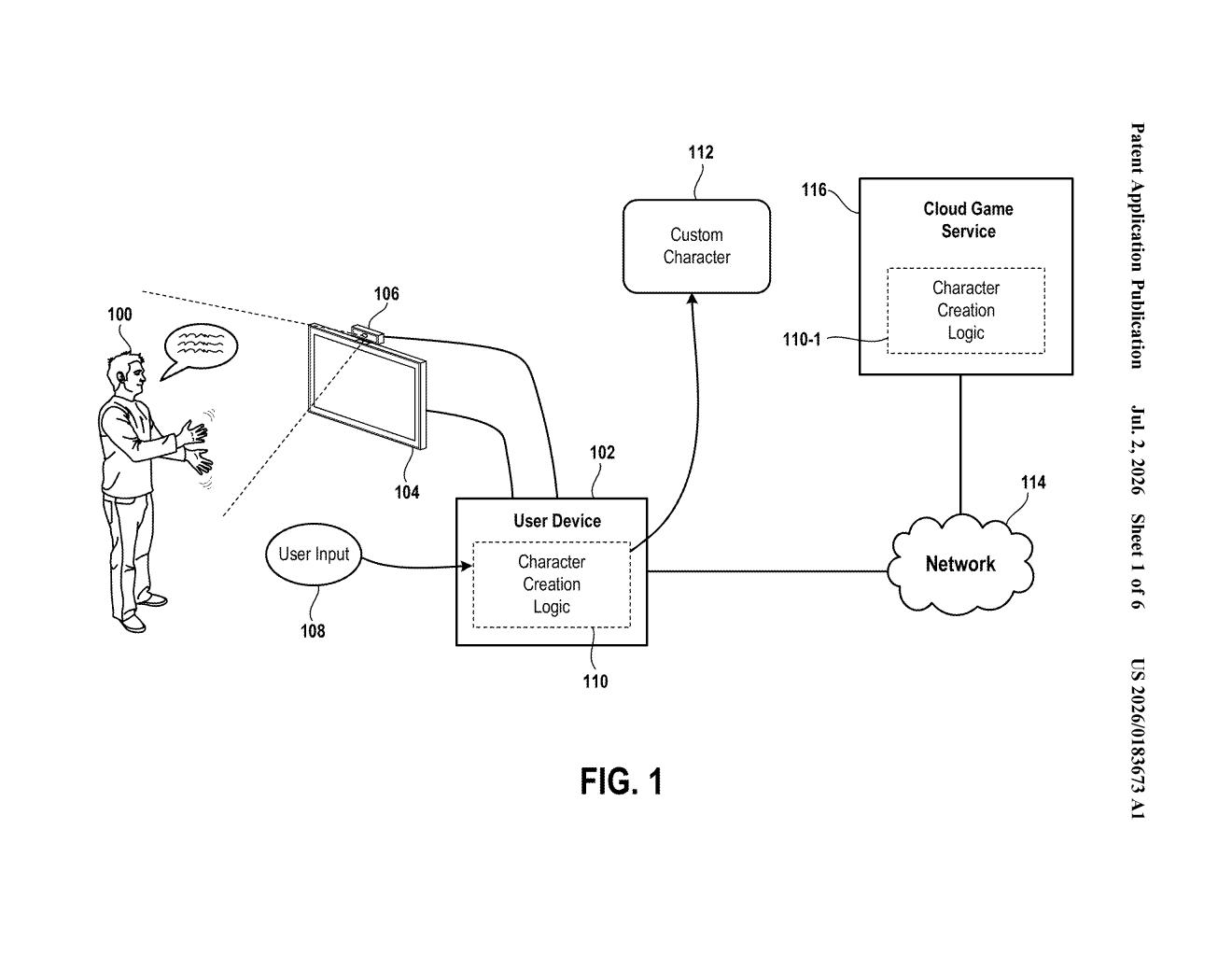
How Sony's word-to-character system actually works
Picture booting up a role-playing game and, instead of dragging sliders for eye color and nose shape, you type something like: "a tall warrior with silver braids, scarred face, and a tattered green cloak." Sony has filed a patent for exactly that kind of system, one where you describe your ideal character in plain words and an AI generates the look for you.
The key twist is that your words don't go straight to the AI unfiltered. The game itself adds its own rules first. If the game is set in a medieval fantasy world, it won't let you accidentally generate a character in a spacesuit. Those guardrails keep your custom hero from looking wildly out of place.
The result is a character shaped by both your imagination and the game's own art style, then rendered and dropped into actual gameplay. It's character creation that feels more like texting a friend than filling out a form.
How the AI turns your words into game-ready visuals
The patent describes a pipeline with a few distinct stages:
- User description input: A player types or speaks a description of how they want their character to look. The system treats this as a set of words to carry forward.
- Game-specific constraints: The system identifies rules baked into the particular game, things like its visual style, permitted character types, or lore-appropriate clothing. These constraints ensure the output fits the game's world.
- Prompt construction: The player's words and the game's constraints are combined into a single text prompt. At least some of the player's original words are preserved so the output actually reflects what they asked for.
- Generative AI image creation: That combined prompt is fed into a generative AI model, which produces the visual elements of the character, things like facial features, clothing, and colors.
- Rendering in gameplay: The resulting character is rendered and used in the actual game session.
The title also mentions body movement data, though the core claim focuses on the text-description side. The filing suggests motion capture or pose data could factor into character creation alongside text, though the details there are thin in the primary claim.
What this means for custom characters in PlayStation games
Character creators in games can be notoriously tedious. Sony's approach trades hundreds of manual sliders for a conversational description, which could dramatically lower the barrier for players who find traditional tools frustrating or overwhelming. If this ships in a PlayStation title, your ability to put a personal stamp on a character could become as easy as writing a sentence.
The game-specific constraint layer is the part worth watching. It means Sony is thinking about how to give players creative freedom without breaking the visual coherence that game developers spend years building. Whether that balance actually works in practice depends heavily on how tight those constraints are set, but the architecture at least acknowledges the tension.
This is a real and practical idea that addresses a genuine friction point in gaming. The constraint system is the smart part: pure open-ended AI generation would be chaos in a carefully art-directed game, and Sony clearly knows that. Whether the output looks good enough to matter is an execution question, not a concept question.
Get our take in your Top Stories
Liked this breakdown? Add Patentlyze as a preferred source on Google, and our plain-English take shows up more often in your Top Stories the next time Sony patent news breaks.
There are more where this came from
We read every patent application Big Tech publishes and send you the ones worth knowing. Plain English, free, every week.
Want this weekly breakdown for a company we don't cover? Patentlyze Pro →