
IBM Patents a Wearable That Charges Itself from Sunlight, Body Heat, or Motion
IBM has filed a patent for a wearable device that never needs to be plugged in, at least in theory. It charges itself using whatever energy source happens to be available at any given moment: sunlight, the heat difference between your skin and the air, or the motion of your body moving through the day.
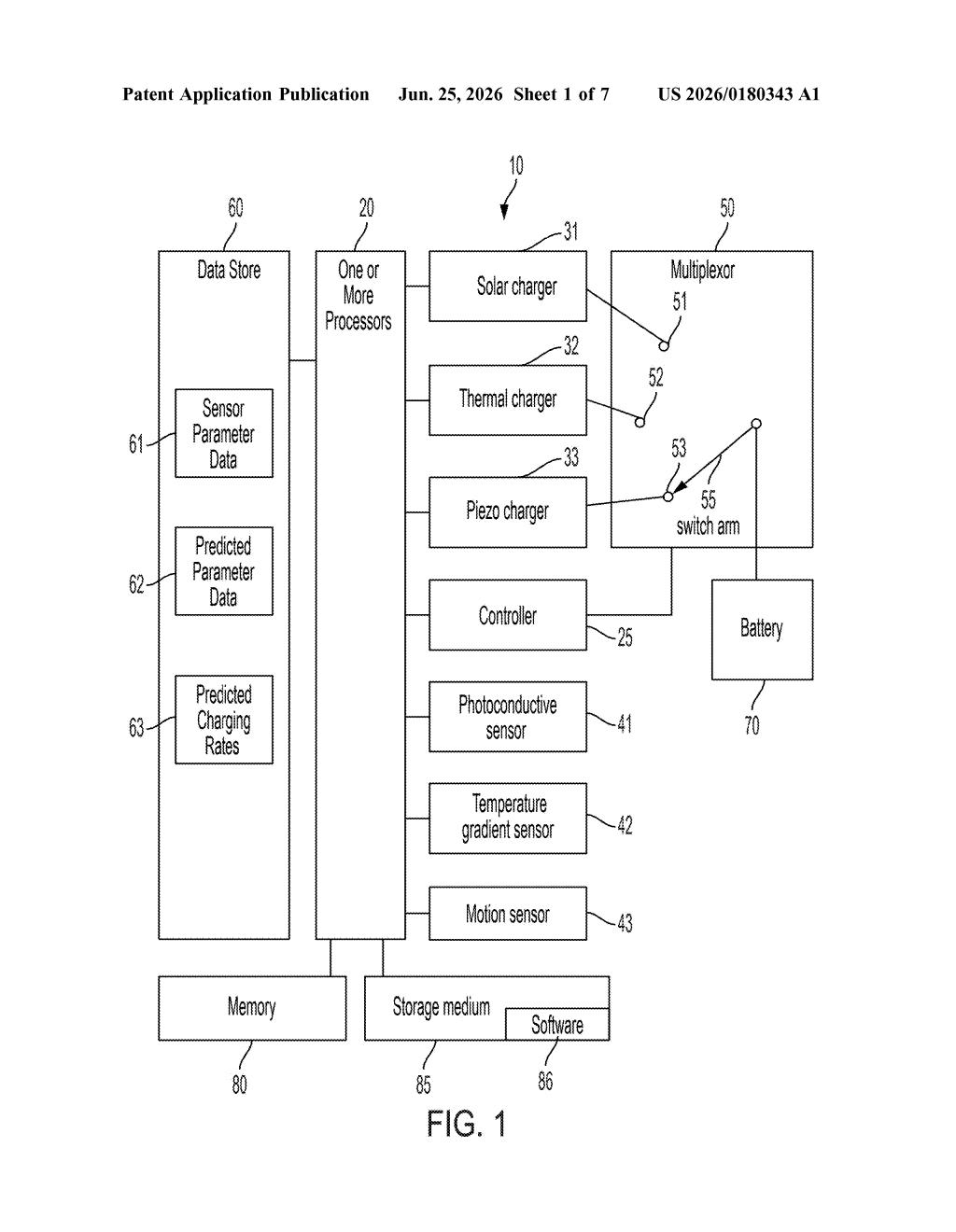
How IBM's self-charging wristband decides what powers it
Imagine your smartwatch charged itself a little whenever you went for a walk, a bit more while you sat in the sun, and even trickled power from the warmth of your wrist on a cold morning. That's the core idea here.
IBM's patent describes a wearable with at least two built-in charging methods: a solar charger that harvests light, a thermal charger that converts the temperature gap between your body and the surrounding air into electricity, and a piezo charger that generates current from physical movement. Each one has a tiny sensor that checks how much energy it could realistically gather right now.
The device runs through scheduled time windows and, at the start of each one, picks whichever charger looks most promising given current conditions. Sunny outside? Solar wins. Sitting still in a cold room? Thermal takes over. Out for a run? The motion charger kicks in. The goal is a wearable that keeps itself topped up without you ever having to think about it.
How the device picks and switches between three charger types
The patent describes a method that runs on processors inside the wearable itself. At regular intervals defined as a sequence of time periods, the device checks in with three possible energy sources and decides which one to activate.
Each charging method is paired with a dedicated sensor:
- Solar charger with a photoconductive sensor (a light-intensity meter) that tells the device how much solar energy is currently available.
- Thermal charger with a temperature gradient sensor that measures the difference between your skin temperature and the ambient air (a bigger gap means more harvestable energy).
- Piezo charger with a motion sensor tracking your linear acceleration (straight-line movement) and angular velocity (rotation, like swinging your arm), since piezoelectric materials generate electricity when physically stressed by movement.
At the start of each time window, the on-device processor reads all active sensors, selects the preferred charger for that period, and triggers it. The patent doesn't specify the exact selection algorithm, leaving room for optimization, but the structure is deterministic: one charger wins per period, and it runs for the full window.
The wearable needs at least two of the three charger types, so the system always has a fallback option if one energy source is unavailable.
What this means for always-on wearable battery life
Battery life is the single biggest complaint about wearables. Most smartwatches need charging every one to two days, which is a genuine daily friction point for users. A device that continuously harvests ambient energy, even in small amounts, could meaningfully extend the gap between plug-in sessions or reduce the battery size needed in the first place.
The three-source approach is the interesting design choice here. Any one of these harvesting methods alone produces modest amounts of power. Combining them and letting the device pick the best option at any moment is more practical than relying on a single source, since no single environmental condition is always present. Whether IBM has the hardware miniaturization to deliver this in a shipping product is a separate question the patent doesn't answer.
This is a solid concept that the wearables industry has been circling for years, but nobody has shipped convincingly at scale. IBM isn't a major wearable hardware maker, so this patent is more likely a research asset or a licensing play than a product roadmap item. The multi-source switching logic is genuinely useful thinking, but the real barrier has always been harvesting efficiency at small form factors, not the selection algorithm.
There are more where this came from
We read every patent application Big Tech publishes and send you the ones worth knowing. Plain English, free, every week.
Want this weekly breakdown for a company we don't cover? Patentlyze Pro →