
IBM Patents a System That Swaps AI Models on Vehicles Based on Passenger Context
Most AI systems run the same models all the time, whether they need them or not. IBM's new patent describes a vehicle that pays attention to who's on board and what's happening, then picks the right AI tools for that exact moment.
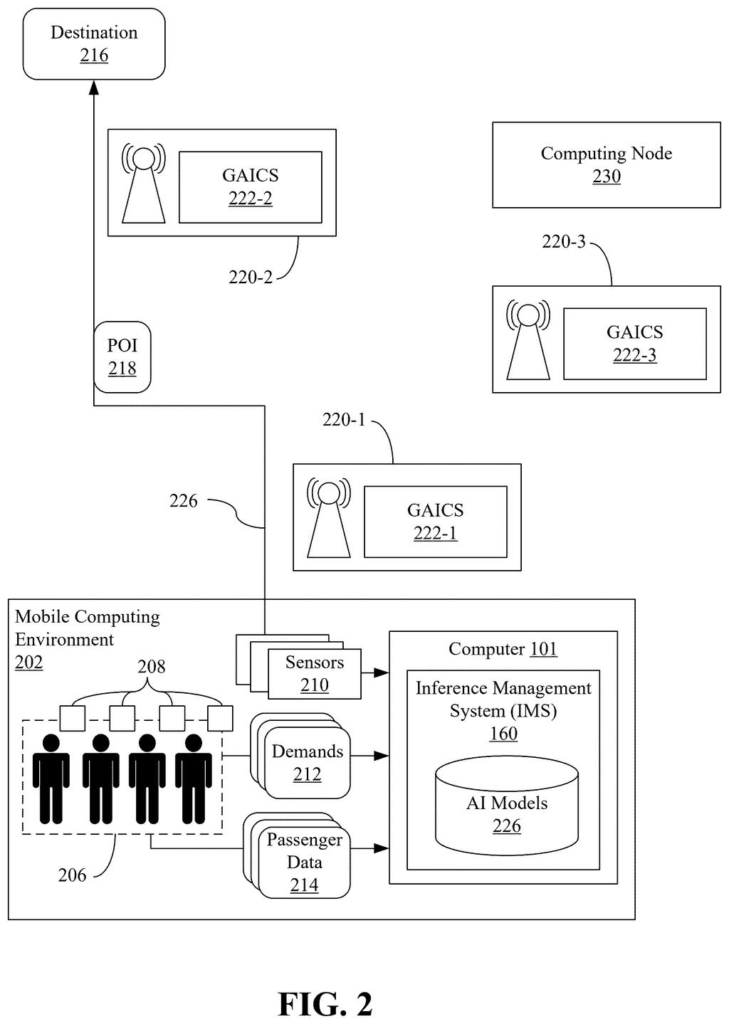
How IBM's on-board AI juggling act actually works
Imagine you're on a commuter train. At rush hour, the train is packed, someone reports a safety issue, and a dozen passengers are streaming video. An hour later, it's nearly empty and everything is quiet. The AI systems running on that train probably don't need to do the same things in both situations.
IBM's patent covers a system that handles exactly this. Sensors around the vehicle and data pulled from passengers' own devices feed into a picture of what's actually going on. The system then looks at a library of AI models stored locally on the vehicle and decides which ones to turn on or off in real time.
The key idea is that each AI model carries a kind of 'profile' describing when it's useful. When conditions match a profile, that model activates. When they stop matching, it shuts down. No cloud connection required, the whole thing runs on hardware inside the vehicle itself.
How the system matches passenger context to AI model profiles
The patent describes a local computing system installed inside a mobile environment (think a train, bus, plane, or ship) that manages a collection of AI models. Rather than running all models constantly, the system activates only the ones relevant to the current situation.
Data inputs come from two sources:
- Onboard sensors (cameras, microphones, environmental monitors, location systems)
- Passenger devices (phones or tablets connected to the vehicle's network, contributing anonymized contextual signals)
From those inputs, the system builds context information, a snapshot of what's happening right now. That snapshot is compared against model profiles, which are essentially metadata tags on each AI model describing the scenarios it's designed for.
When context matches a profile, the corresponding model is activated to run inference tasks (meaning it starts analyzing data and producing outputs). When context drifts away from that profile, the model is deactivated to free up computing resources. The whole cycle runs in real time, without sending data off the vehicle to a remote server.
What this means for AI computing on trains, planes, and buses
Running AI on a vehicle is hard because compute resources are limited and connectivity is unreliable. A system that intelligently turns models on and off based on actual conditions is a practical answer to a real constraint. It means a vehicle could carry a wide library of AI capabilities without needing the hardware to run all of them simultaneously.
For passengers, this could mean better in-vehicle services that respond to real conditions rather than running generic background processes. For operators, it's about efficiency, keeping AI useful without burning through the onboard computer's capacity or battery. IBM positions this squarely for multi-user mobile environments, which points toward public transit and commercial aviation more than personal vehicles.
This is a solid, practical patent addressing a real engineering problem: how do you run meaningful AI on a vehicle with limited hardware and no guaranteed internet? The model-profile matching approach is logical and not wildly novel on its own, but applying it specifically to multi-user transport environments with passenger data as an input is a worthwhile angle. It's not flashy, but it's the kind of infrastructure thinking that actually ships.
There are more where this came from
We read every patent application Big Tech publishes and send you the ones worth knowing. Plain English, free, every week.
The drawings
6 drawing sheets from US 2026/0212235 A1 · click any drawing to enlarge


Want this weekly breakdown for a company we don't cover? Patentlyze Pro →