
Qualcomm Patents a Home Wi-Fi System That Uses AI to Fix Its Own Dead Zones
Every router in a mesh Wi-Fi network is constantly guessing at its own best settings. Qualcomm's new patent describes a system where each router watches what its neighbors are doing and feeds that information into an AI model to automatically pick better configurations for itself.
What Qualcomm's self-tuning mesh Wi-Fi actually does
Imagine you have a mesh Wi-Fi setup in your house, with two or three routers working together to blanket every room in coverage. Right now, each of those routers mostly figures out its own settings independently, or relies on fixed rules baked in at the factory. When the network gets congested or conditions change, the adjustment process is slow and blunt.
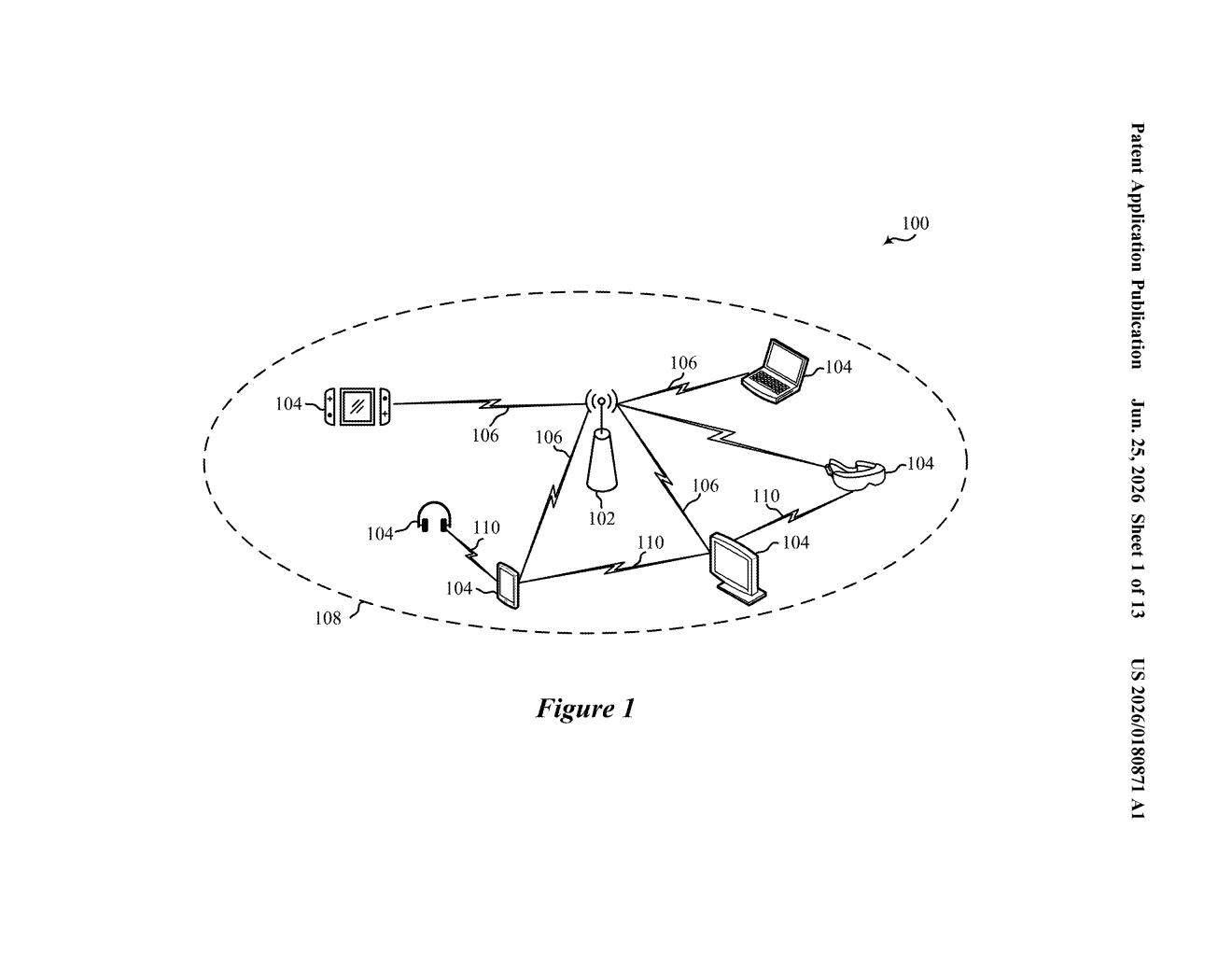
Qualcomm's patent describes a different approach. Each router in the network sends a report to its parent router describing the settings it is currently using. That parent router then feeds both its own settings and its neighbor's settings into an on-device AI model. The model spits back a recommended set of updated parameters, and the router applies them automatically.
The idea is that the whole mesh network can co-adapt in near real time, with every node learning from what the nodes around it are doing. Instead of a network engineer logging in to tweak channel widths or transmission power, the routers effectively negotiate their own best configuration among themselves.
How each access point feeds the AI model and applies new settings
The patent describes a hierarchy of access points (APs), which is the technical term for the individual router nodes in a mesh network. One AP acts as a parent node, and others connect through it either as children below it or as a parent above it.
The key mechanism works like this:
- A child AP sends a report to the parent AP listing its current configuration parameters, things like channel selection, transmission power, and bandwidth settings.
- The parent AP takes those parameters, combines them with its own current settings, and feeds the combined data into a machine learning (ML) model running locally on the device.
- The ML model outputs a revised set of parameters specifically for the parent AP, reflecting what configuration would work best given what its neighbors are doing.
- The parent AP then applies those updated settings to its live wireless communications.
The claim covers communications in multiple directions simultaneously: the AP can apply updated settings when talking to child APs below it, a parent AP above it, or end-user devices (called stations, or STAs) like laptops and phones.
The patent does not specify exactly what ML architecture is used or how the model is trained, which leaves Qualcomm room to implement this across different chip generations.
What this means for home and enterprise Wi-Fi mesh systems
For consumers, the promise here is a mesh network that actually gets better at managing itself over time, rather than one that works adequately out of the box and then stays frozen at those initial settings. If Qualcomm builds this into its Wi-Fi chipsets, router makers who use Qualcomm silicon could offer self-optimizing mesh products without writing the AI logic themselves.
For enterprises running large indoor Wi-Fi deployments, the stakes are even higher. Dense office environments with dozens of access points have always been difficult to tune manually. A system where each AP adjusts based on real-time neighbor reports could reduce the need for expensive on-site network audits. Qualcomm supplies Wi-Fi chips widely across both the consumer router market and enterprise networking gear, so a feature baked into the chip's firmware could show up across a broad range of products.
This is a technically credible patent that addresses a real and persistent pain point in mesh networking. The idea of using on-device AI to coordinate settings across a router network is not entirely new as a concept, but Qualcomm filing a specific method claim around the AP-to-AP reporting loop and ML inference step suggests they are serious about implementing it at the chip level. Whether it actually ships in a way users notice depends entirely on how well the ML model performs in practice.
There are more where this came from
We read every patent application Big Tech publishes and send you the ones worth knowing. Plain English, free, every week.
Want this weekly breakdown for a company we don't cover? Patentlyze Pro →