
Qualcomm Patents Phones Verifying Each Other's GPS Data to Flag Fake Locations
What if your phone could tell when a nearby device is lying about where it is? Qualcomm's new patent describes exactly that: a system where devices cross-check each other's claimed locations and flag anything suspicious.
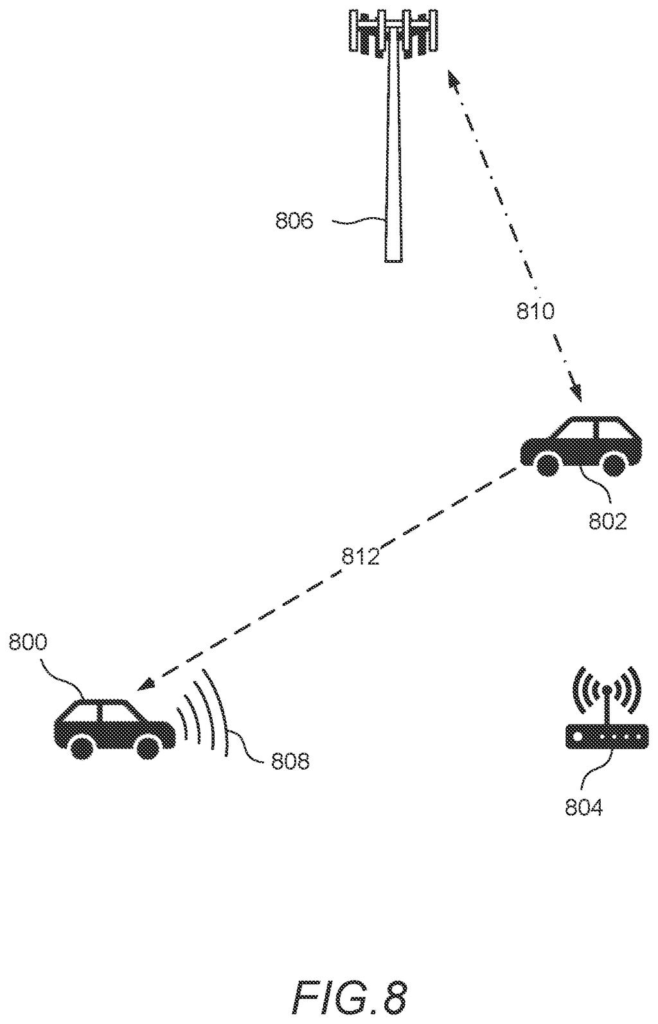
How Qualcomm's crowdsourced location check actually works
Imagine a car on the highway broadcasting its position to other vehicles around it. Now imagine that broadcast is wrong, either because the car's GPS is broken, or because someone is deliberately feeding it fake coordinates. Right now, the cars around it have no way to know.
Qualcomm's patent proposes a fix: when your device receives a location claim from a nearby device, it independently estimates where that device actually is (using signal strength, timing, or other cues). If the two numbers don't match, your device sends a warning to other devices nearby.
This is essentially crowdsourced fact-checking for GPS. No single authority decides who's lying. Instead, the network of devices collectively surfaces inconsistencies, letting everyone in the area make a more informed judgment about whether a location claim can be trusted.
How devices estimate, compare, and flag location mismatches
The patent describes a three-step process running on a wireless device:
- Receive: The device picks up a broadcast message from a second device that includes that device's self-reported location (its "advertised location").
- Estimate independently: The receiving device calculates its own estimate of where the broadcasting device actually is. This could use signal time-of-flight, angle of arrival, received signal strength, or a combination of techniques.
- Flag and forward: If there's a meaningful gap between the advertised location and the independent estimate, the device sends a discrepancy alert to other nearby devices.
The patent doesn't lock in a specific measurement technique for the estimation step, which keeps the design flexible across Wi-Fi, 5G, C-V2X (the wireless standard used for vehicle-to-vehicle communication), and other protocols.
The "crowdsourcing" element comes from that third step. Rather than one device silently ignoring a bad reading, it propagates the warning. Multiple devices observing the same mismatch from different angles would give downstream systems much stronger evidence that something is wrong, whether that's a GPS outage, a software bug, or intentional spoofing.
What this means for GPS spoofing and connected-car safety
GPS spoofing, where a bad actor broadcasts fake satellite signals to mislead receivers, is a known and growing threat in aviation, shipping, and increasingly in connected vehicles. A system where the vehicles themselves cross-check each other's positions adds a layer of defense that doesn't depend on any single GPS receiver or central server getting it right.
For connected cars and V2X safety systems, accurate position data isn't just convenient, it's what keeps automatic braking and collision-avoidance systems working correctly. If a vehicle broadcasts a false position, nearby cars could make dangerous decisions based on it. Qualcomm's approach shifts some of that verification burden to the network itself, which is a practical direction given that Qualcomm already supplies the chips inside many automotive and mobile platforms.
This is a genuinely useful idea for vehicle safety and anti-spoofing, not a flashy consumer feature. The real test will be how the system handles false positives (a device flagged as lying when its GPS is just briefly inaccurate) and how it performs in dense urban environments where signal reflections already make independent location estimation tricky. Worth watching as V2X deployment accelerates.
There are more where this came from
We read every patent application Big Tech publishes and send you the ones worth knowing. Plain English, free, every week.
The drawings
14 drawing sheets from US 2026/0223045 A1 · click any drawing to enlarge


Want this weekly breakdown for a company we don't cover? Patentlyze Pro →
Be the first to weigh in