
Intel Patents a Way to Stream Every Car Screen to Remote Engineers at Once
Testing a modern car's software means staring at a dashboard full of screens, and today that usually means being in the same room as the car. Intel's new patent wants to change that by packaging all those screens into a single remote-friendly stream.
What Intel's virtual car-display streaming actually does
Imagine a team of engineers trying to debug the software on a new car. The car has multiple screens: a driver cluster, a center console display, maybe rear-seat entertainment panels. Right now, getting everyone on the team to see all those screens at the same time is a logistical headache, especially if some engineers are working from a different building or city.
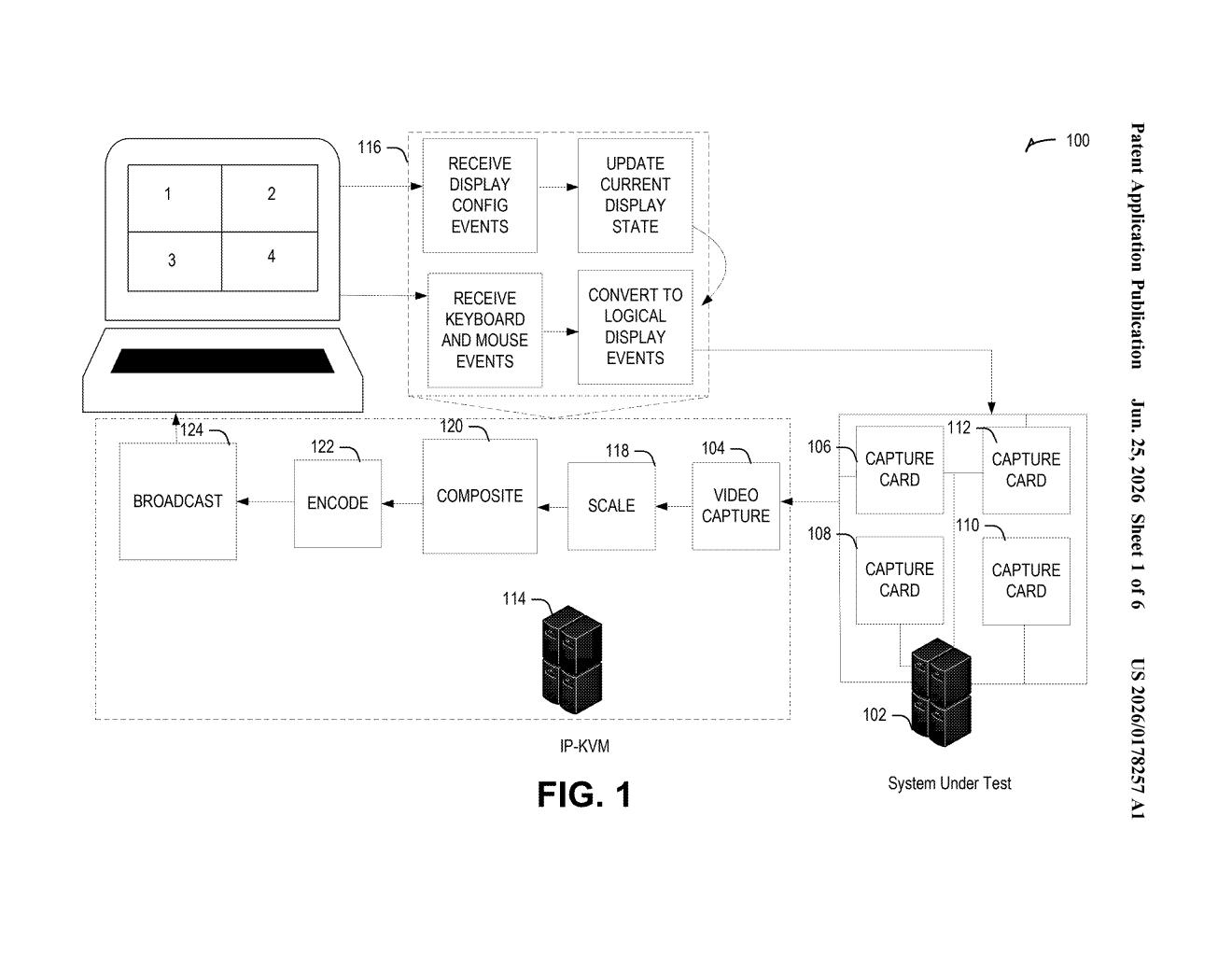
Intel's patent describes a system that captures all of those screens simultaneously, stitches them together into one combined video feed, and then broadcasts that feed so multiple engineers can watch and interact with it remotely at the same time. Think of it like a screen-sharing tool, but built specifically for the multi-display setup inside a car being tested.
Engineers can view all the screens tiled together in one grid, or zoom in on a single screen, without losing the context of what the other displays are doing. The system is designed to work over standard internet connections, so the car doesn't need to be physically present in every team member's office.
How Intel stitches multiple car displays into one stream
The patent describes a software system that runs on an IP-KVM device (a piece of hardware that lets you control and view another computer's video, keyboard, and mouse over a network connection, like a remote-desktop box for video signals).
When connected to an automotive system under test, the device captures multiple video outputs simultaneously, one for each display inside the vehicle. It then applies what Intel calls virtual SerDes operations. SerDes (serializer/deserializer) is normally a hardware chip that combines multiple data signals into one for transmission and splits them back out at the other end. Here, Intel is doing that same job in software, which means no special hardware wiring is needed between the car and the viewing system.
The combined output is packaged into a super-frame format, a single video stream that carries all the individual display channels at once, with their spatial positions preserved. That stream is then encoded and sent over the network. Key capabilities include:
- Multiple engineers viewing the same combined stream at the same time
- Dynamic switching between a tiled multi-display grid view and a full-screen single-display view
- Synchronized playback so all viewers see the same moment in the car's software state
- Support for logical (software-defined) displays, useful when the car's software generates screens that aren't tied to a physical panel
What this means for automotive software development
Car software validation is expensive and slow partly because it requires physical access to a test vehicle. A system like this lets distributed engineering teams collaborate on the same test session without everyone needing to be in the garage, which could cut iteration cycles during development.
For Intel specifically, this fits into its broader push into automotive silicon and software tooling. The patent targets software development and validation workflows, which is exactly the kind of infrastructure tooling that gets baked into development platforms sold to automakers. If this ships as a product, it would likely appeal to any company building multi-display vehicle software, which today means nearly every major automaker.
This is niche but genuinely useful engineering infrastructure. Automotive software testing is one of the messier corners of the industry, and tools that let remote teams collaborate on live vehicle displays have real commercial value. It's not a consumer product, but it's the kind of quiet tooling patent that tends to show up in developer kits.
There are more where this came from
We read every patent application Big Tech publishes and send you the ones worth knowing. Plain English, free, every week.
Want this weekly breakdown for a company we don't cover? Patentlyze Pro →