
AMD Patents a Battery-Saving Way to Hand Audio Processing Off to a Dedicated Chip
Every time your PC plays audio, the main processor wakes up to handle it, burning battery in the process. AMD's new patent describes a smarter way to hand that work off to a smaller, more efficient chip.
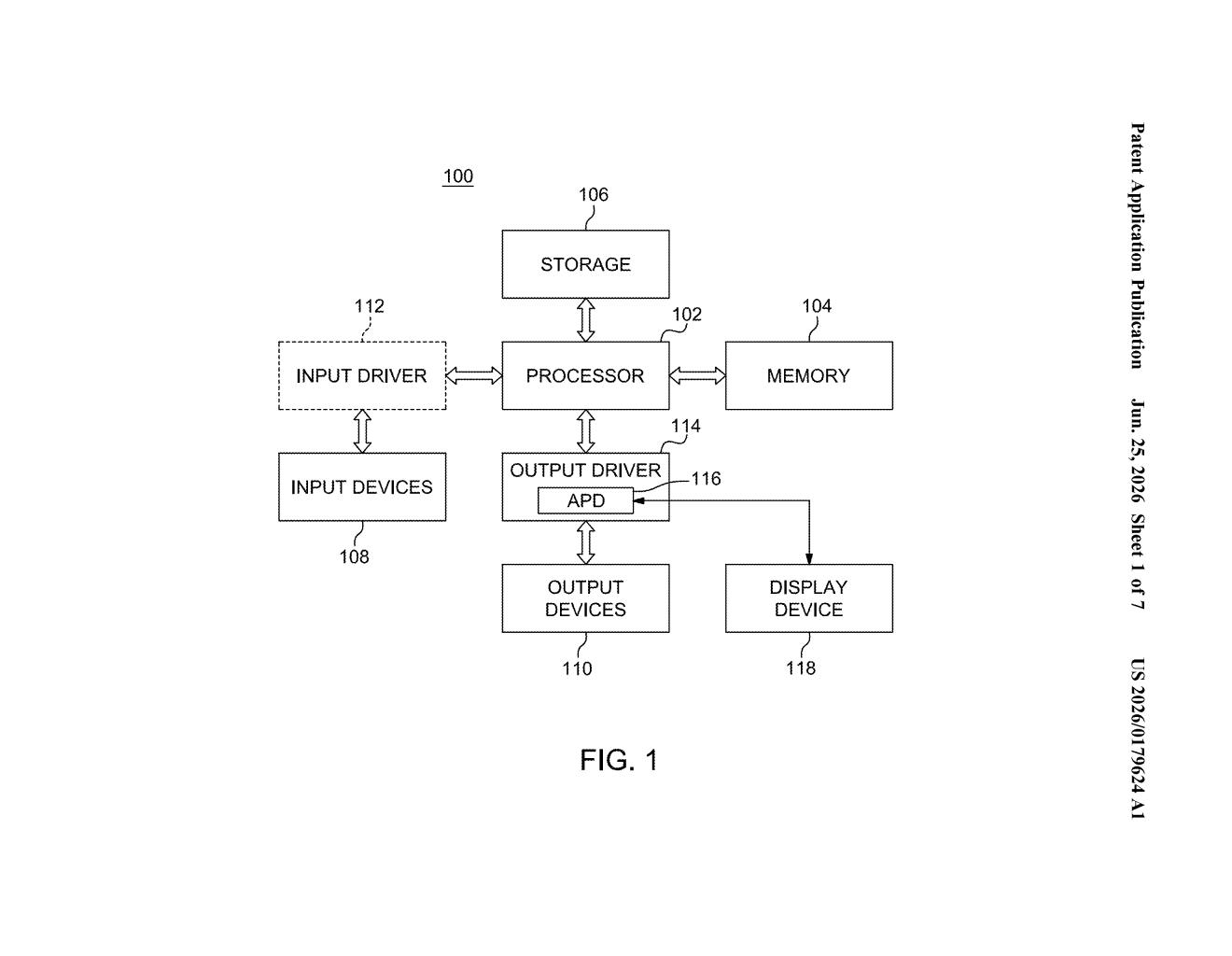
What AMD's audio offload system actually does
Imagine your laptop's main processor as a powerful but power-hungry engine. Even for something as light as playing a podcast in the background, that engine has to stay partly awake. That wastes battery.
AMD's patent describes a system where audio processing gets handed off to a digital signal processor (DSP), a small, specialized chip that handles sound much more efficiently than the main CPU. The DSP gets its own dedicated memory to store and work through whatever audio is playing, so the main processor can stay idle.
The clever part is how the DSP manages that memory. Instead of reserving a fixed chunk no matter what, it adjusts the allocation based on how many audio streams are active at once. Playing one song takes less memory than handling a video call, background music, and system sounds simultaneously.
How the DSP allocates memory per audio stream
The patent describes a method for a digital signal processor (DSP) to take over audio workloads that would otherwise run on the main CPU.
The core mechanism works like this:
- The system allocates a portion of DSP memory specifically for each active audio stream.
- That memory size is not fixed; it scales based on how many streams are currently offloaded to the DSP at once.
- The DSP then processes the audio data entirely within that dedicated memory space, keeping the CPU out of the loop.
The filing notes that different memory allocation strategies offer different tradeoffs. Some approaches prioritize raw power savings; others balance power against latency (how quickly audio responds to commands) or memory efficiency. The patent is broad enough to cover several implementation variants, all sharing the same core idea: let the DSP own the audio pipeline and manage its own memory dynamically.
The first independent claim anchors everything to the relationship between memory size and stream count, which is the variable that determines how aggressively the system can save power without dropping audio quality.
What this means for laptop and PC battery life
For laptop and handheld PC users, background audio is a surprisingly consistent drain on battery. If AMD can route that workload to a low-power DSP reliably, it is the kind of incremental improvement that adds real minutes to a charge without any change to how the user experiences their device.
This is infrastructure-level work, not a flashy feature. But AMD's PC chips compete directly with Apple Silicon, which has long used dedicated audio coprocessors as part of its efficiency story. A patent like this signals AMD is working on closing that architectural gap, even if the specific implementation described here is relatively narrow.
This is unglamorous but genuinely useful engineering. Audio offload is one of those small efficiency wins that accumulates into a meaningfully better battery life story, and AMD needs every edge it can find competing against Apple's tightly integrated chip designs. The patent itself is narrow and incremental, but the direction it points is worth noting.
There are more where this came from
We read every patent application Big Tech publishes and send you the ones worth knowing. Plain English, free, every week.
Want this weekly breakdown for a company we don't cover? Patentlyze Pro →