
AMD Patents a System That Alerts Developers When Programs Access Forbidden Memory
Tracking down bugs in GPU code is notoriously painful, partly because the hardware offers almost no built-in tools to tell you when something reads or writes a memory address it shouldn't. AMD's new patent describes a system that puts that kind of watchpoint directly into the chip.
What AMD's memory watchpoint system actually does
Imagine you're trying to figure out why a program is corrupting data. You'd love to plant a tripwire on a specific piece of memory and get an automatic alert the moment anything touches it. On a regular CPU, debuggers have been able to do this for decades. On GPUs and other accelerators, it's much harder.
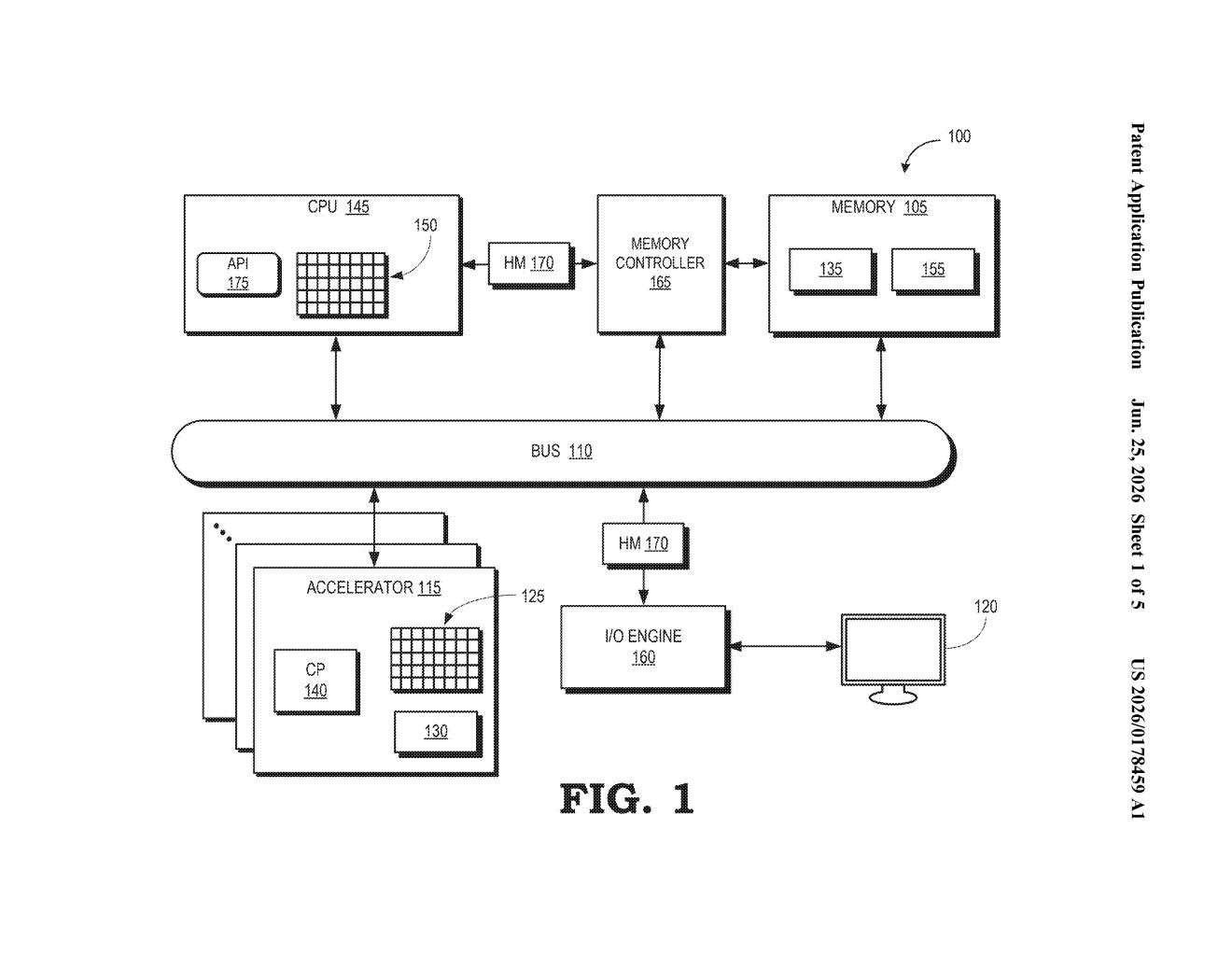
AMD's patent describes hardware circuits baked into the chip that do exactly that kind of tripwire monitoring. A program running on the GPU can tell these circuits, "watch this range of memory addresses, and if anything reads or writes there, call this function." The key detail is that it works through a standard software interface that doesn't depend on the specific chip architecture, so the same code should work across different AMD processors.
Multiple programs can each set up their own independent watches on shared memory at the same time. When a watched address gets touched, the hardware fires off a callback automatically, letting the program log the event, pause execution, or take whatever action the developer set up.
How the hardware monitors track virtual address ranges
The patent describes a hardware monitoring circuit placed at strategic points inside a processing system, such as a GPU or other accelerator. These monitors sit on the path between the processor cores and memory, watching every memory access as it happens.
A software program can configure a monitor through a software API (application programming interface, meaning a standardized set of commands the program calls). The program specifies:
- A virtual address range (a span of memory locations, identified by the logical addresses the program uses rather than physical chip addresses)
- A callback function (a piece of code that runs automatically when the condition is met)
- Which types of access to watch, such as reads, writes, or both
When the hardware detects that any memory access falls inside the specified range, it triggers the callback immediately. Critically, the API is described as architecture-independent, meaning it doesn't change based on which specific AMD chip is underneath. Multiple processes running on the same chip can each configure their own monitors independently without interfering with each other, even when they share the same pool of memory.
What this means for GPU software debugging
For developers writing GPU compute code, things like AI model training kernels or graphics shaders, finding memory bugs today usually means adding software logging that slows everything down or relying on external profiling tools that only catch problems after the fact. A hardware-level watchpoint that fires in real time with almost no performance cost would be a significant quality-of-life improvement for that debugging workflow.
The architecture-independent API angle is the part worth watching closely. If AMD can offer a single debugging interface that works the same way across its CPU, GPU, and specialized AI accelerator products, that makes the whole AMD ecosystem more attractive to developers who currently have to learn different tools for each chip type.
This is genuinely useful developer infrastructure, not a flashy consumer feature. Watchpoint debugging is a standard expectation on CPUs and its absence on GPUs has been a real friction point for GPU programmers for years. AMD filing this patent suggests it is working to close that gap at the hardware level rather than papering over it with slow software workarounds.
There are more where this came from
We read every patent application Big Tech publishes and send you the ones worth knowing. Plain English, free, every week.
Want this weekly breakdown for a company we don't cover? Patentlyze Pro →