
Google Patents an AI System That Builds New Ads From Your Existing Logos and Colors
Instead of asking advertisers to upload fresh creative for every new campaign, Google has patented a system that scans what you already have and generates a full batch of ads from scratch.
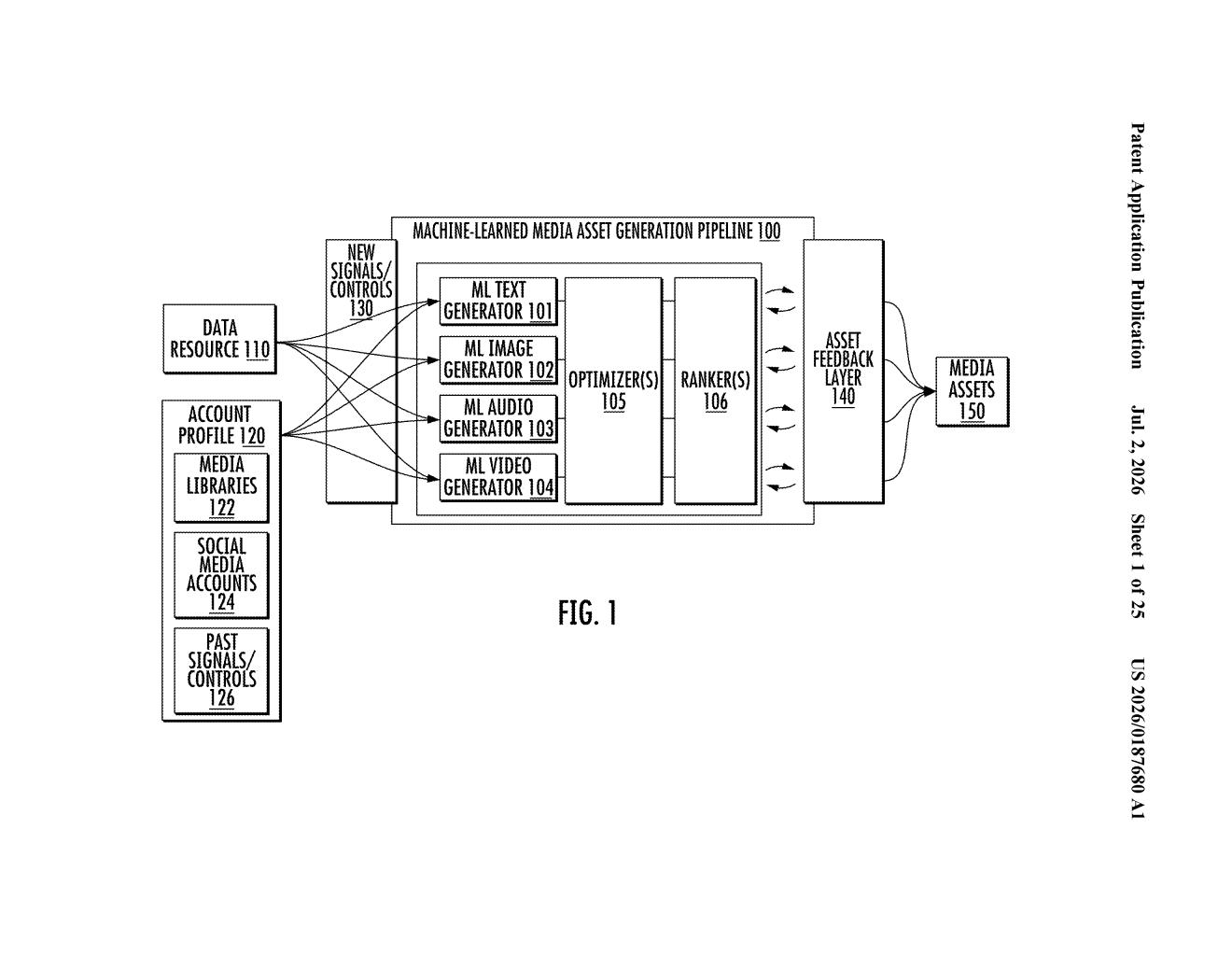
How Google's ad-generation AI reads your brand and runs with it
Imagine you run a small business and your Google ad campaign is running stale. You've got a logo, a color scheme, and some product copy, but you don't have a designer on call to spin up new banners every week. Google's newly filed patent describes a system designed to solve exactly that problem.
The idea is that Google's AI takes your existing ad or webpage and pulls out the building blocks: background images, your brand colors, your logo, and your marketing text. It then uses those ingredients to automatically generate a whole set of new ads, resized for different screens and formatted in different ways, without you lifting a finger.
The output isn't just one new ad. The system produces a batch of candidates, each with different layouts, aspect ratios, and copy variations, which then get fed into Google's existing ad-serving pipeline to find out which ones perform best.
How the three AI models divide the ad-building work
The patent describes three separate AI models working in sequence, each handling a different piece of the ad.
Model one handles images. It takes the background from your original ad, then uses a technique called inpainting (think of it as AI-powered Photoshop fill, where the model guesses what pixels should go inside a blank region) to generate new background images. It also produces versions cropped to different aspect ratios, so the same ad concept works on a phone, a desktop sidebar, and a widescreen banner.
Model two handles text. It reads the existing copy from the original asset and generates multiple new text variations. These aren't just copies; the model produces distinct alternatives, which gives the ad pipeline options to test.
Model three handles brand identity. It analyzes your logo and color palette to produce what the patent calls unique profile data, essentially a style fingerprint that keeps all the generated assets looking like they belong to the same brand.
- Signals extracted: background image, color palette, logo, text
- Output: new background images, new text copy, brand style data
- Final step: all assets fed into Google's existing content generation pipeline as candidate content items
What this means for small advertisers on Google's platforms
For small and medium-sized advertisers, the biggest barrier to running effective campaigns is creative volume. Google's own ad platforms already reward advertisers who supply more variations, because the system can test and optimize across them. This patent points toward a future where Google handles that asset production automatically, lowering the bar for anyone who can't afford a creative agency.
For Google's ad business, the upside is obvious: if advertisers produce more assets with less effort, they're more likely to stay active and spend more. It also fits into a broader pattern of Google building AI tools directly into its advertising stack, reducing reliance on third-party creative tools.
This is one of those patents that sounds incremental but actually describes a real shift in how ad platforms work. Automating creative production has been a missing piece for Google's small-business advertisers for years, and this filing lays out a concrete architecture for doing it. Whether the output ads are any good is a separate question the patent can't answer.
Get our take in your Top Stories
Liked this breakdown? Add Patentlyze as a preferred source on Google, and our plain-English take shows up more often in your Top Stories the next time Google patent news breaks.
There are more where this came from
We read every patent application Big Tech publishes and send you the ones worth knowing. Plain English, free, every week.
Want this weekly breakdown for a company we don't cover? Patentlyze Pro →