
Google Patents System That Serves Targeted Ads Without Storing Your Browsing History
Google is patenting an ad system where your personal browsing profile never leaves your device. Instead of shipping your data to Google's servers, your phone or computer does the profiling work locally and only sends back a blurred, combined report.
What Google's on-device ad targeting actually does
Imagine your phone keeping a running list of things you seem interested in: sports gear, travel deals, cooking videos. Right now, most ad systems would send that list to a company's servers, where it gets stored, analyzed, and sold. This patent describes a different setup.
Here, your device holds onto your own attribute data (think of it as a personal interests file) in local storage. When ads need to be targeted, the system pulls only blended, anonymized totals across many users at once. No one server ever sees your individual profile.
Google then uses those aggregated reports to decide which ads to distribute and at what frequency, adjusting its targeting based on group-level signals rather than following you personally. The goal is to run a functional ad business while giving individual users a meaningful privacy buffer.
How Google aggregates profiles without seeing individual data
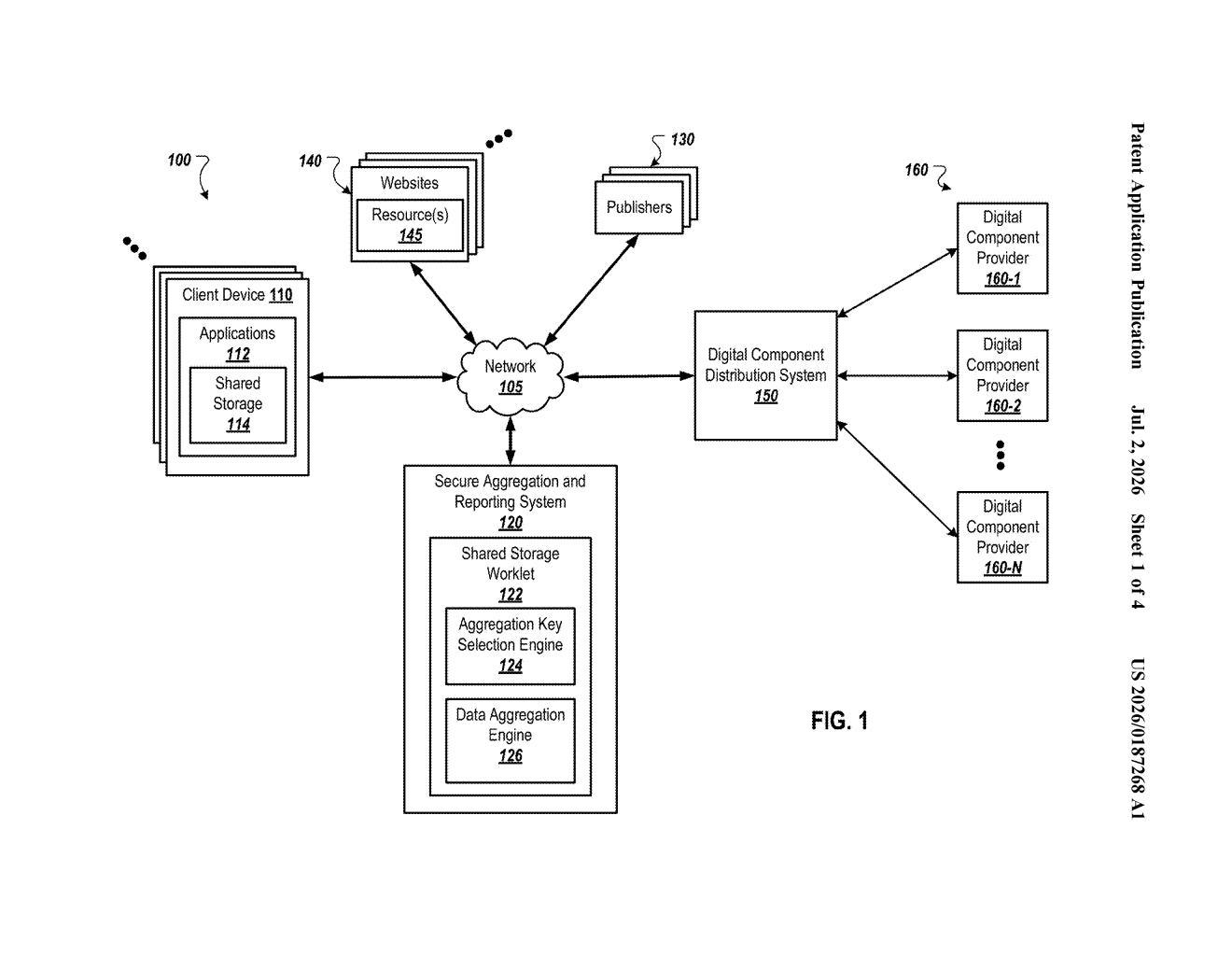
The patent describes a pipeline with a few distinct moving parts:
- Attribute identification: When your device sends a request for a digital component (the patent's term for an ad or piece of content), the system identifies relevant user attributes based on that request and sends them back to your device.
- Local accumulation: Your device stores those attributes over time in a "shared storage" layer, building up a running picture of your interests without transmitting it anywhere.
- Aggregated reporting: The system later reads from multiple devices' shared storage buckets simultaneously and generates an aggregated user attribute report, a statistical summary bucketed by "aggregation keys" (think broad categories like "sports fans aged 25-34") rather than individual records.
- Distribution adjustment: Ad delivery parameters are tuned based on those aggregated reports, so targeting decisions reflect real user signals without the company ever holding a single user's complete profile.
The first independent claim was canceled during prosecution, which is common during patent examination and doesn't necessarily doom the filing. Dependent claims likely carry the operative scope.
What this means for the future of cookieless advertising
For you as a user, this approach means your browsing habits stay on your own hardware rather than living on ad-tech servers. That's a meaningful shift from how most digital advertising has worked for the past two decades, and it aligns with the direction regulators in the EU and elsewhere are pushing.
For Google's business, the stakes are higher. The company has been under sustained pressure to move away from third-party tracking cookies, and its Privacy Sandbox initiative has been the public answer to that. This patent looks like part of the underlying technical architecture for that transition, building a system that can still serve targeted ads at scale while reducing the company's direct exposure to individual user data.
This is serious infrastructure work, not a headline feature. The canceled lead claim is a minor flag, but the core idea, running ad profiling on-device and only surfacing aggregate stats, is exactly the direction the industry is being pushed by regulators and browser makers. If this approach ships in any form, it could become the backbone of post-cookie advertising.
Get our take in your Top Stories
Liked this breakdown? Add Patentlyze as a preferred source on Google, and our plain-English take shows up more often in your Top Stories the next time Google patent news breaks.
There are more where this came from
We read every patent application Big Tech publishes and send you the ones worth knowing. Plain English, free, every week.
Want this weekly breakdown for a company we don't cover? Patentlyze Pro →