
Google Patents a Way to Run Touch Sensors Across a Display's Full Edge-to-Edge Surface
Modern phone screens still can't quite reach the very edge of the glass because the electronics that drive the pixels get in the way. Google's new patent describes a way to keep the touch layer working even over the strip of pixels that hang past those electronics.
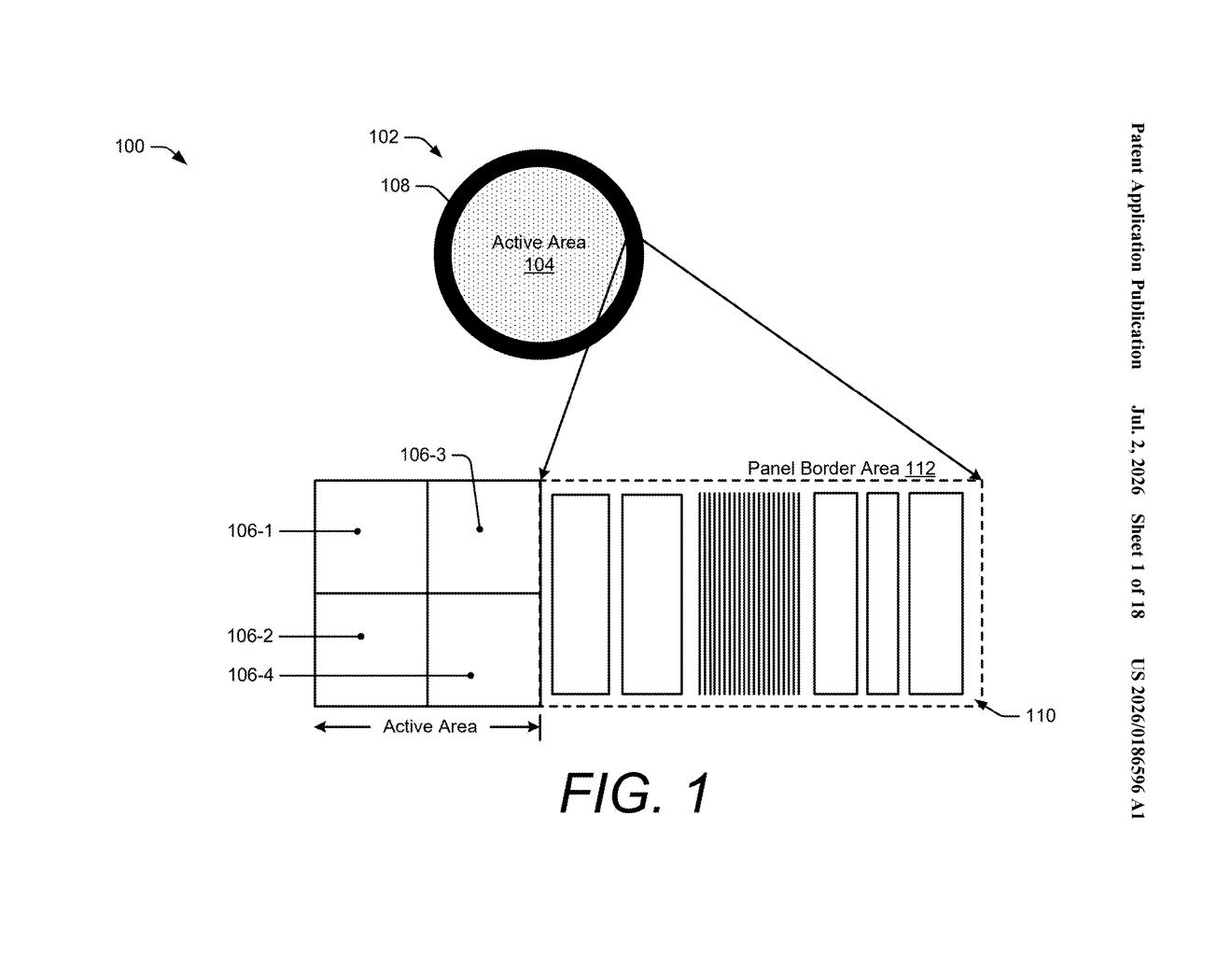
How Google fits touch controls to a bigger-than-usual lit screen
Imagine a phone screen where the lit area pushes all the way to the corners and edges of the glass, with no dark border at all. The problem is that every pixel needs a tiny transistor underneath it to switch it on, and those transistors take up space. When engineers want pixels to reach beyond where the transistors end, the screen still lights up in that outer ring, but the touch layer usually can't follow because there's nowhere to hide its wiring.
Google's patent solves this by routing the touch sensor's wires between the glass cover and the pixel layer itself, specifically threading them through the gaps in that outer ring where pixels exist but aren't emitting light at any given moment. The wiring stays flat, tucked above the pixels rather than below them, so it doesn't block any light.
The result is a display whose touch sensitivity matches its full lit area, including the parts that extend beyond the transistor layer. That's the technical foundation for a screen that is genuinely active right up to its physical edges.
How the touch wiring hides in the display's extended outer pixels
The patent describes a display stack built in distinct layers, each with a specific job.
- Cover layer: the glass you actually touch, sitting on top.
- Pixel array: the layer of light-emitting diodes (tiny LEDs, one per pixel) directly underneath the glass.
- Transistor layer: the switching electronics that tell each pixel when to turn on, sitting below the pixel array and covering a smaller area than it.
Because the pixel array is physically larger than the transistor layer beneath it, there's an "extended emitting area" at the outer edges of the screen where pixels exist but are not directly above their own dedicated transistors. Google's engineers use variable pixel density and transistor density to make this work without obvious visual gaps.
The clever part is where the touch sensor wiring goes. Normally, touch trace routings (the thin conductive lines that carry signals from your finger to the processor) are buried below the pixels. In the extended outer area, the patent places them above the pixel layer but below the cover glass, snaking through spots in the outer ring where pixels are present but happen not to be emitting light at that moment. This keeps the wiring invisible to you while still giving the touch controller full coverage of the screen's real estate.
What this means for truly edge-to-edge phones and tablets
For anyone who has ever noticed that tiny gap between the last lit pixel and the actual edge of their phone's glass, this patent is directly aimed at that problem. A display built this way could be genuinely active, both visually and to touch, across its entire physical surface, which matters most for foldable phones, tablets, and any device where bezel width is a selling point.
From a competitive standpoint, Google making this kind of filing suggests the Pixel hardware team is thinking carefully about next-generation display construction. Routing touch wires above the pixel plane rather than below is an unconventional layout choice, and patenting it locks in some design space for future Pixel phones or tablets that push screen real estate to the physical limit.
This is genuinely interesting display engineering, not a vague platform play. The specific problem (touch wiring can't easily follow pixels that extend past the transistor layer) is real, the solution is concrete, and the claim language is narrow enough that it might actually hold up. It's worth watching if you care about where foldable and edge-to-edge screen design is heading.
Get our take in your Top Stories
Liked this breakdown? Add Patentlyze as a preferred source on Google, and our plain-English take shows up more often in your Top Stories the next time Google patent news breaks.
There are more where this came from
We read every patent application Big Tech publishes and send you the ones worth knowing. Plain English, free, every week.
Want this weekly breakdown for a company we don't cover? Patentlyze Pro →