
Google Patent Covers Secure Ad Selection That Keeps User Data Private
Google has filed a patent for an ad-selection system where no single computer ever holds enough information to know who you are or what ad you'll see. The trick is splitting the decision across multiple machines using cryptographic puzzles that only work when combined.
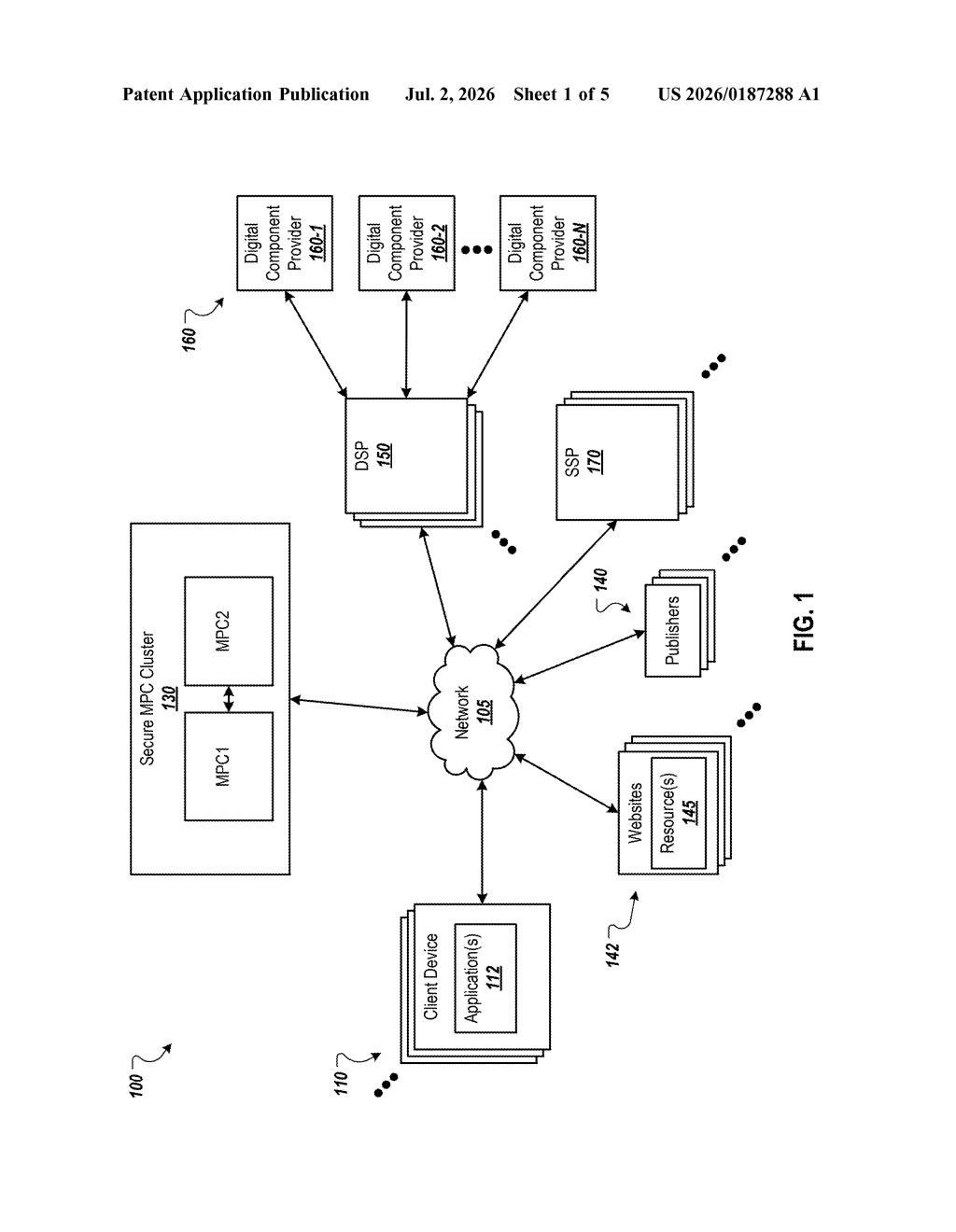
How Google filters ads without exposing your info
Imagine your doctor splitting a prescription across two separate pharmacies, so neither one alone knows what you're being treated for. Google's patent applies that same idea to online advertising.
When a webpage you're visiting needs to show an ad, instead of one Google server knowing everything (which ad is eligible, your browsing context, and who wins the auction), the decision is carved up across multiple computers. Each computer only ever sees an encrypted piece of the puzzle. They can run the full ad-selection process together without any single machine learning the whole picture.
The result is that the "winning" ad gets chosen and sent to your browser, but the servers involved never combined your data in a readable form. Think of it as a locked-room vote where each voter only sees a redacted ballot.
How garbled circuits split and hide the ad decision
The system uses a technique called secure multi-party computation (MPC), where multiple computers collaborate on a calculation without sharing the raw inputs with each other.
The specific tool doing the heavy lifting is a garbled circuit, a way of encoding a logical decision ("does this ad meet the rules for this page?") as a kind of encrypted circuit board. One server builds the circuit; another server runs it. Neither learns the other's inputs, yet both contribute to the answer.
The process works in two stages:
- A first garbled circuit checks whether each ad from a content platform meets a "publication condition" (for example, is this ad approved to appear on this type of page?).
- A second garbled circuit, built using encrypted fragments from the first stage, checks whether each ad is eligible for this specific user and context.
The output of all this is a secret share of the selection result, meaning the winning ad's identity is split into fragments sent to different parties. Only when the client device (your browser) reassembles those fragments does the final choice become visible. The patent also references oblivious transfer, a cryptographic method that lets one party receive a piece of data from another without the sender knowing which piece was received.
What this means for privacy-focused ad targeting
Ad targeting currently depends on servers that accumulate and cross-reference large amounts of user data. A system like this could allow meaningful ad selection to happen without centralizing that data, which matters both for user privacy and for regulatory environments like the EU's GDPR that restrict how personal data can be processed.
For Google specifically, this fits into a broader pattern of "privacy-preserving" ad infrastructure it has been building since announcing the end of third-party cookies. If the computation itself never exposes user data in the clear, that is a different kind of privacy guarantee than simply anonymizing data after the fact. Whether this ever replaces existing ad pipelines depends on real-world performance costs, since garbled-circuit systems are computationally expensive.
This is genuinely interesting cryptographic engineering applied to one of the most data-hungry processes on the web. Whether it scales to the billions of ad auctions Google runs per day is a real open question, and the patent doesn't answer it. But the underlying approach, replacing data-sharing with encrypted joint computation, is the direction serious privacy researchers have been pointing for years.
Get our take in your Top Stories
Liked this breakdown? Add Patentlyze as a preferred source on Google, and our plain-English take shows up more often in your Top Stories the next time Google patent news breaks.
There are more where this came from
We read every patent application Big Tech publishes and send you the ones worth knowing. Plain English, free, every week.
Want this weekly breakdown for a company we don't cover? Patentlyze Pro →