
Google's New Patent Lets You Point Your Phone and Ask a Question Out Loud
Google is patenting a search system that processes live video and audio at the same time, not one or the other, to figure out what you're looking for. It's the closest thing yet to pointing your phone at the world and just asking it a question out loud.
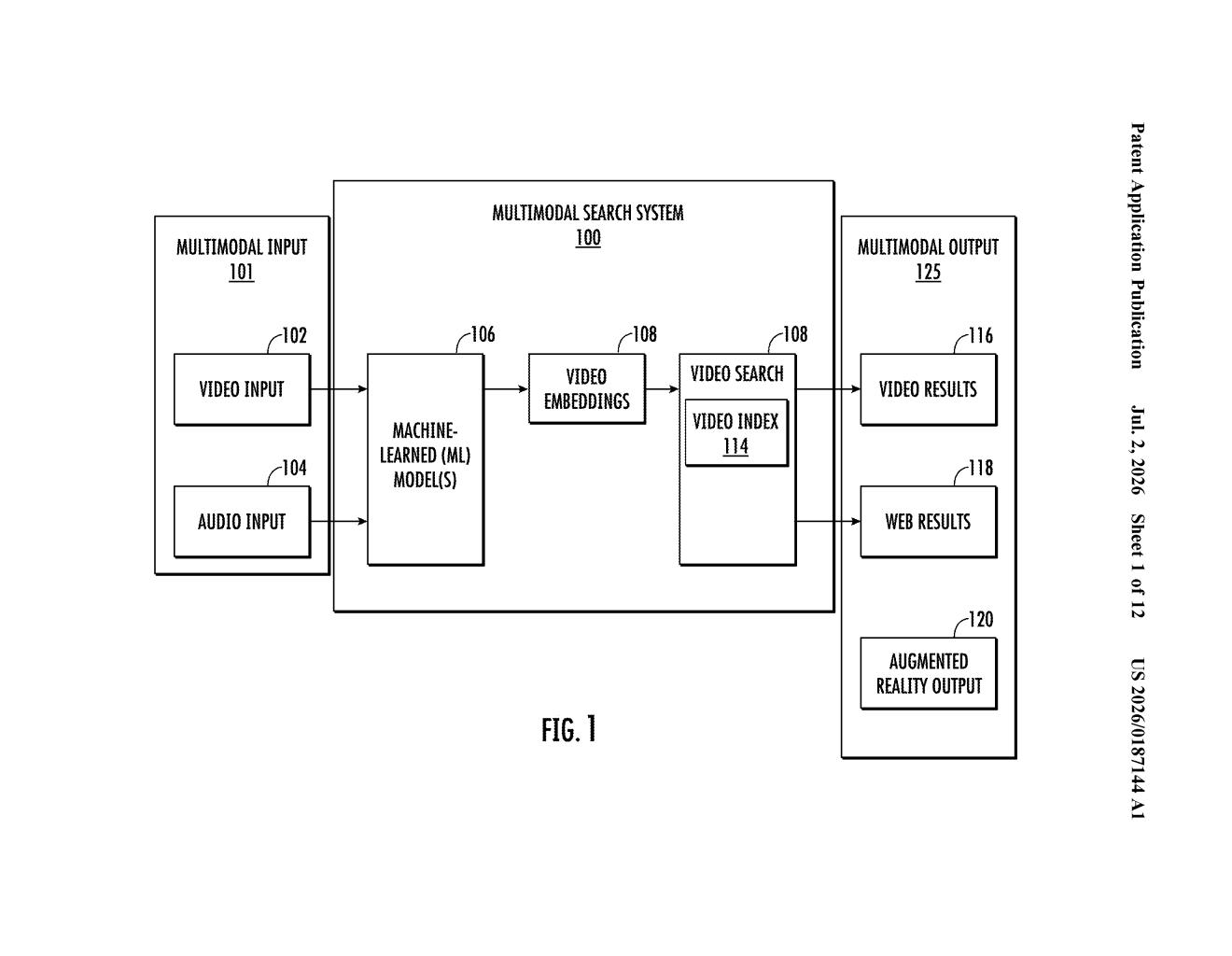
What Google's video-plus-audio search actually does
Imagine you're at a concert and you want to know who the opening act is. Right now, you might take a photo and use Google Lens, or you might hum the song into a music-recognition app. This patent describes a system that does both simultaneously, combining what your camera sees with what your microphone hears to return better search results.
The idea is that video and audio together carry more context than either one alone. If you point your phone at a restaurant menu while asking "what's the most popular dish here," the system can use the visual content of the menu and your spoken question together to give you a more relevant answer.
Google is essentially describing a search engine that treats your phone's camera and microphone as a combined input, the way a search box treats typed text today.
How the system combines image and audio signals
The system works in a few stages. First, it receives video data from a device camera, which is broken down into a sequence of individual image frames. At the same time, it captures audio data from the device microphone.
The image frames are then fed through one or more machine-learned models (neural networks trained to understand visual content) to produce image embeddings. An embedding is essentially a compact numerical fingerprint that represents what's in the image in a way a computer can compare and search against.
The system then combines those visual embeddings with the audio data to determine search results. The patent doesn't specify exactly how audio is processed, but the claim language makes clear that both signals influence what gets returned.
- Camera input is converted frame-by-frame into searchable visual fingerprints
- Audio input (spoken words, ambient sound, or both) is layered in alongside the visual data
- The combined signal is used to retrieve and rank video results
- Results are sent back to the user's device
What this means for Google Lens and visual search
For Google Lens and any future iteration of visual search on Android or iOS, this is a meaningful architectural step. Right now, most visual search is single-frame and silent: you snap a photo, the app identifies it. Adding continuous video and audio as joint inputs makes real-time, conversational search much more plausible, the kind where you just hold up your phone and talk.
This also fits neatly into the trajectory of Google's AI search products, particularly anything that bridges the physical world with the web. If your phone can understand what it sees and hears at the same time, the gap between "looking something up" and "just asking" gets a lot smaller for you as a user.
This is a straightforward but important infrastructure patent for Google's search ambitions. The concept of combining camera and microphone inputs isn't new in demos, but having it formalized as a searchable system with video embeddings at its core signals Google is building the plumbing to make this real. It's worth watching.
Get our take in your Top Stories
Liked this breakdown? Add Patentlyze as a preferred source on Google, and our plain-English take shows up more often in your Top Stories the next time Google patent news breaks.
There are more where this came from
We read every patent application Big Tech publishes and send you the ones worth knowing. Plain English, free, every week.
Want this weekly breakdown for a company we don't cover? Patentlyze Pro →