
Meta Patents a Compact RGB Laser Assembly for AR Headset Displays
Getting a full-color image into a tiny pair of glasses requires cramming red, green, and blue lasers into an impossibly small space. Meta's latest patent tackles exactly that problem.
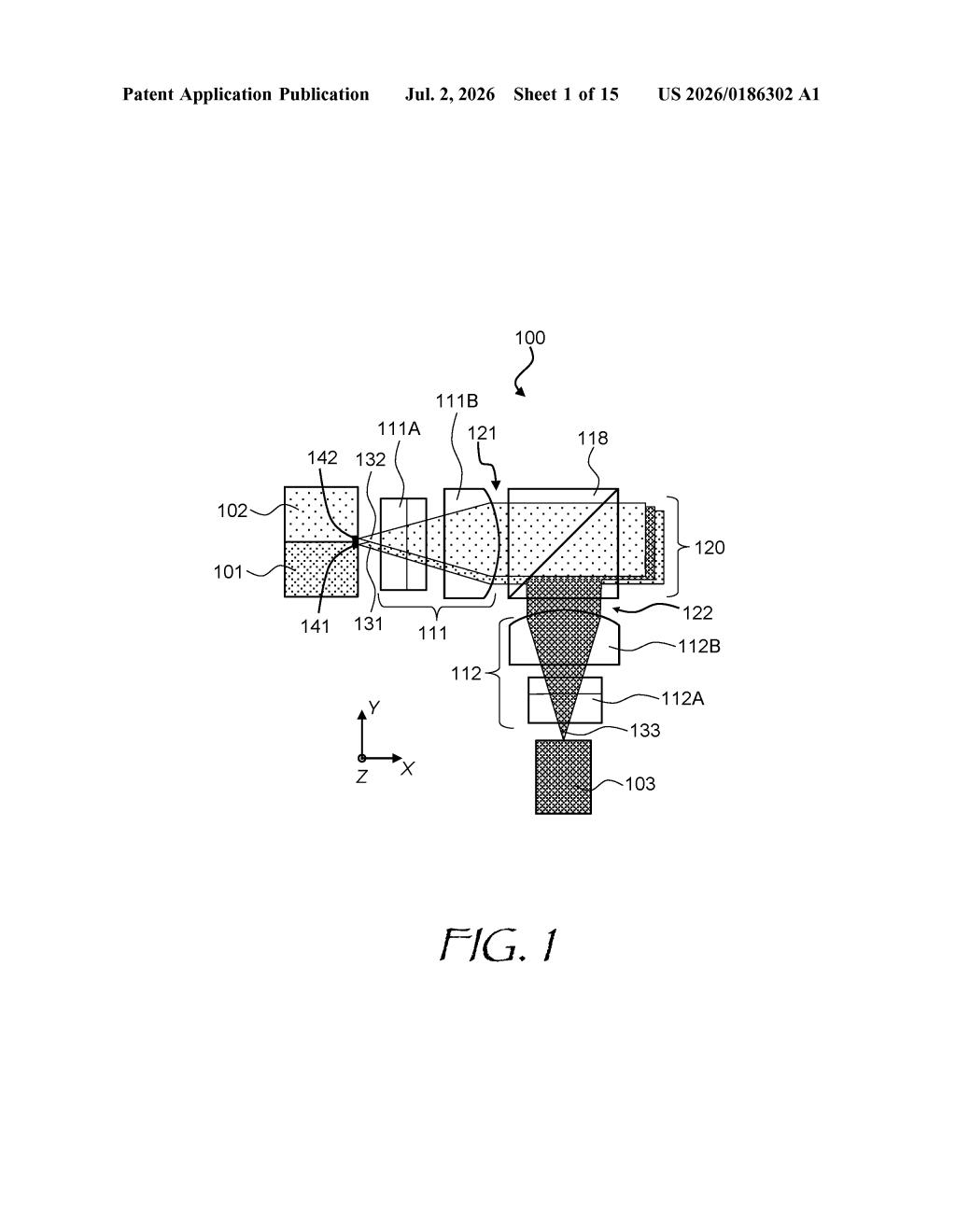
What Meta's combined laser light source actually does
Imagine trying to aim three separate flashlights so their beams perfectly overlap into one clean beam of light, all from a device smaller than a thumbnail. That's roughly the challenge Meta is solving here for its augmented reality glasses.
The patent describes a way to take three separate colored laser chips (red, green, and blue) and merge their output into a single, well-focused beam. Two of the chips are placed close together and share a common lens system, while the third gets its own lens, and then all three are combined at the end. The result is one tidy beam carrying all three colors at once.
This kind of light source is the engine behind scanning projector displays, where a single laser beam is steered rapidly across your field of view to paint an image. Getting that beam compact, bright, and color-accurate is one of the core engineering challenges standing between today's bulky AR headsets and genuinely wearable smart glasses.
How Meta's chip pairing and collimation system works
The patent covers a multi-color light source built from three semiconductor laser chips, one for each primary color. The key engineering move is how those chips are organized.
- The first two chips (say, red and green) are positioned so their light already travels in the same direction. A single shared collimator (a lens or lens system that straightens scattered light into a parallel beam) handles both at once, producing one combined collimated beam.
- The third chip (blue) gets its own separate collimator.
- A combiner then merges the two collimated beams into one unified output beam carrying all three colors.
The patent also describes an optional lightguide approach, a thin slab of glass or plastic with microscopic grating structures etched into it that can pull light in, route it internally, and release it in a controlled direction. This allows beams of different colors or polarizations to be merged without needing bulky traditional optics.
The fast-axis and slow-axis collimating elements mentioned in the abstract refer to the two perpendicular directions in which laser diode light spreads out. Taming both directions is what turns a messy laser blob into a clean, steerable beam.
What this means for the future of Meta's AR glasses
Scanning projector displays, which draw images by steering a laser beam pixel by pixel, are one of the leading candidates for see-through AR glasses because they can be extremely power-efficient and compact. The light source is typically the largest and most power-hungry part of that system, so making it smaller and more efficient directly determines whether AR glasses can look like real glasses rather than ski goggles.
This patent puts Meta on record with a specific optical architecture for combining RGB lasers. For anyone tracking the race toward lightweight AR glasses, it's a signal that Meta is doing serious low-level optics engineering in-house, not just sourcing off-the-shelf components.
This is genuine foundational optics work, not a software feature or a UI tweak. Compact, efficient RGB laser sources are one of the real bottlenecks in consumer AR, and Meta filing detailed optical architecture patents suggests it's investing in the hardware layer seriously. It won't make headlines the way a new headset announcement does, but patents like this are what eventually make those announcements possible.
There are more where this came from
We read every patent application Big Tech publishes and send you the ones worth knowing. Plain English, free, every week.
Want this weekly breakdown for a company we don't cover? Patentlyze Pro →