
Sound-Based Location Tech Patent Could Cut Wires From VR Headset Tracking
Sony is exploring a way to figure out exactly where a game controller or VR headset is in a room by listening to specially coded audio signals rather than relying on cameras or infrared sensors.
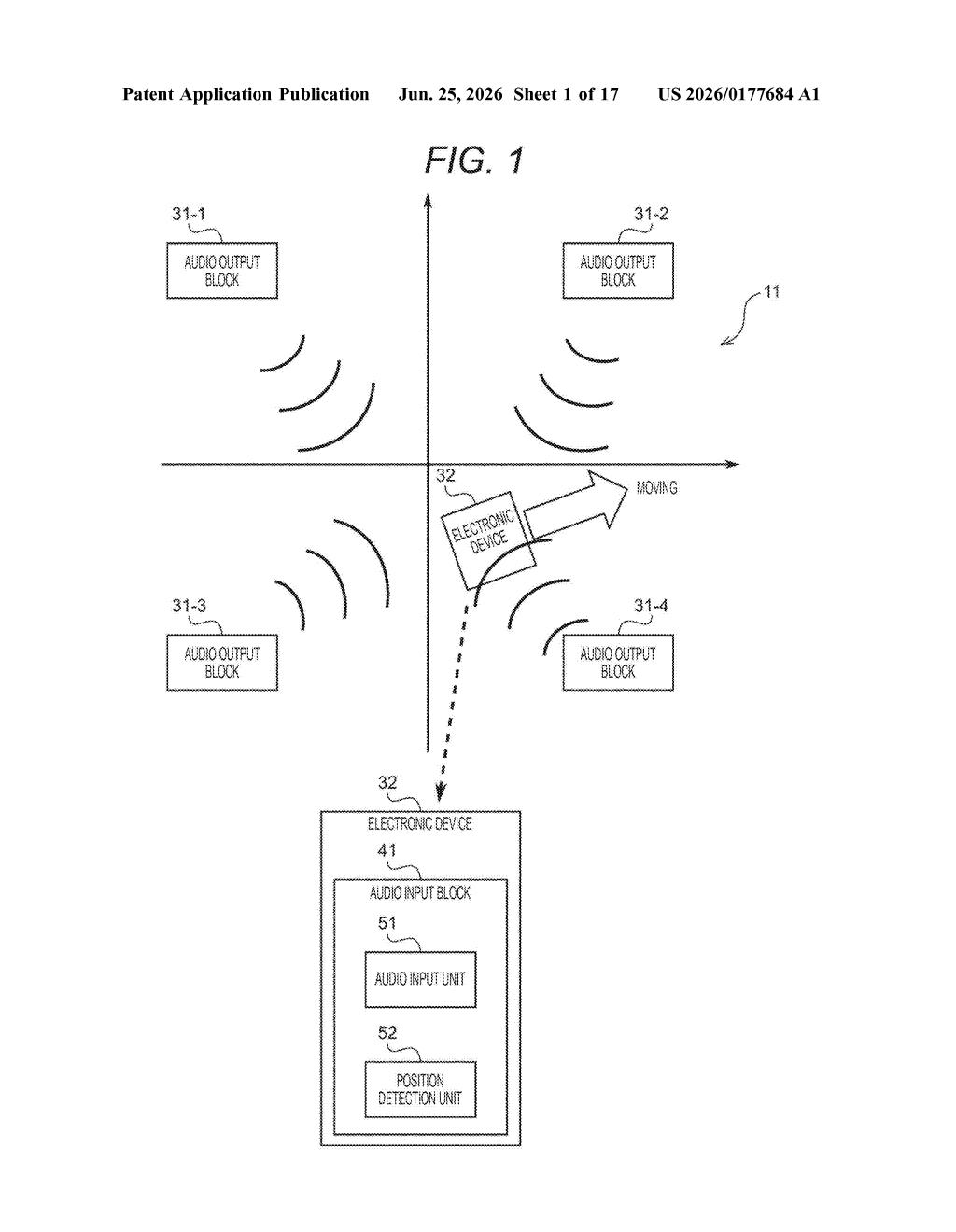
How Sony's audio positioning system actually works
Imagine trying to figure out your exact position in a dark room using only sound. If someone claps on one side of the room, you can tell roughly how far away they are based on how long the sound takes to reach you. Sony is applying that same idea to gaming hardware.
This patent describes a system where speakers or transmitters emit a specially coded audio signal, and a device like a game controller or VR headset listens for that signal. By measuring how long the sound takes to arrive from multiple transmitters, the device can calculate its own position in space, even when the transmitters aren't all perfectly synchronized.
The clever part: the system doesn't require the transmitters to be talking to each other in real time. Instead, it tracks how your distance to each transmitter changes as you move, and uses that changing gap to pinpoint where you are. Sony's own filing calls out game controllers and VR headsets as the target hardware.
What this means for Sony's VR headsets and game controllers
Current VR tracking systems, including Sony's PlayStation VR2, rely on cameras and infrared light to follow controllers and headsets. Those systems work well in open, well-lit rooms but can struggle with occlusion (when your body blocks the camera's line of sight to a controller) and in unusual lighting conditions. An audio-based fallback or complement could fill in those gaps without adding expensive hardware.
For you as a player, this could mean fewer moments where your virtual hands suddenly freeze or jump because a sensor lost track of them. It also raises the possibility of simpler, cheaper room-scale tracking setups that don't require camera towers placed around the room.
This is a quiet but practical filing. Audio-based positioning is a real and under-explored alternative to optical tracking, and Sony's framing around asynchronous transmitters solves a genuine engineering headache. Whether it ships in a consumer product soon is unclear, but it fits neatly into Sony's ongoing investment in VR and spatial computing hardware.
There are more where this came from
We read every patent application Big Tech publishes and send you the ones worth knowing. Plain English, free, every week.
Want this weekly breakdown for a company we don't cover? Patentlyze Pro →