
Samsung Files Patent for Always-On Camera That Learns Users' Daily Routines
Samsung is exploring a system that never really turns the camera off, using a constant visual feed plus other sensor readings to build a profile of patterns over time.
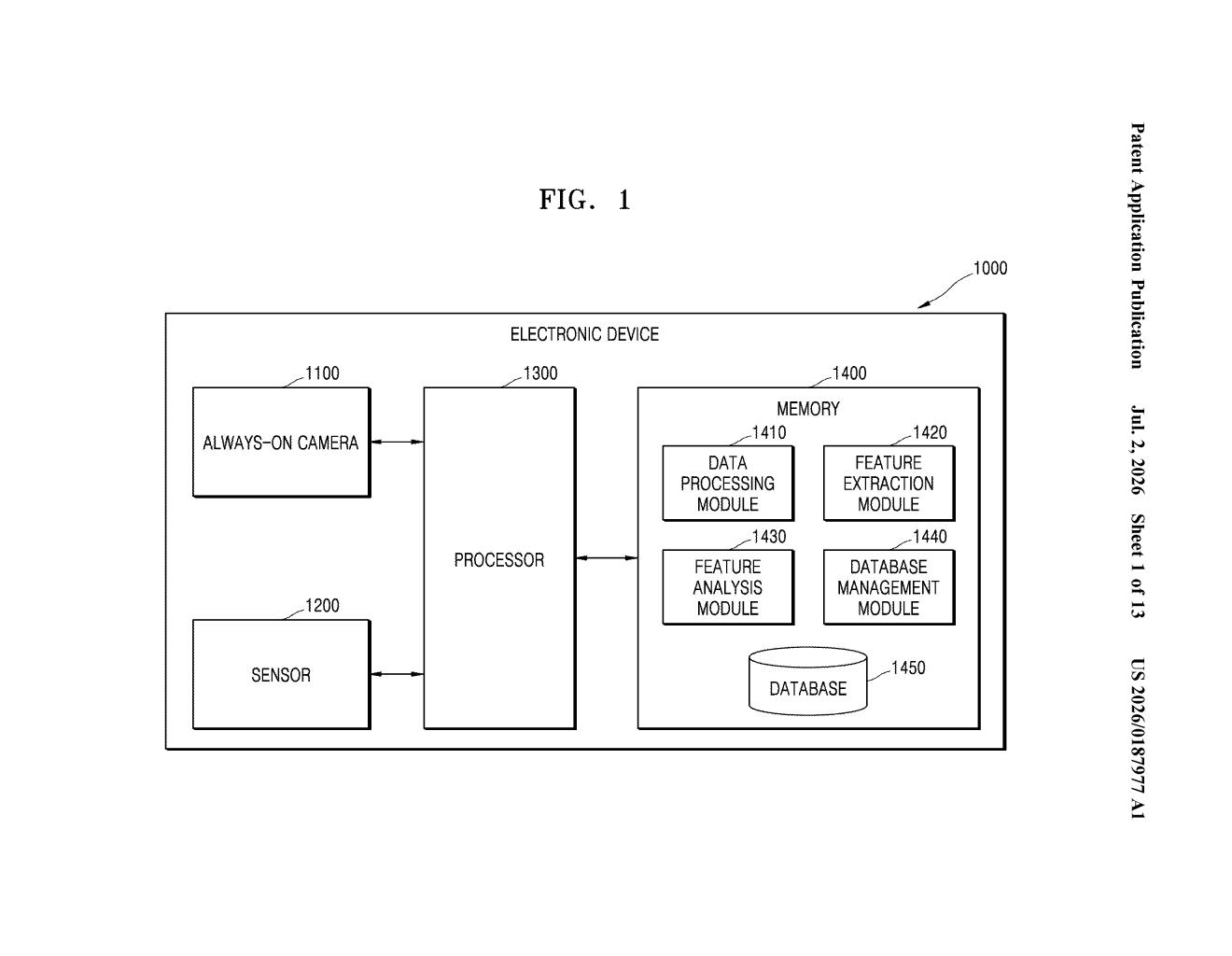
What Samsung's always-on camera system actually collects
Imagine your phone's camera is always watching in the background, not recording video, but taking note of what's happening around you and when. Samsung's patent describes exactly that: an always-on camera that runs continuously and pairs what it sees with data from other sensors, like a motion detector or proximity sensor, to build up a picture of your routines.
The system takes that combined information and groups similar moments together, a process called clustering, essentially sorting your activities into categories without you doing anything. Think of it like your phone learning that you sit at a desk most mornings and go outside most afternoons.
The goal appears to be giving a device persistent, context-aware awareness of your environment so it can act more intelligently over time. Whether that means smarter notifications, faster camera responses, or something else entirely, the patent doesn't fully say.
How the sensor-fusion and clustering pipeline works
The patent describes a pipeline with several distinct steps:
- Always-on image capture: A camera runs continuously in a low-power mode, collecting image data in the background.
- Sensor data pairing: Readings from other onboard sensors are collected at the same time, and the system aligns them by timestamp so each image has a matching sensor context.
- Feature extraction: From the combined image-plus-sensor data, the system pulls out meaningful attributes, things like detected objects, lighting conditions, or motion signatures.
- Clustering: Those features are grouped into sets and then sorted using a clustering algorithm (an unsupervised machine-learning technique that finds natural groupings without being told what to look for). The results are stored persistently on the device.
The practical upshot is that the device accumulates a structured, machine-readable log of environmental patterns over time. It is less like a surveillance feed and more like a running summary of recurring contexts.
Note: All 20 original claims in this patent were canceled at the time of publication, which is a procedurally significant detail (more on that below).
What persistent visual profiling means for Samsung devices
An always-on camera that builds behavioral clusters could power genuinely useful features: a phone that knows you're in a meeting before you tell it, a tablet that dims itself when no one has been nearby for a while, or a wearable that tracks physical context throughout the day. Samsung already ships always-on displays and always-on microphone features, so the sensor-infrastructure groundwork exists.
That said, all 20 claims in this patent were canceled, meaning Samsung likely rewrote or abandoned them during review. Until new claims are granted, this is more of a technical disclosure than enforceable intellectual property. It still tells you where Samsung's engineers were thinking, which is toward persistent, camera-based environmental awareness baked into everyday devices.
The idea is genuinely interesting as a direction, always-on sensing that builds passive context is a real category Samsung and others are investing in. But the canceled claims make this a thin filing to analyze: there is no granted protection here, and the abstract alone can't tell us what Samsung actually intends to ship. Worth filing away as a signal, not a headline.
Get our take in your Top Stories
Liked this breakdown? Add Patentlyze as a preferred source on Google, and our plain-English take shows up more often in your Top Stories the next time Samsung patent news breaks.
There are more where this came from
We read every patent application Big Tech publishes and send you the ones worth knowing. Plain English, free, every week.
Want this weekly breakdown for a company we don't cover? Patentlyze Pro →