
Samsung Patents a LiDAR Chip That Mixes Its Own Laser Light to Sharpen Distance Readings
Samsung is patenting a new way to build LiDAR sensors, where each individual pixel on the sensor chip handles its own laser-mixing trick to measure distance more precisely than a simple light-and-wait approach.
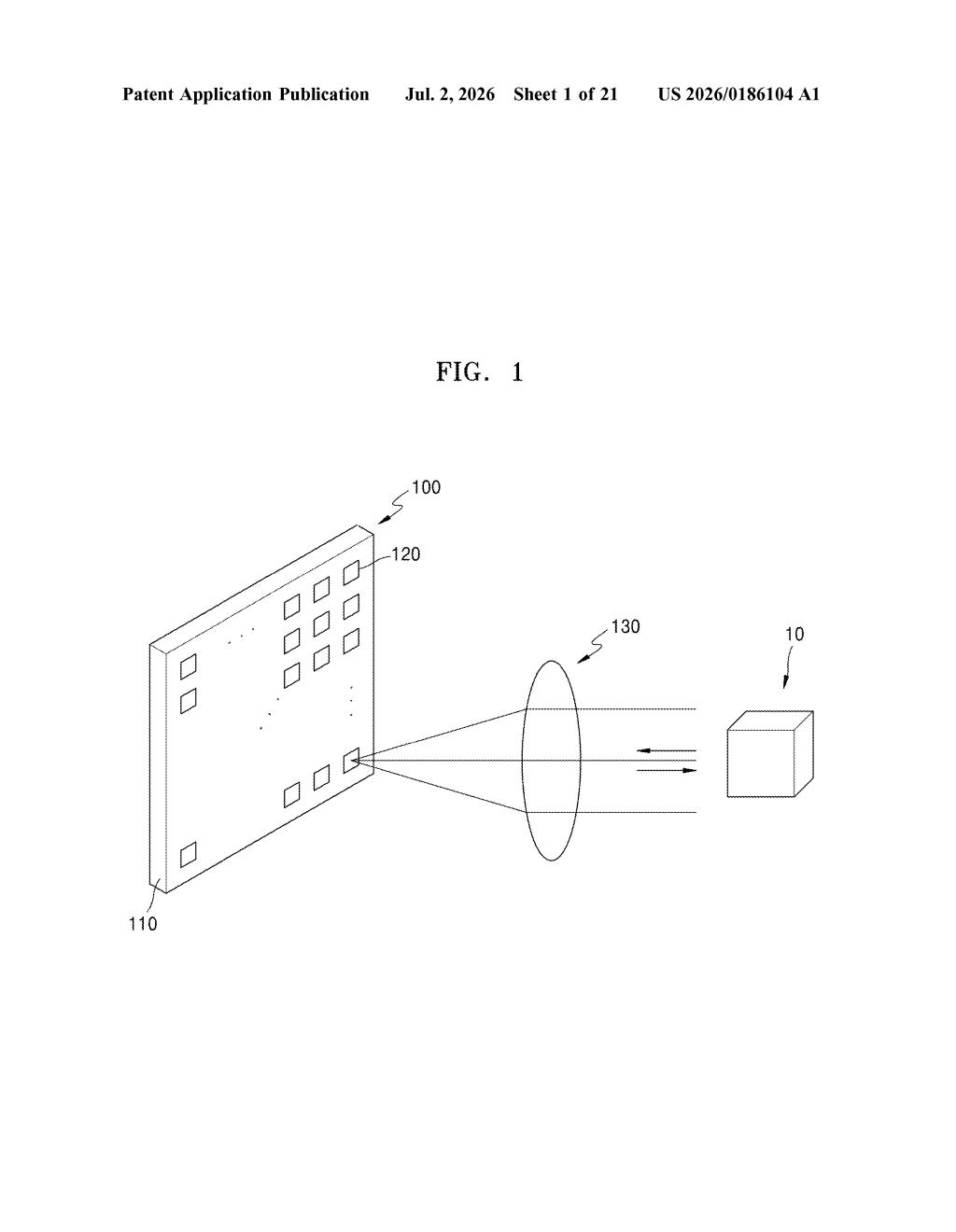
What Samsung's pixel-level laser mixing actually does
Imagine a bat sending out a sound pulse and listening for the echo. Basic LiDAR works similarly: a laser fires a pulse, and the sensor times how long it takes to bounce back from a nearby object. The problem is that simple timing can miss subtle details, especially at longer ranges or when objects are moving.
Samsung's patent describes a different approach. Instead of just firing and listening, each tiny pixel on the sensor chip keeps a copy of the outgoing laser beam and mixes it with the returning echo. That mixing process, a technique called coherent detection, produces a much richer signal that can reveal not just distance but also tiny differences in speed or position.
The clever part is that all of this happens inside each pixel independently, without a big central mixing unit. The design routes the copied beam through a miniature waveguide (a microscopic light channel) and recombines it with the echo right at the detector. It's a more compact, chip-friendly way to build the kind of high-precision LiDAR that autonomous vehicles and robotics systems need.
How each pixel splits, routes, and recombines its laser beams
The patent describes a focal plane array (FPA), which is essentially a grid of tiny sensing pixels, each doing the same job. Each pixel contains three main parts:
- A transmitter with a laser element that fires the outgoing light pulse (the first signal beam).
- A receiver with a photodetector that captures the return echo (the second signal beam, reflected from a target).
- An interference light beam controller that manages the mixing process.
The interference controller works in three steps. A splitter sits on the path of the outgoing laser and peels off a small fraction of that beam before it leaves the pixel. A microscopic waveguide (a channel that guides light the way a wire guides electricity) carries that copied fraction to a receiving coupler. When the echo arrives back at the pixel, the receiving coupler combines the echo with the copied beam.
The key geometric detail in the claim is that the outgoing beam and the copied beam travel in different directions inside the pixel. That angled routing keeps the two paths from interfering with each other prematurely, which is what makes the architecture practical at pixel scale.
The result is coherent LiDAR detection, a technique where mixing a known reference signal with the return signal allows the system to extract phase and frequency information, not just arrival time. That translates to finer distance resolution and the ability to detect object velocity.
What this means for self-driving sensors and 3D cameras
LiDAR is a key sensor technology for autonomous vehicles, drones, and industrial robots, and the industry is under constant pressure to shrink sensors onto single chips while keeping accuracy high. Today's coherent LiDAR systems often rely on a centralized optical mixing setup that's hard to scale. By pushing the mixing logic into each individual pixel, Samsung's design could allow much denser sensor arrays without a proportional increase in chip complexity.
For consumers, better LiDAR means vehicles and robots that see farther, handle bad weather more reliably, and respond faster. Samsung is one of the world's largest chip manufacturers and an active player in automotive electronics, so this kind of foundational sensor patent is worth tracking as a signal of where the company is investing.
This is genuine engineering work on a hard problem: getting coherent LiDAR, which normally requires bulky optical setups, to fit inside a pixel-scale chip architecture. It's not a consumer product announcement, and it may be years from anything you'd hold in your hand, but Samsung filing this signals real investment in the sensor stack that powers autonomous systems.
Get our take in your Top Stories
Liked this breakdown? Add Patentlyze as a preferred source on Google, and our plain-English take shows up more often in your Top Stories the next time Samsung patent news breaks.
There are more where this came from
We read every patent application Big Tech publishes and send you the ones worth knowing. Plain English, free, every week.
Want this weekly breakdown for a company we don't cover? Patentlyze Pro →