
Samsung Patents a Step That Sharpens Video Quality Based on How Footage Was Compressed
Every time a compressed video plays on your screen, a decoder has to reverse-engineer millions of tiny math decisions. Samsung has filed a patent for a step inside that process that applies a small correction based on what kind of content it's decoding, potentially recovering detail that standard decoders discard.
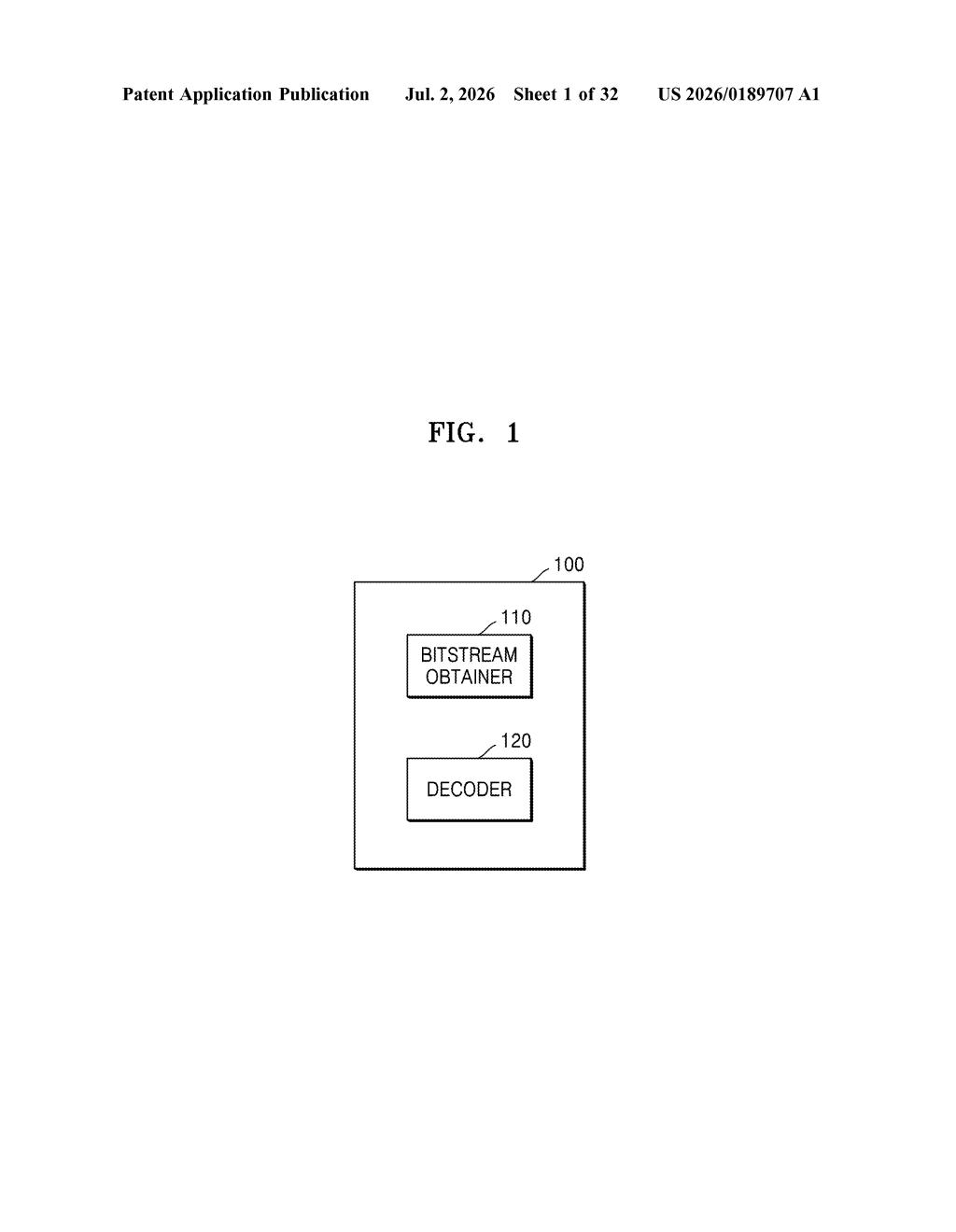
What Samsung's quantization offset trick actually does
Imagine a video file as a zip archive for images. Compressing a video throws away a little information to save space, and when you play it back, the decoder has to reconstruct what was there. The quality of that reconstruction depends on how carefully the decoder 'unzips' those image blocks.
Samsung's patent describes a decoder that doesn't treat every block the same way. Before finalizing a block of pixels, it applies a small numerical nudge called a quantization offset. The decoder chooses which nudge to apply based on clues: is this block using predicted motion from another frame, or is it coded independently? Is it a high-frequency detail (like a sharp edge) or a low-frequency area (like a flat sky)? How compressed was the block to begin with?
The idea is that a one-size-fits-all approach wastes quality. By picking the right offset for each block's context, the decoder can recover a bit more accuracy from the compressed data it receives.
How the decoder picks which offset to apply
The patent sits inside the video codec pipeline, specifically at the dequantization step (the stage where compressed numerical values are scaled back up to something close to their original size). Standard decoders apply a fixed scaling factor based on the quantization parameter (QP), which is a single number indicating how aggressively a block was compressed.
Samsung's method adds a refinement stage after that. The decoder selects one offset from a set of pre-defined quantization offsets based on up to four contextual signals:
- Prediction mode: whether the block was coded using intra prediction (estimated from nearby pixels in the same frame) or inter prediction (estimated from a previous or future frame)
- Slice type: whether the current group of blocks is an I-slice (keyframe), P-slice (forward-predicted), or B-slice (bi-directional predicted)
- Frequency band: whether the transform coefficient represents low-frequency content (broad shapes) or high-frequency content (fine detail)
- Quantization parameter value: how heavily the block was compressed in the first place
The selected offset is then added to or subtracted from the transform coefficient before the inverse transform converts it back into pixel values. A matching encoding side generates and signals the offset choices into the bitstream so the decoder knows what to expect.
What this means for Samsung's video codec ambitions
Video codec efficiency is a serious competitive battlefield, and every incremental quality improvement at a given file size has real commercial value. Samsung competes in this space through its own codec work and its chip division, which supplies video encode/decode hardware in Exynos processors and other chips. A method that selectively improves reconstruction quality without inflating file size is exactly the kind of incremental patent that stacks up in codec standards bodies like JVET (the group behind H.266/VVC).
For the average viewer, the direct effect would be marginally sharper video at the same bitrate, or the same visual quality at a smaller file size. That matters most at the edges: streaming on a slow connection, storing 4K footage on a device with limited storage, or video calling where bandwidth is tight. Whether this specific approach makes it into a shipping product or a standards submission is a separate question, but it fits Samsung's pattern of incremental codec IP accumulation.
This is a narrow, technical codec patent of the kind that Samsung files by the hundreds. It's not boring exactly, but it won't mean anything to consumers directly. Its real audience is standards committees and licensing negotiations. If you're tracking Samsung's codec IP strategy, it's worth logging. If you're not, move on.
Get our take in your Top Stories
Liked this breakdown? Add Patentlyze as a preferred source on Google, and our plain-English take shows up more often in your Top Stories the next time Samsung patent news breaks.
There are more where this came from
We read every patent application Big Tech publishes and send you the ones worth knowing. Plain English, free, every week.
Want this weekly breakdown for a company we don't cover? Patentlyze Pro →