
Samsung Patents a System That Passes Your Voice Commands to a More Capable Nearby Device
Your earbuds are paired to your phone, but you just asked something your phone can't handle. Samsung's new patent describes a system that surveys nearby devices and hands the job to whichever one actually can.
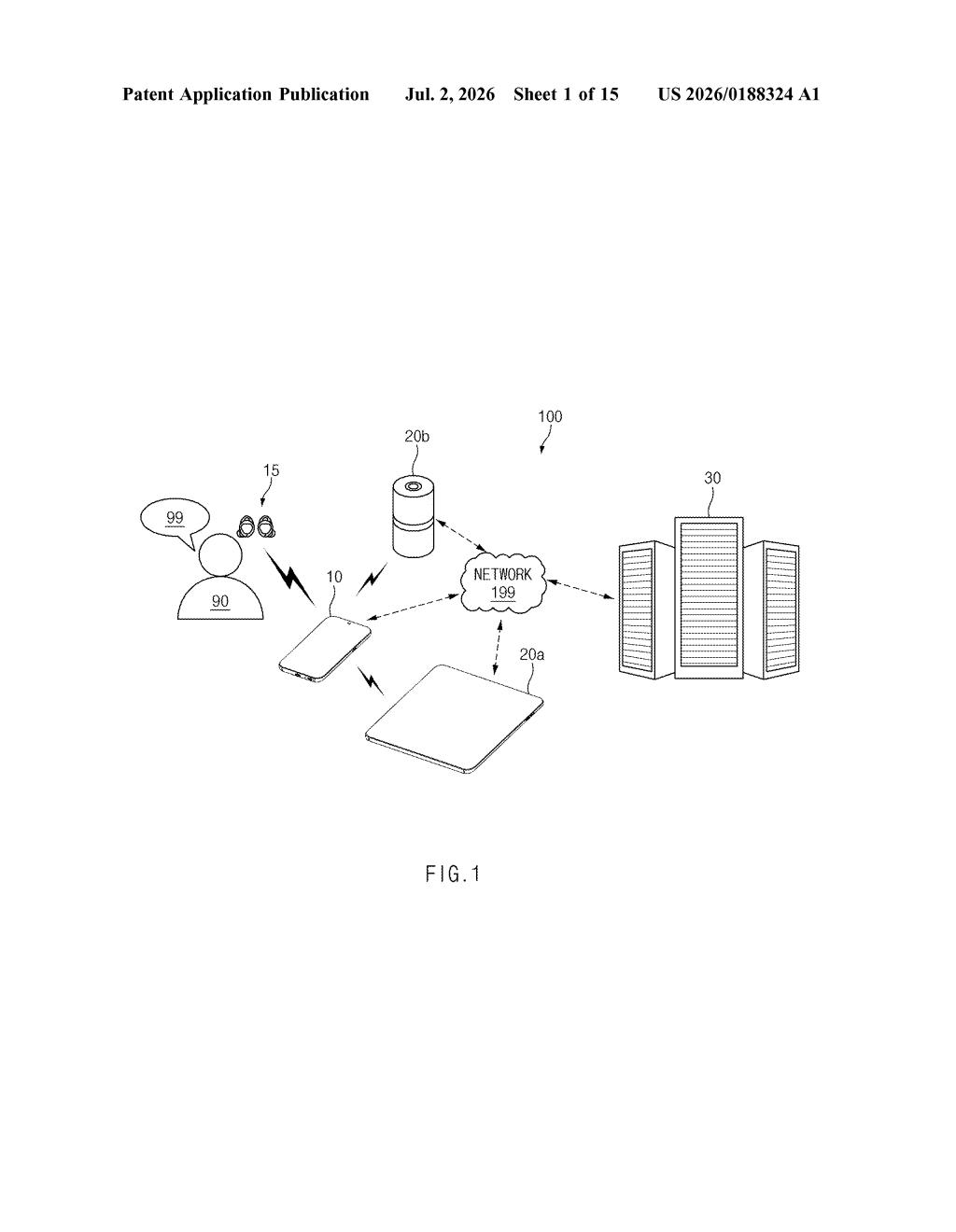
What Samsung's automatic voice-command handoff actually does
Imagine you're wearing wireless earbuds connected to your phone and you ask a voice assistant to do something. Your phone listens, realizes it doesn't have the right app, the right account, or the right capability to handle that request, and instead of failing or giving you an error, it looks around for another device on the network that can handle it.
That's the core idea in this Samsung patent. The system listens to your voice command, figures out what category of task it belongs to, checks whether the current phone is up to the job, and if not, scouts for a nearby device (a tablet, a TV, a smart speaker) that is. Once it finds one, it re-routes your earbuds to connect directly with that device instead.
The result is that your audio experience stays uninterrupted while the work shifts to the best available device in the room, without you having to manually switch anything.
How the device scans, checks, and reroutes the audio link
The patent describes an electronic device (a phone, tablet, or similar hub) that acts as a traffic controller for voice commands coming in from a connected audio device like wireless earbuds or a Bluetooth speaker.
When a voice command arrives, the system does two things in sequence:
- It classifies the command into a domain and task (think: "music playback" or "smart home control" or "video call").
- It checks its own capability score for that domain. If it comes up negative (meaning it can't handle the request), it starts scanning for nearby external devices.
For each candidate device it finds, it queries that device's capability for the same domain and task. The first external device that reports a positive capability wins: the system then instructs the audio device to drop its current connection and pair directly with that external device instead.
The handoff is controlled by the original phone, but the new audio link is formed between the earbuds and the more capable device. The patent doesn't specify a single wireless protocol, so this could work over Bluetooth, Wi-Fi, or any combination the devices support.
What this means for multi-device Samsung households
For households with multiple Samsung devices, this is a meaningful quality-of-life fix. Right now, if your earbuds are tethered to your phone and you ask for something only your TV or tablet can do, you're stuck manually re-pairing. This patent describes the infrastructure to make that handoff automatic and invisible to you.
It also hints at a broader Samsung strategy: treating the Galaxy ecosystem (phones, tablets, TVs, smart speakers) as a shared pool of capability rather than a collection of separate gadgets. If Samsung can make capability-aware routing work reliably, it becomes a real differentiator for people who own several Samsung devices.
This is a practical, plausible feature for a company that sells phones, tablets, TVs, and earbuds under one roof. The concept isn't flashy, but automatic device handoff based on actual capability gaps is a real problem Samsung's customers face. Whether the execution is smooth enough to matter is the open question.
Get our take in your Top Stories
Liked this breakdown? Add Patentlyze as a preferred source on Google, and our plain-English take shows up more often in your Top Stories the next time Samsung patent news breaks.
There are more where this came from
We read every patent application Big Tech publishes and send you the ones worth knowing. Plain English, free, every week.
Want this weekly breakdown for a company we don't cover? Patentlyze Pro →