
Samsung Patents a Projector That Drives Itself Around a Room and Fixes Its Own Picture
Forget fighting with a projector's angle and focus. Samsung is patenting a device that rolls to the right spot in a room on its own, projects a test image, checks whether it looks good, and adjusts itself until it does.
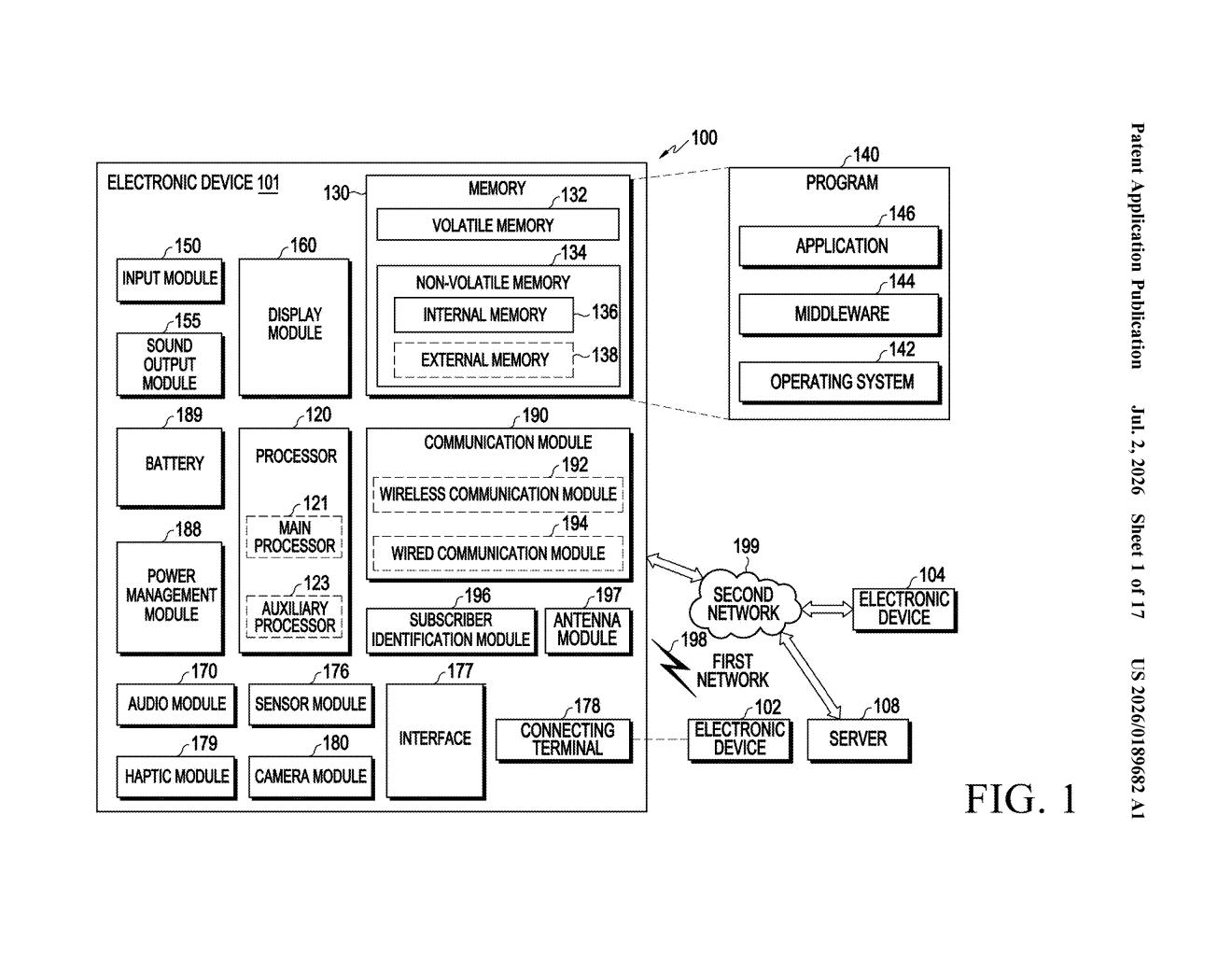
What Samsung's self-positioning projector actually does
Imagine setting up a movie night and instead of measuring distances, tilting the projector, and squinting at a blurry corner for ten minutes, the projector just... handles it. That's the idea behind this Samsung patent.
The device is a projector mounted on a motorized base. You tell it what you want to watch, and it drives itself to the best position in the room. Before it starts the actual content, it fires a test beam at the wall, photographs the result with a built-in camera, and runs that photo through an AI model to check whether the image is sharp, properly sized, and correctly aligned. If something's off, it adjusts its angle or moves slightly until the picture passes the check.
Only once the image looks right does it switch from the test beam to your actual content. No remote controls, no manual focus ring, no tripod fiddling.
How the AI test-beam loop corrects the image
The patent describes a mobile electronic device with four main components working together: a projector, a driving device (a motorized base that physically moves the unit around the floor), an adjustment device (motors that tilt the beam angle or raise its height), and a camera pointed at whatever the projector is hitting.
The processor first identifies a list of candidate projection locations in the room based on pre-stored values, then navigates the device to the best one. Once parked, it projects a test beam (not the real content yet) onto the target surface.
The camera captures an image of that test projection and feeds it into a first AI model stored in memory. That model acts as an automated quality inspector, checking whether the image meets a "designated image condition" (think: correct aspect ratio, no keystone distortion, adequate brightness, sharp focus).
If the AI flags a problem, the system tries corrections:
- Physically repositioning the device via the driving motor
- Tilting or raising the beam via the adjustment device
- Looping back to test again until the condition is met
Only after the test image passes does the projector output the real content beam, locked into the configuration that passed.
What this means for hands-free home projection
For home users, this patent describes a path to projectors that genuinely require no setup. Today, even "smart" projectors still ask you to physically place, aim, and calibrate them. A device that self-positions and self-corrects could make large-screen projection as simple as turning on a TV.
For Samsung, this fits into a broader push toward autonomous home devices. The company already makes robot vacuums and AI-powered appliances. A self-navigating projector would extend that logic to home entertainment. The practical question is whether the driving and adjustment hardware can be made small and quiet enough to feel natural in a living room, rather than like a robot intruding on movie night.
This is a genuinely interesting product concept, not just a software tweak. Combining a motorized base, beam-angle adjustment, and a closed-loop AI image-check into one device solves a real annoyance. The patent is broad enough to cover a lot of approaches, but the core loop (project, photograph, evaluate, correct) is a specific and sensible design. Whether Samsung ships something like this or files it away is the real question.
There are more where this came from
We read every patent application Big Tech publishes and send you the ones worth knowing. Plain English, free, every week.
Want this weekly breakdown for a company we don't cover? Patentlyze Pro →