
Apple Patents a Transformer-Based Filter for Wireless Oscillator Circuits
Deep inside every wireless chip is an oscillator — a circuit that generates the precise clock signal your phone uses to tune into a frequency. Apple is filing patents on a clever way to filter the noise out of those oscillators using a pair of transformers.
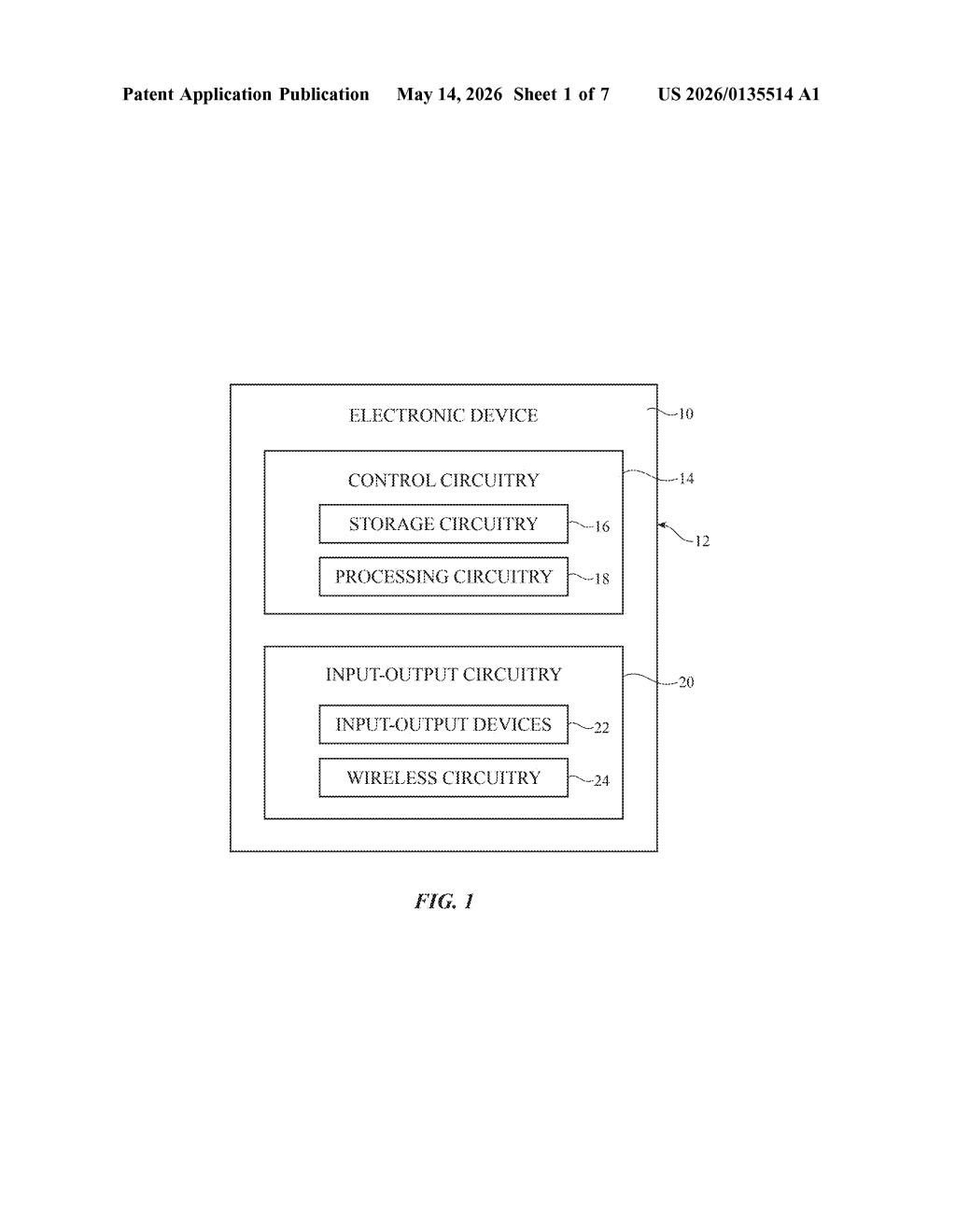
What Apple's oscillator filter actually does inside a radio chip
Imagine your phone's radio as a musician trying to hit a perfect note. If there's too much background noise, the note wobbles — and that wobble translates to a weaker or less reliable wireless connection. The circuit Apple is patenting is essentially a noise-canceling mechanism built right into the oscillator, the part of the chip that generates that precise signal.
Apple's design uses two small transformers — not the power-grid kind, but microscopic coils on silicon — placed at key points in a complementary oscillator (one that uses both n-type and p-type transistors together for better efficiency). These transformers channel noise away from the core signal path and into a tunable capacitor that can be adjusted to match different frequencies.
The result is a cleaner signal with less phase noise (the technical term for that frequency wobble), which is important for Wi-Fi, Bluetooth, and cellular radios. It's not a user-facing feature you'd ever see in a spec sheet, but it's the kind of low-level engineering that makes wireless chips faster and more power-efficient.
How the dual transformers and tunable capacitor work together
The patent describes a complementary cross-coupled oscillator — a common architecture in RF (radio frequency) chip design that pairs n-type and p-type transistors to reduce power consumption while maintaining oscillation. What's novel here is the filtering approach Apple is adding to it.
The circuit has two distinct tail nodes — the first tail node connects to the n-type transistor pair, and the second tail node connects to the p-type transistor pair. These tail nodes are points in the circuit where noise tends to accumulate, particularly at twice the oscillation frequency (called 2f₀ noise, a well-known headache for RF designers).
Apple's solution is to place a transformer at each tail node. A transformer in this context is a pair of magnetically coupled inductors that can block or redirect certain frequencies. Each transformer connects to a shared tunable capacitor — a bank of switchable capacitors that can be digitally configured to target specific noise frequencies. Together, the transformer-capacitor pairs act like a precision notch filter (a circuit that blocks a narrow band of frequencies) aimed directly at the noise sources in the tail nodes.
The tunable capacitor itself is built from multiple differential switchable capacitor circuits, meaning you can turn individual capacitor segments on or off to dial in the right filtering for whatever frequency band the radio is operating on — whether that's 2.4 GHz Wi-Fi, 5 GHz, or a cellular band.
What this means for Apple's in-house wireless silicon
Phase noise in oscillators is one of the harder problems in RF chip design. It directly limits how cleanly a radio can distinguish between adjacent frequency channels, which affects everything from Bluetooth audio quality to cellular data throughput. Apple has been building its own wireless silicon for years — the W-series and H-series chips in AirPods, and the rumored in-house cellular modem — and patents like this one are the building blocks of that stack.
For you as a user, better oscillator noise performance means more reliable wireless connections with less power consumed to maintain them. This kind of sub-circuit innovation rarely gets a product name, but it compounds across every device Apple ships with a radio inside.
This is a narrow but legitimate RF engineering patent. Transformer-based tail filtering in complementary oscillators is a real technique with measurable performance benefits, and the dual-transformer topology described here is a specific enough design choice to be worth patenting. It's not flashy, but it's exactly the kind of deep silicon work Apple needs to do if its in-house cellular modem is going to compete with Qualcomm's RF front-end performance.
Get our take in your Top Stories
Liked this breakdown? Add Patentlyze as a preferred source on Google, and our plain-English take shows up more often in your Top Stories the next time Apple patent news breaks.
There are more where this came from
We read every patent application Big Tech publishes and send you the ones worth knowing. Plain English, free, every week.
Want this weekly breakdown for a company we don't cover? Patentlyze Pro →